

The phrase “all-weather outdoor sofa” sounds reassuring, but the label itself tells you surprisingly little. Many outdoor sofas are described as all-weather without clearly explaining how long the frame is expected to resist UV exposure, which grade of metal protects against corrosion, how much maintenance the materials require, or what happens when cushions stay wet after heavy rain.
A better way to shop is to follow the construction chain: frame material determines weather resistance, weight, and placement; cushion construction determines comfort and drying speed; maintenance affects long-term durability; and each layer of weather protection contributes to the final price.
Whether you live in a humid inland climate, a salty coastal area, a dry and sunny region, or a cold location where outdoor furniture needs seasonal storage, the goal is the same: choose an outdoor sofa whose materials match the conditions it will actually face.
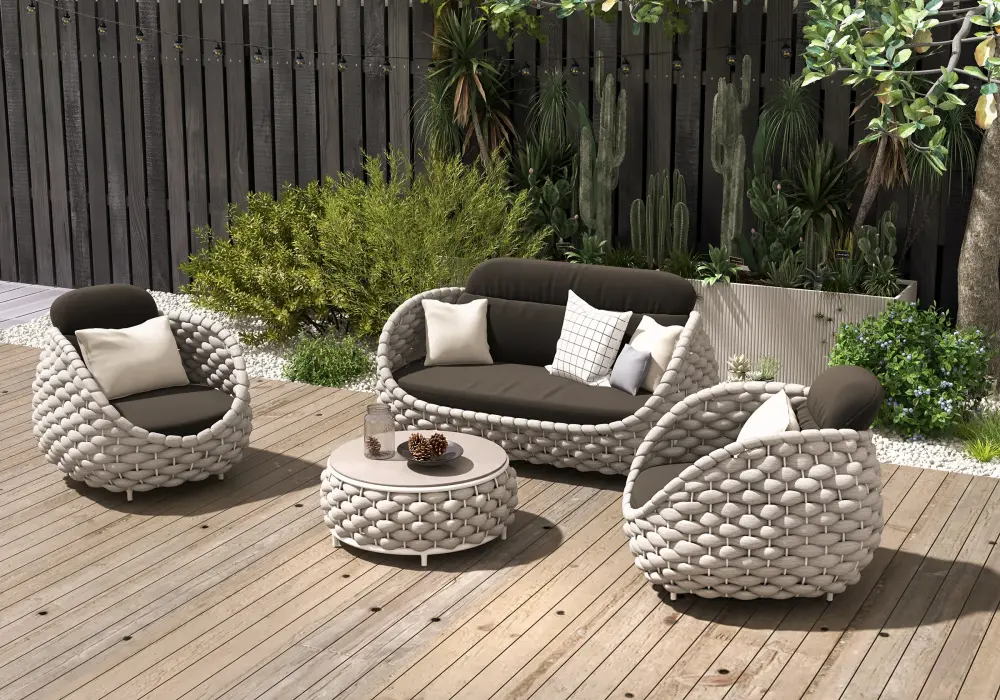
Cocaro 3 Seater Woven Outdoor Sofa
Table of Contents
All-Weather Outdoor Sofa Materials: Aluminum, HDPE Wicker & Teak Compared
The frame is the starting point for genuine all-weather performance. Aluminum, stainless steel, HDPE-based synthetic wicker, and teak can all work outdoors, but they behave differently under sunlight, rain, humidity, temperature changes, and salt exposure.
Aluminum Outdoor Sofa Frames
Aluminum is one of the most practical frame materials for an outdoor sofa because it combines relatively low weight with good resistance to atmospheric corrosion. It does not develop red rust like ordinary carbon steel, making it especially suitable for patios that are frequently exposed to rain.
The finish applied to aluminum matters almost as much as the metal itself. Powder coating creates a protective surface that improves resistance to weathering, scratching, moisture, and UV exposure. For higher-end outdoor furniture, look for information about a durable polyester powder coating and, where available, compliance with architectural coating standards such as AAMA 2604 or AAMA 2605.
Anodizing is another surface-treatment option. It creates a controlled oxide layer on aluminum and can provide durable protection while retaining a distinctive metallic appearance. However, the exact performance still depends on the alloy, finish, fabrication, and environment.
There is no universal “10-year UV life” for an aluminum outdoor sofa. A coating test or warranty is not the same thing as a guaranteed furniture lifespan. Actual service life depends on exposure, coating quality, cleaning, installation, and climate.
Stainless Steel Outdoor Sofa Frames
Stainless steel provides excellent structural strength and a more substantial appearance. For outdoor furniture, the stainless-steel grade is important.
304 stainless steel offers good general corrosion resistance, while 316/316L stainless steel contains molybdenum and provides improved resistance to chloride exposure, making it particularly useful for many coastal applications.
For an outdoor sofa near the ocean, ask:
- Is the frame 304 or 316/316L?
- What grade are the screws and fasteners?
- Are dissimilar metals isolated?
- Does the manufacturer provide coastal maintenance instructions?
- Has the finish been tested for aggressive outdoor exposure?
Salt-spray testing can be useful when comparing finishes, but a laboratory test should not be interpreted as a direct guarantee of real-world service life.
HDPE Wicker for Outdoor Sofas
Synthetic wicker made from high-density polyethylene (HDPE) is very different from traditional natural wicker. Quality HDPE outdoor materials can be formulated with UV inhibitors and pigments throughout the material, helping the color and structure remain more stable during prolonged outdoor use.
However, the wicker itself is only one part of the product. Buyers should also inspect the internal frame, connectors, fasteners, drainage design, and cushion construction.
Teak Outdoor Sofa Frames
Teak remains popular because it combines structural strength, outdoor durability, and a naturally warm appearance. Unlike coated metal, teak is expected to change visually as it weathers.
When left outdoors, teak typically changes from golden brown to silver-gray as its surface pigments fade. The timing varies significantly with sunlight, humidity, rain, and local climate.
Natural-weathered teak does not require intensive finishing simply to remain outdoors. Regular cleaning is generally more important than trying to preserve its original color. Owners who want to keep the golden-brown appearance can use manufacturer-approved teak care products, but this adds maintenance.
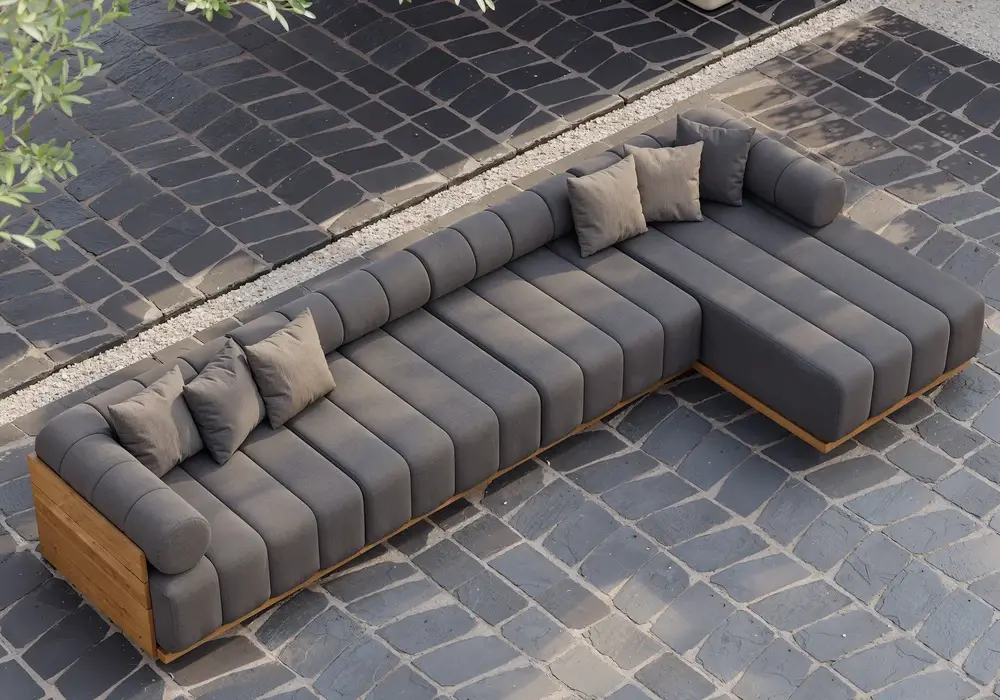
Resaro Outdoor 4-Piece Teak Modular Sectional Set
Which Outdoor Sofa Material Matches Your Climate?
Material | UV & Weather Performance | Corrosion / Decay Considerations | Maintenance |
Powder-coated aluminum | Very good when properly coated | No red rust, but coating can be damaged | Rinse and inspect regularly |
316 stainless steel | Excellent corrosion resistance for many exposed applications | Strong chloride resistance, but not corrosion-proof | Regular salt and dirt removal |
HDPE synthetic wicker | Good with UV-stabilized resin | Does not rot like natural wicker; frame still matters | Periodic rinsing and soft brushing |
Teak | Naturally suited to outdoor exposure | Naturally durable wood; surface aging is normal | Regular cleaning, optional color treatment |
For humid inland climates, aluminum, HDPE wicker, and teak are practical choices.
For coastal climates, pay additional attention to stainless-steel grade, fasteners, coating quality, and routine salt removal.
For cold climates, material durability is only part of the equation. Modular construction and manageable weight can be just as important because the sofa may need seasonal storage.
The key takeaway is that there is no single “best all-weather outdoor sofa material.” The right choice depends on exposure, maintenance expectations, and how the furniture will actually be used.
How Outdoor Sofa Materials Affect Weight, Modularity & Layout
Once the frame material is understood, the next question is practical: How will the sofa work in your outdoor space?
Lightweight Aluminum Sofas for Flexible Layouts
Aluminum frames are relatively easy to move, making them suitable for homeowners who frequently rearrange outdoor furniture or need to move pieces into storage.
A lightweight frame can also be useful on balconies, decks, and compact patios where furniture needs to be repositioned regularly. The trade-off is wind stability. In very exposed areas, loose cushions and lightweight furniture may need additional securing.
Heavy HDPE Wicker Sofas for Windy Patios
HDPE wicker seating systems can feel more substantial, particularly when combined with a steel or aluminum structural frame. The added weight can help the sofa remain stable in open outdoor spaces.
For windy terraces, look beyond sofa weight alone. Sectional connectors, leg geometry, footprint, and cushion retention can all affect how the furniture behaves during strong winds.
Teak Sofas for Stable Outdoor Seating
Teak is dense and naturally substantial. A teak outdoor sofa may feel exceptionally stable, but that same weight makes it less convenient to move frequently.
For fixed seating areas, this can be an advantage. For seasonal layouts, however, modular aluminum construction may be easier to manage.
Outdoor Sofa Layout Ideas by Exposure Level
Outdoor Setting | Recommended Configuration | Material Priorities |
Fully exposed terrace | 3-seat or compact modular sectional | Aluminum, HDPE wicker, corrosion-resistant hardware |
Partially covered patio | 3-seat sofa with lounge chair or ottoman | Aluminum, teak, synthetic wicker |
Covered deck or pergola | Deeper modular seating | Teak, aluminum, premium outdoor upholstery |
Windy open deck | Lower-profile, well-connected modules | Heavier frame, secure connectors |
Seasonal cold climate | Modular pieces that separate for storage | Lightweight aluminum or manageable modules |
Cushions & Upholstery: Quick-Dry Foam and Weatherproof Fabric Explained
The frame is important, but the cushions determine whether your outdoor sofa remains comfortable after repeated exposure to rain, humidity, and intense sun.
How Quick-Dry Foam Cushions Work
Quick-dry foam typically uses an open-cell or reticulated structure. Instead of trapping water inside a conventional foam block, the interconnected cells allow water to flow through more easily.
This makes quick-dry foam particularly useful for uncovered patios, pool areas, humid climates, and homes where cushions may be exposed to frequent rainfall.
However, drying speed is not a universal number. Actual drying time depends on cushion thickness, airflow, temperature, humidity, fabric construction, and the design of the cushion cover.
Why Foam Density Matters
Outdoor cushion quality is not determined by “soft” or “firm” alone. Technical specifications may include foam density, firmness, rebound, cell structure, and compression characteristics.
Higher-quality outdoor foam can provide a more consistent balance between comfort and resilience. When comparing sofas, ask for the actual foam specification rather than relying only on phrases such as “luxury cushion” or “premium comfort.”
Best Outdoor Sofa Fabrics for Sun and Rain
Solution-dyed acrylic fabrics are widely used for high-performance outdoor upholstery because the pigment is integrated into the fiber rather than simply applied to the outside.
Sunbrella and Outdura are two familiar names in the outdoor upholstery market. Sunbrella describes its outdoor fabrics as resistant to fading, stains, water, mold, and mildew, while Outdura uses solution-dyed acrylic construction for residential performance fabrics.
The important point is not simply choosing a famous brand. Check the specific fabric collection, warranty, cleaning instructions, abrasion rating, and UV-performance information for the exact sofa you are considering.
Maintenance & Cleaning Guide by Outdoor Sofa Material
Even a genuinely weather-resistant sofa needs maintenance. In many cases, accumulated dirt, salt, pollen, and trapped moisture cause more problems than a single rainstorm.
How to Clean a Powder-Coated Aluminum Sofa
Use fresh water and a mild soap to remove dirt, dust, and salt. Avoid abrasive cleaning pads because scratches can damage the protective coating.
Inspect the frame periodically for chips, scratches, or exposed metal, especially when the sofa is located near the ocean.
How to Clean HDPE Synthetic Wicker
A hose or low-pressure rinse is usually sufficient for routine cleaning. A soft brush can be used to remove dirt trapped between woven strands.
Avoid aggressive pressure washing. Excessive water pressure can damage the weave, loosen components, or push dirt deeper into small openings.
How to Maintain Teak Outdoor Furniture
Clean teak with water and an appropriate mild cleaning solution. The goal is to remove dirt and organic buildup without unnecessarily damaging the wood surface.
If you prefer the original brown color, use a teak treatment recommended by the manufacturer. Otherwise, allowing teak to weather naturally to silver-gray can significantly reduce ongoing maintenance.
How to Clean Outdoor Cushions and Performance Fabrics
For routine cleaning, begin by removing loose dirt and debris. Then use the fabric manufacturer's recommended soap and water solution.
For mildew, clean the affected area thoroughly, rinse well, and allow the cushion to dry completely. Do not leave a damp cushion covered or compressed in storage.
Always follow the care instructions for the exact fabric because cleaning tolerances vary.
How to Remove Salt Stains from Coastal Outdoor Furniture
Salt deposits are best removed before they accumulate. Regularly rinse exposed frames and upholstery with fresh water, particularly after periods of strong coastal winds.
Pay close attention to joints, hardware, undersides, and areas where moisture may collect.
Furniture Covers vs. Outdoor Storage
A breathable outdoor furniture cover can reduce dust, UV exposure, and direct moisture. However, covers should not trap wet cushions underneath.
For cold climates, clean and completely dry the furniture before seasonal storage. Cushions should be stored in a dry, ventilated location rather than sealed while damp.
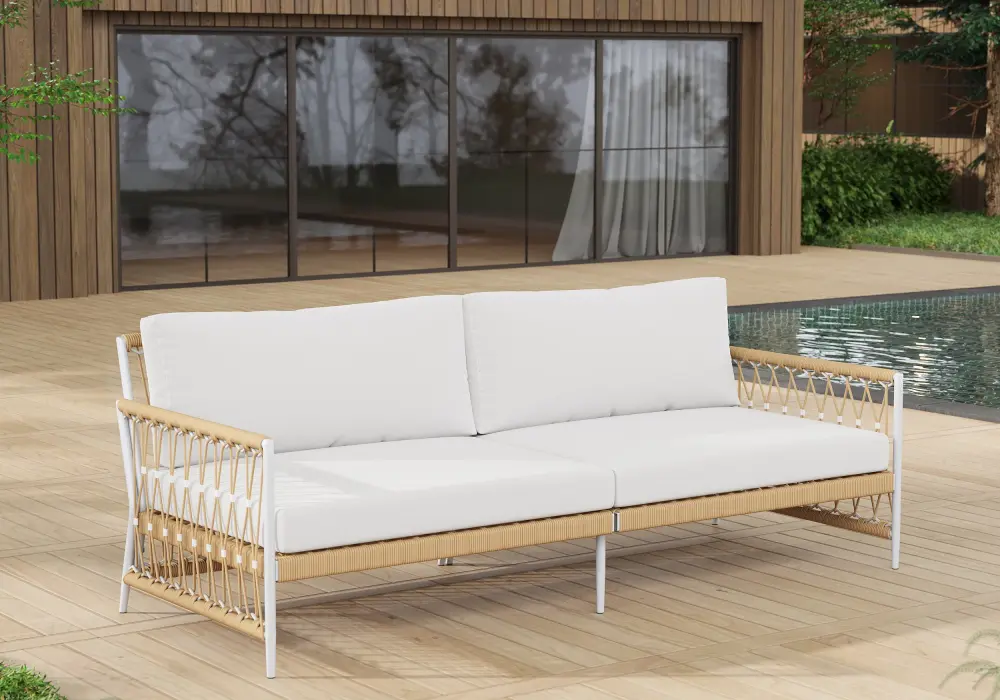
Ropipe Woven Rope Outdoor Sofa
What All-Weather Construction Adds to the Price
The cost of an outdoor sofa reflects much more than its visible design. The frame alloy, coating, fasteners, foam, fabric, drainage system, modular components, and warranty can all affect the price.
Entry-Level All-Weather Outdoor Sofas
Entry-level models may use a basic aluminum or steel frame, standard outdoor polyester fabric, conventional cushion foam, and limited finish protection.
These products can work well in covered areas, but fully exposed installations may require more frequent cleaning, covering, or seasonal storage.
Mid-Range Outdoor Sofas
Mid-range sofas may introduce upgraded powder coatings, better aluminum profiles, HDPE wicker, solution-dyed fabrics, and improved cushion construction.
This is often where buyers begin to see a more noticeable difference between indoor-style furniture placed outdoors and furniture designed specifically for prolonged exposure.
Premium All-Weather Outdoor Sofas
Premium products may combine advanced coatings, 316 stainless-steel hardware, quick-dry foam, high-performance acrylic upholstery, modular replacement parts, and extended warranties.
The premium is easier to justify when these features are documented rather than simply presented as “luxury” or “all-weather.”
How to Tell Whether the Weatherproof Premium Is Worth It
Price Tier | Typical Features | What to Verify |
Entry | Basic frame and outdoor fabric | Coating, hardware, foam, warranty |
Mid-range | Better finishes, HDPE wicker, upgraded fabric | Fabric specs, drainage, replacements |
Premium | Quick-dry foam, advanced coatings, 316 hardware, service support | Test standards, warranties, replacement availability |
The most important distinction is between weather-tested construction and weather-marketing language.
A higher price should correspond to measurable improvements such as documented coating specifications, solution-dyed fabric, open-cell quick-dry foam, corrosion-resistant hardware, replacement components, or stronger warranty coverage.
Frequently Asked Questions About All-Weather Outdoor Sofas
What materials make an all-weather outdoor sofa suitable for humid or coastal climates?
For humid environments, aluminum, HDPE synthetic wicker, teak, and appropriately specified stainless steel can all be suitable. Coastal environments place greater emphasis on chloride resistance, so 316/316L stainless steel is often preferred for exposed metal components. UV-stabilized synthetic materials and solution-dyed outdoor fabrics are also useful.
Does a heavier or lighter outdoor sofa frame handle wind better?
Weight matters, but it is not the only factor. A heavier sofa may be harder for wind to move, while a lightweight aluminum sofa is easier to reposition and store. Frame geometry, footprint, sectional connectors, center of gravity, and cushion retention also influence wind stability.
Are quick-dry foam cushions worth the extra cost?
Quick-dry foam is particularly useful in rainy, humid, or poolside environments because its open-cell structure allows water and air to move through the cushion more efficiently. For a fully covered patio in a dry climate, the benefit may be less significant.
What is the easiest way to remove mildew from outdoor sofa cushions?
Remove loose dirt first and then follow the fabric manufacturer's cleaning instructions. Many performance outdoor fabrics are specifically designed to resist mold and mildew. After cleaning, allow the cushion to dry completely before covering or storing it.
Does an aluminum frame corrode in humid or salty air?
Aluminum does not rust like ordinary carbon steel, but its surface and protective finish can still deteriorate in aggressive environments. Regular freshwater rinsing, inspection of scratches, and a high-quality exterior coating can help minimize problems.
How much more does a genuinely weather-tested outdoor sofa cost?
There is no universal percentage because prices depend heavily on size, construction, brand, materials, and market. Instead of paying more simply for an “all-weather” label, compare measurable features such as frame grade, coating specification, fabric performance, quick-dry foam, hardware grade, testing information, replacement parts, and warranty coverage.