

Yes, you can put patio furniture sets on grass for occasional use when the ground is firm, dry, and level and the furniture manufacturer permits that placement. For a lounge you use every day, a properly prepared hard surface usually provides more dependable support. Check the lawn, the furniture’s feet, and the length of time the setup will remain in place before arranging a sofa or table.
A garden gathering and a permanent outdoor living room make different demands on the ground. A chair that sits comfortably during an afternoon party may sink after rain, while a sectional left in one position can make mowing and lawn recovery difficult. The aim is to keep both the seating and the lawn usable.
Table of Contents
Decide Whether Your Setup Is Temporary or Permanent
For a short visit, move lightweight seating onto an established lawn only after checking its condition. Remove it afterward so you can inspect the ground and let the area return to normal use. A temporary arrangement should remain easy to change if the soil softens or the weather turns.
For a seasonal lounge, plan a dedicated base. If you expect the same sectional to stay outside the back door for months, treat its location as a small patio project. The foundation, drainage, and walking route matter as much as the furniture style.
Situation | Sensible starting point | What to watch |
Occasional seating on firm, dry turf | Short-term placement if permitted by the furniture instructions | Feet sinking, rocking, and worn traffic routes |
Wet ground or visible footprints in soft soil | Postpone or move to a suitable hard surface | Uneven support and damage from repeated traffic |
Daily sectional seating | Prepare a stable, draining patio base | Full footprint, access, and maintenance |
Outdoor fire pit lounge | Follow the appliance’s surface and clearance requirements | Combustible materials, fuel placement, and local restrictions |
There is no universal number of hours that makes grass placement harmless. Soil, rainfall, turf condition, furniture weight, and the size of its contact points all change the outcome.
Check the Lawn Before Moving Anything
Walk across the proposed area in ordinary shoes. If the ground feels soft, water rises around your shoes, or your steps leave deep impressions, choose another location. Look for dips, sprinkler heads, exposed roots, and patches that remain damp after the rest of the lawn dries.
University of Maryland Extension’s lawn-maintenance guidance explains that repeated traffic can compact soil and that wet soil is particularly vulnerable. Furniture placement adds a separate practical concern: its feet concentrate the load in small areas. A dry-looking grass surface does not prove that the soil underneath will support occupied seating evenly.
Check the whole footprint, including the coffee table. A stable sofa beside a rocking drinks table still makes an awkward lounge. Avoid trying to make sloping ground feel level by placing one sofa foot on a loose stone or stacking small scraps beneath a leg.
If the lawn is newly laid, recently seeded, or already struggling, keep the lounge elsewhere until the turf is established and suitable for normal use. Ask a local lawn-care professional about recovery where you see recurring bare patches or poor drainage.
Match the Furniture’s Feet to the Surface
Before buying, look underneath the furniture rather than judging its suitability from the upholstery. Identify every support point: corner feet, center legs, ottoman bases, and table supports. A long sofa can have hidden middle supports that also need firm contact.
Broad contact points may spread weight more effectively than narrow ones, but they do not turn wet ground into a stable foundation. Nor does a lightweight frame guarantee that it will stay level once people sit down. Consider the occupied furniture, not only the empty piece you can lift easily.
Homary’s 8-Piece Teak, Aluminum & Rattan Outdoor Sectional Sofa Set offers a modular arrangement with separate seating pieces, ottomans, and a coffee table. This flexibility makes it important to check the footing of each piece when arranging the set on a lawn. On softer ground, consider placing suitable flat supports beneath the feet or bases, and follow the manufacturer’s assembly instructions. Although the set uses outdoor-oriented materials, that alone does not establish that it is suitable for continuous direct contact with soil.
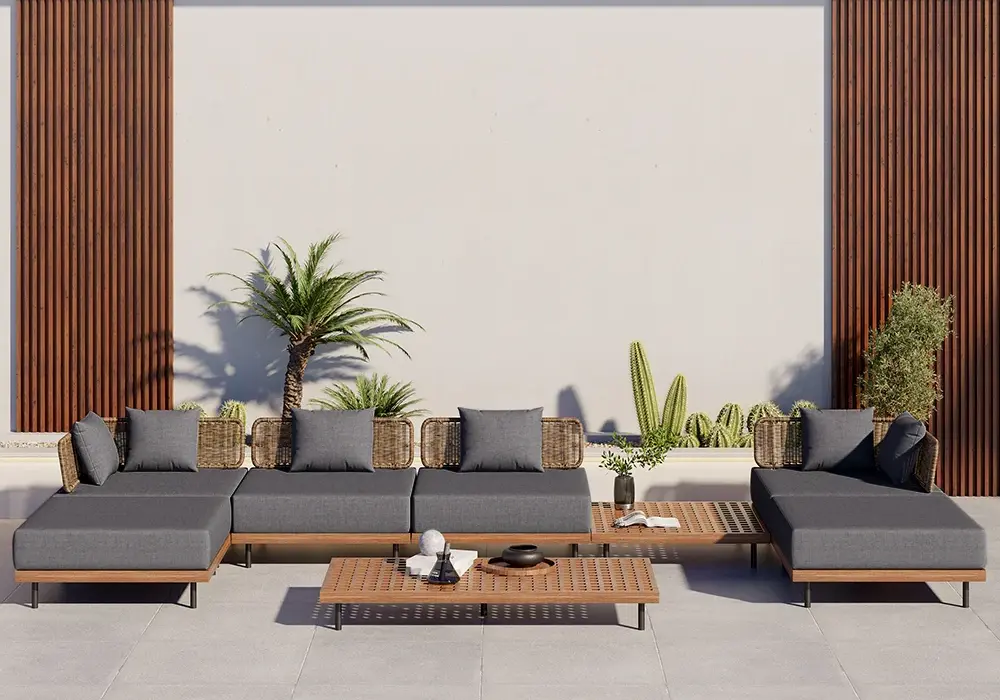
Do not attach improvised foot extensions or drill the base to fit lawn spikes. If broader supports are needed, ask the manufacturer whether a compatible accessory is available and whether it is suitable for the intended surface.
Understand What a Rug or Deck Tile Can—and Cannot—Do
An outdoor rug can make a seating area feel more defined, but it is not a structural foundation. It follows the shape of the ground and cannot correct a depression beneath a table leg. Leaving a large covering in one position can also interfere with the light reaching the grass.
Use a rug on a suitable prepared surface according to its care instructions. If you place one temporarily on the lawn for an event, remove it afterward and check for trapped moisture rather than assuming its outdoor label means it can stay there indefinitely.
Interlocking deck tiles also need the base specified by their manufacturer. Do not assume that clipping them together over grass creates a lasting patio. A tile system that needs firm, level support will still need that support in the garden.
For a permanent area, discuss paving, a properly designed deck, or another suitable surface with a qualified installer. Ask how the base will support furniture, drain water, meet the lawn edge, and avoid creating a trip point. Loose decorative gravel alone is not automatically a level foundation for narrow furniture feet.
Plan a Lawn-Edge Lounge That Is Easy to Maintain
Often the most useful compromise is a seating area beside the lawn. You keep the garden view while placing the sofa and table on a stable base. Position the lounge so people can reach it without repeatedly cutting across a damp corner of grass.
The Tevara 4-Piece Outdoor Teak & Aluminum Modular Sofa Set offers teak-and-aluminum construction with a modular layout and matching coffee table. For a lawn-edge arrangement, map the actual sofa configuration and table together. Leave a practical route around the grouping so nobody has to step over an ottoman or brush through planting to take a seat.
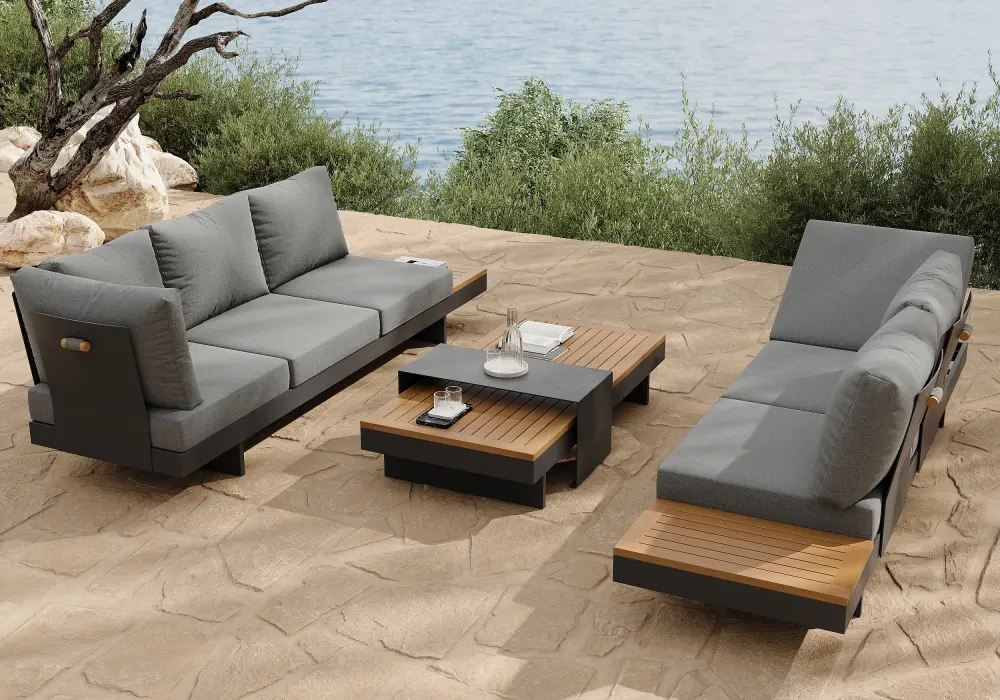
Keep the prepared area large enough for all support points. A sectional with front feet on paving and back feet on turf can become uneven as the ground changes. Include the positions you expect to use after rearranging the modules, not just the first layout shown in a photograph.
Think about mowing too. A neat lawn border is easier to maintain when the furniture sits clear of it. Avoid a layout that requires dragging a heavy table across the turf every week.
Treat Fire Pit Placement as a Separate Decision
A sofa may be suitable for temporary garden seating while its accompanying fire appliance requires a completely different surface. Never assume that a set sold together can be placed anywhere the sofa fits.
The 4-Piece Modular L-Shaped Teak Sectional Outdoor Sofa Set with Fire Pit includes a propane fire pit alongside modular seating. Plan it as a fire appliance installation as well as a lounge arrangement. Confirm the exact model’s approved supporting surface, required clearances, fuel-cylinder position, and hose route before use.
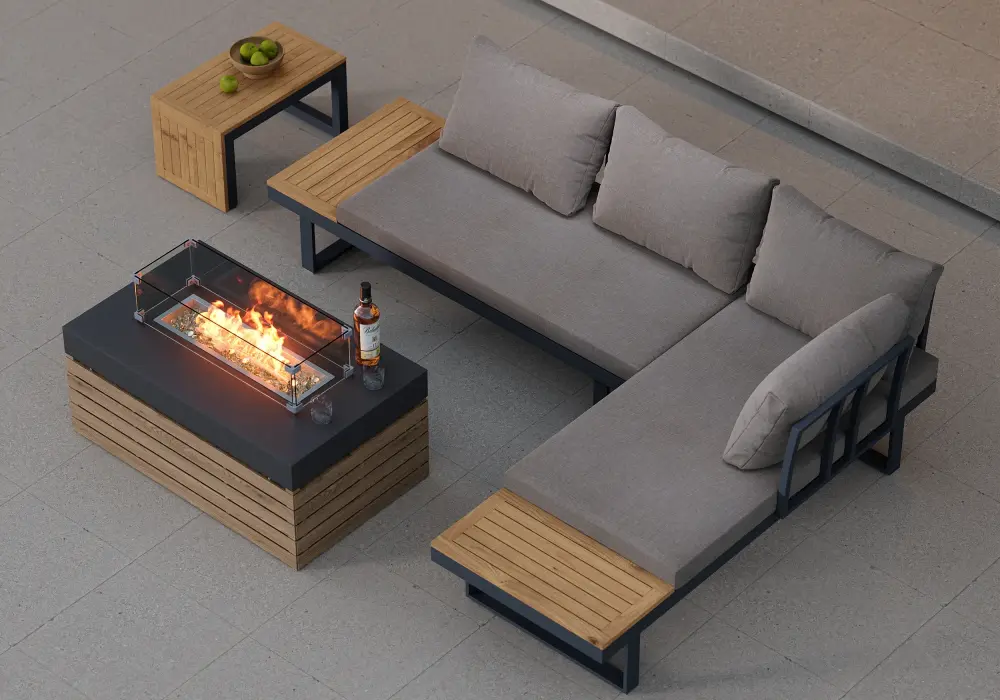
Do not use the fire pit on grass, rugs, decking, or other unverified surfaces unless the manufacturer explicitly permits the installation and all required precautions are followed. A glass wind guard or improvised slab does not replace the manufacturer’s requirements. Keep the fuel system clear of walkways and follow the product manual and local fire restrictions.
Follow a Simple Setup and Reset Routine
For permitted short-term seating, use this routine:
- Check the ground after the most recent rain or irrigation, not only when you first plan the gathering.
- Mark the sofa, table, and access route, keeping every support point within the suitable area.
- Move pieces with enough help to avoid dragging them or twisting the frame.
- Fit the supplied connectors and check for rocking before anyone sits down.
- Recheck stability during use if the weather changes or a leg begins to settle.
- Remove the furniture afterward, brush away soil as the care instructions allow, and inspect the lawn.
If the same spot repeatedly becomes rutted or muddy, change the plan. Adding more accessories over a failing base is unlikely to make the location easier to use.
Choose the seating arrangement you want, then give it an appropriate foundation. Before ordering, compare each set’s full dimensions and care requirements with the surface you can provide.
Frequently Asked Questions
Will patio furniture kill the grass underneath?
It can damage or thin the lawn if it blocks light, compresses the ground, or concentrates traffic in one place. The result depends on the turf and conditions. Remove temporary furniture after use and inspect the area rather than relying on a fixed “safe” duration.
Can I leave a sectional on the lawn all summer?
A prepared base is a better plan for a sectional that will stay in one place. Long-term placement makes it harder to mow, inspect the ground, and keep every module evenly supported. Check the manufacturer’s placement requirements before deciding.
Do furniture leg cups solve sinking on grass?
They may distribute a load differently, but their suitability depends on the furniture and ground. They do not correct wet soil, slopes, or drainage problems. Use only compatible supports and stop using the setup if any part sinks or rocks.
Is artificial grass better for outdoor furniture?
Artificial turf still needs a suitable underlying base and appropriate protection against concentrated loads. Check the turf installer’s and furniture manufacturer’s guidance. Artificial grass is also not automatic approval for placing or operating a fire appliance.
Should I move furniture before watering the lawn?
For a temporary setup, moving it away before irrigation keeps you from leaving loaded seating on newly softened ground and makes coverage easier to manage. Wait until the area is firm again before returning furniture, and check the condition beneath each support.