

Plan Christmas wall decor by choosing one clear focal area, coordinating it with the room's lighting, and using fixing methods appropriate to the actual surface. Explore suitable wall decor when a lasting room update is needed, then keep seasonal additions removable and easy to maintain. Mirrors, artwork, and light fixtures already provide strong shapes. A holiday arrangement can build around them without attaching decorations to every frame or fitting or making the wall difficult to use.
Table of Contents
Read the wall as part of the whole room
Stand at the doorway and identify what already draws attention. A mirror, artwork, television, or large light fitting may establish the room's visual centre. Decide whether the seasonal display should support that feature or create a quieter secondary area elsewhere.
Connect the wall treatment with the furniture beneath it. A console or sideboard can provide a stable display surface, while the wall feature supplies height. This relationship often works better than adding a dense collection of small hanging pieces around an already substantial object.
Choose a limited palette that relates to the room. Repeat a colour or finish from the tree, dining table, or textiles. The wall does not need to contain every seasonal material used in the home. A few connected details can create a clearer result than several unrelated arrangements.
Christmas Wall Decor Ideas You Can Style Without Damaging Walls
The best Christmas wall decor ideas use a few recognizable seasonal shapes, repeat them once or twice, and leave open wall around them. Choose one of the approaches below and keep the rest of the room quiet.
A pine-and-candle console vignette. Lay a fresh or faux pine garland along the length of a console, then set two or three candlesticks of different heights in the greenery. Use flameless candles if the arrangement sits near the wall or any fabric. The wall above stays clean, while the greenery adds the scent and colour people expect at Christmas.
A paper star or snowflake grouping. Cut stars or snowflakes from heavy white or kraft paper in three sizes and arrange them in a loose cluster on a wall section that has no mirror or artwork. Fix each piece with a removable product rated for your wall finish and test a small area first. The paper is light, and the result reads as seasonal without covering the wall in colour.
A ribbon drop on a door or open wall. Hang one wide velvet or satin ribbon in deep red, forest green, or champagne from a single secure fixing, and let it fall in a straight line. Add a small bow at the top if you like. One vertical line works well on narrow walls and in hallways, where a full wreath would project too far.
A single oversized wreath. Choose a natural eucalyptus, fir, or dried-orange wreath and give it a dedicated hanging point. Place it where it will not catch when a door opens. A wreath this size needs no companions.
A mini tree or pine branch display below the wall feature. Set a small potted tree or a tall vase of cut branches on the sideboard. Add a few ornaments in the finish you want to echo, such as gold, clear glass, or matte white. Height here draws the eye upward and connects the display to the wall without touching it.
A framed seasonal print. Swap one existing piece of artwork for a winter landscape, a botanical sprig, or a simple typographic print. This is the least invasive of all the ideas, and it can be stored away in January.
For palette, red and green with warm wood feels traditional. White, silver, and glass feels cooler and more modern. Gold, cream, and dried natural textures suit a calm, Scandinavian look. Pick one and repeat it.
Use mirrors without treating their frames as hooks
The White and Gold Geometric Wall Mirror gives you a lasting wall feature whose angular frame suits a restrained Christmas scheme. Its gold finish pairs naturally with warm metallics, so you can build the seasonal layer on the surface below rather than on the frame. Place a pine garland on the console and add gold or champagne baubles, a pair of white taper candlesticks, and a small bowl of clear glass ornaments. The geometric lines of the mirror then frame these soft, organic shapes, and the reflection doubles the glow of the candles in the evening. For a lighter touch, lean a few paper stars or a short strip of velvet ribbon against the base of the mirror on the console, never on its edge. Check its dimensions, weight, and mounting guidance before styling, and keep seasonal additions off the frame.
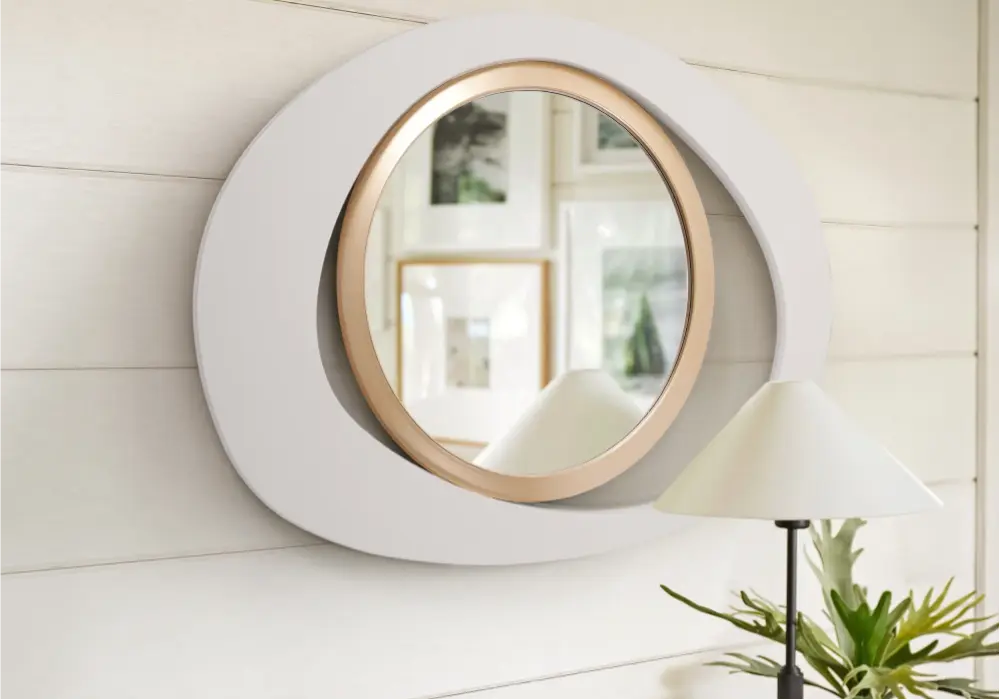
Look at the reflection from the seats and doorway. The mirror may emphasize a pleasing focal point or repeat a crowded area. Adjust the surrounding display so the reflection supports the room. Adding more objects beside a mirror can multiply visual clutter rather than solve it.
A nearby tabletop arrangement can carry the seasonal detail without attaching anything to the frame. Keep its height and width related to the mirror, but do not assume they must match exactly. The relationship should feel balanced from the actual viewing positions.
If you want to hang a separate seasonal element, give it its own appropriate mounting method. A frame that securely holds the mirror is not automatically designed to carry another object. Follow the manufacturer's guidance and obtain suitable installation advice when the requirements are unclear.
Coordinate chandeliers and pendant lights through the surrounding decor
The Cloude Six Light Glass Chandelier brings clear glass and soft light, which suit both a classic red-and-green table and a pale winter one. Instead of adding anything to the fixture, echo its glass below. Set a runner of pine and eucalyptus along the centre of the table, add glass hurricanes with flameless candles, and use clear or frosted ornaments in a shallow bowl. At each place setting, a sprig of rosemary or a small pinecone on a cloth napkin picks up the seasonal colour without crowding the overhead view. In a living room, the same idea works with a few glass ornaments on a side table beneath the light. Keep all decorative material clear of the lamps, bulbs, and electrical parts, and follow the manufacturer's instructions for dimensions, installation, and clearances.
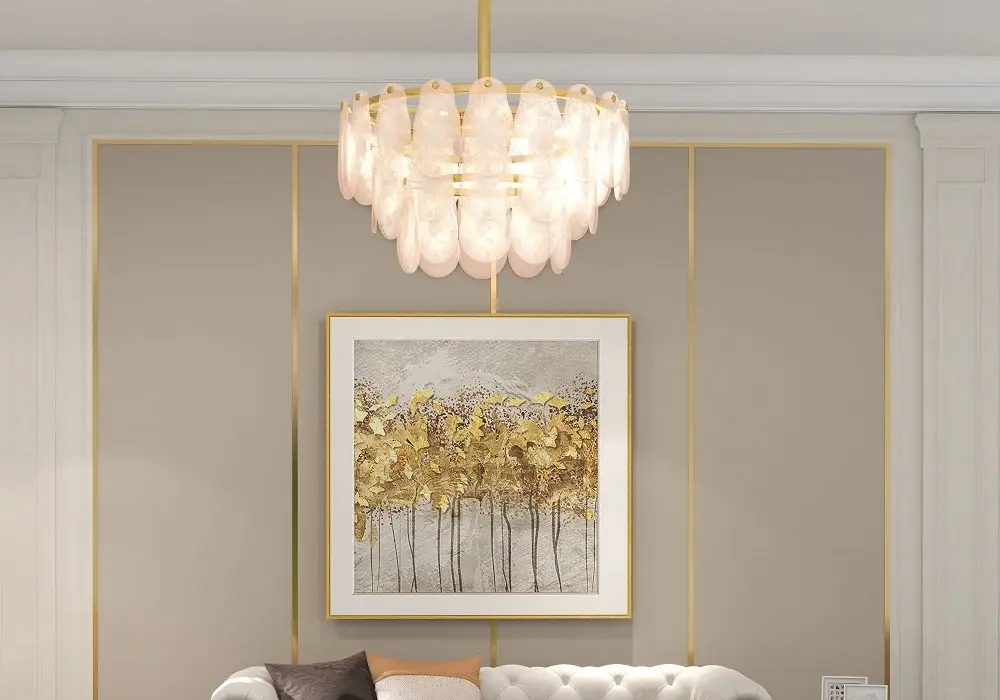
You do not need to attach ornaments or greenery to a chandelier to connect it with Christmas decor. Repeat a compatible finish in the table setting or a suitable decorative object below. The fixture can contribute light and shape while the seasonal change remains on another surface.
Keep lamps, bulbs, electrical components, and required clearances free of decorative material. Do not infer that a fixture stays cool enough for attachments because it uses a particular light source. Follow the actual manufacturer's instructions instead of relying on appearance or a styling photograph.
For a pendant above a dining table, review the room as a complete composition. The centrepiece and fixture should not compete for the same view. A lower tabletop arrangement can let the overhead form remain clear while preserving conversation across the table.
Choose wall attachments according to surface and load
Identify the actual wall finish and the item you want to mount. Painted walls, wallpaper, masonry, tile, and other surfaces can require different methods. A product described as removable is not universally appropriate for every finish or weight.
Follow the fixing manufacturer's instructions for preparation, load, application, and removal. Do not substitute a different use because a decoration appears light. The full installed arrangement, including ribbon or other attachments, determines what the fixing must support.
Check the location for everyday use. Keep switches, controls, doors, and necessary equipment accessible. A hanging detail should not project into a narrow route or catch when a door opens. Consider how people carry bags or move furniture through the space as well as how it looks while empty.
When you cannot establish an appropriate mounting method, choose a stable surface display instead. A seasonal arrangement does not need to be attached to the wall to relate to it. This can be a particularly useful approach in rented homes or where the finish is delicate.
Adapt the ideas for living dining and bedroom walls
In a living room, let the main seating view guide the arrangement. A large wall feature may need only a small seasonal echo on a nearby table. Avoid making the wall so busy that it competes with the tree, TV, and other major room elements at once.
In a dining room, check the wall together with the seated view and service routes. A sideboard display can connect the wall feature to the table while leaving the dining surface quieter. Keep the serving area useful and choose stable objects suited to the location.
In a bedroom, use a lighter treatment. Repeat a colour from the bedding or one small decorative detail near an existing wall feature. Keep bedside routines and normal lighting easy to use. A quieter scheme can feel seasonal without requiring the visual density of a living room display.
For a small wall, reduce the number of elements before trying to shrink every object. One clear feature with surrounding open space can look more deliberate than several miniature arrangements. Check how the treatment reads from across the room, not only from immediately beside it.
Review the room under its normal lighting
Begin with the lighting you use for ordinary activities. Then decide whether a decorative light treatment adds something useful. An arrangement should remain understandable when seasonal lights are off. Avoid depending on a very dark room to hide an overcrowded or awkward composition.
NIST's holiday guidance recommends checking decorative lights for damage and using appropriately tested products. Follow each product's intended location and instructions. Keep cords and controls accessible and avoid routing electrical items through places where doors or furniture can interfere.
Do a final practical check. Open doors, use switches, sit at the table or sofa, and inspect reflections. Remove a detail if it makes those actions harder. The wall and lighting scheme should contribute to a comfortable room rather than require constant special handling.
Frequently Asked Questions
How do I hang Christmas decorations without damaging walls?
Choose a fixing method intended for the actual surface and load, then follow its preparation and removal instructions. No removable product is suitable for every finish. If you cannot confirm compatibility, use another display location rather than improvising.
How do I decorate a wall mirror for Christmas?
Coordinate nearby accents with the mirror's shape and finish. You can place seasonal details on a suitable surface below without attaching them to the frame. Preserve the mirror's mounting requirements and do not add unsupported hanging weight.
Should I attach decorations to a chandelier?
Only consider uses expressly supported by the fixture's manufacturer. A safer styling approach is to coordinate the surrounding table or room decor while leaving the fixture unobstructed. Appearance does not establish acceptable heat or electrical clearances.
What works on a small wall?
Choose one main feature and leave visible space around it. Repeat a colour or material elsewhere in the room instead of adding several separate hanging groups. Keep switches, doors, and walking routes usable.
How do I coordinate wall decor and lighting?
Review them from the room's normal seats and entrances. Let one feature lead visually and keep nearby details quieter. Repeat a finish or colour, and check the result with the ordinary lighting on as well as any seasonal lighting.