

The right coffee table height is less about following a single furniture standard and more about creating a comfortable relationship between the table, sofa, seating position, and living room layout.
For most U.S. living rooms, a coffee table around 16–18 inches high works well with a conventional sofa seat that is approximately 17–19 inches high. A useful starting rule is to keep the tabletop level with the sofa seat or about 1–2 inches lower. This keeps drinks, books, remotes, and trays within easy reach without making the table feel visually taller than the seating.
However, the ideal height changes when you use a low-profile sectional, chaise, recliner, sofa bed, or ottoman. The table also needs enough space from the sofa for comfortable legroom and movement.
Seating Type | Typical Seat Height | Suggested Coffee Table Height |
Standard sofa | 17–19" | 16–18" |
Low-profile sofa | 14–17" | 14–16" |
Sectional | 17–19" | 16–18" |
Reclining sofa | 18–20" | 17–19" |
Sofa with chaise | 16–19" | 15–18" |
Sofa bed | 17–19" | 16–18" |
Ottoman used as table | 16–19" | Around seat height |
The best choice therefore starts with your actual sofa, not a generic coffee table measurement.
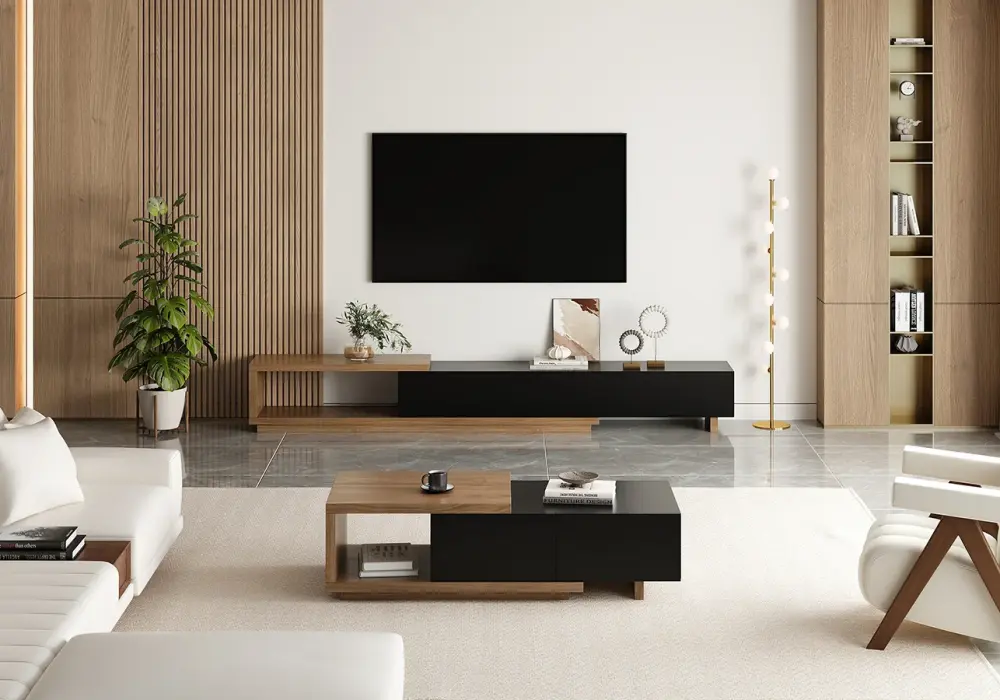
Source Homary
Standard Coffee Table Heights & Sofa Compatibility
For a conventional living room, 16–18 inches is the most useful starting range for coffee table height. Many tables fall within or close to this range because it creates a natural relationship with common sofa seat heights.
The Seat-Height Rule
Measure from the floor to the top surface of the sofa seat cushion, not the top of the sofa frame.
Then use this simple formula:
Ideal coffee table height = sofa seat height to approximately 1–2 inches lower
For example, if your sofa seat is 18 inches high:
18" sofa seat − 1–2" = 16–17" coffee table
A table that is noticeably taller than the sofa can make the seating area feel crowded and may require you to lift your arm higher every time you reach for a drink. A table that is dramatically lower can look intentional in a contemporary room, but it may be less convenient for serving or everyday use.
Inches to Centimeters
Inches | Centimeters |
14" | 35.6 cm |
15" | 38.1 cm |
16" | 40.6 cm |
17" | 43.2 cm |
18" | 45.7 cm |
19" | 48.3 cm |
20" | 50.8 cm |
Special Seating Situations
A low-profile modern sofa may have a seat height of only 15–16 inches. Pairing it with an 18–20-inch coffee table can make the table look disproportionately tall. In this situation, a 14–16-inch table often creates a more cohesive profile.
A sectional with a standard seat height usually works with the same 16–18-inch range, but the table's shape becomes important. A rectangular or oval table can work well with an L-shaped sectional because it follows the open interior of the seating arrangement.
For a reclining sofa, measure the closed seating position first. You normally want the coffee table to remain useful while the sofa is upright. The table should not interfere with the footrest when it is extended, so its position matters just as much as its height.
A sofa bed also benefits from a conventional table height because the coffee table may need to be moved when the sleeper function is used.
Seated Reach, Ergonomics & Serving Clearance
Height is only one part of coffee table ergonomics. The table also needs to sit at a comfortable horizontal distance from the sofa.
A practical starting point is approximately 14–18 inches between the sofa's front edge and the coffee table. This creates enough room for your legs while keeping the tabletop close enough for everyday reaching.
Think of the arrangement as three connected measurements:
Sofa seat height → coffee table height → sofa-to-table distance
If one measurement is wrong, the whole seating experience can feel awkward.

Source Homary
Keep Everyday Items Within Easy Reach
A coffee table is normally used while seated, so its most important job is to make common items accessible without forcing users to lean excessively forward.
For everyday living, consider whether someone seated on the sofa can comfortably reach:
- A glass or coffee cup
- A remote control
- A book or tablet
- A serving tray
- A phone
- Small decorative objects
A slightly lower tabletop can make the room feel relaxed and contemporary, but if the table is intended for frequent dining or serving, an excessively low surface may be inconvenient.
Allow Room for Movement
The recommended 14–18-inch sofa-to-table gap is a useful starting point, but your actual room may require adjustment.
A compact living room may need the table slightly closer to the sofa to preserve circulation. A large sectional may benefit from a larger gap so people can enter and exit the seating area more easily.
Do not measure only between the furniture frames. Check the actual usable legroom, including thick cushions, sofa skirts, recliner mechanisms, and ottomans.
For households with children or older adults, rounded table corners and stable construction may matter more than achieving an exact height. A slightly different dimension that improves safety and reach can be preferable to following a standard measurement rigidly.
For wheelchair users or people with limited mobility, the table should be evaluated as part of the entire seating and circulation arrangement. The relevant question is not simply whether the tabletop is the “correct” height, but whether the person can approach and reach the table without an obstruction. Accessibility requirements can vary by room type and application, so a specific accessible installation should be checked against applicable local standards.
Measuring, Leveling & Templates Before You Buy
The simplest way to choose the right coffee table height is to measure your existing furniture before shopping.
Step 1: Measure the Sofa Seat
Place the tape measure on the floor and measure vertically to the top of the seat cushion.
For example:
Floor → sofa cushion = 18"
Then establish a target table height:
18" − 1" = 17"
Your target would therefore be approximately 17 inches.
Step 2: Measure the Existing Coffee Table
Measure from the floor to the highest usable point of the tabletop. If the table has a thick glass, stone, or wood top, measure to the actual upper surface rather than the frame underneath.
This helps identify whether your current table feels uncomfortable because of its height or because of another dimension, such as its distance from the sofa.
Step 3: Test the Height Before Purchasing
If you are deciding between two coffee tables, create temporary height samples.
For example, stack stable books or boxes beneath a board to approximate:
- 15"
- 16"
- 17"
- 18"
Do not use an unstable setup for actual use. The purpose is simply to sit on the sofa and test the visual relationship and reach.
Step 4: Mark the Floor
Use painter's tape to mark the proposed coffee table footprint.
This lets you evaluate:
- Table length
- Table width
- Sofa clearance
- Walkway clearance
- Clearance from chairs
- Relationship to a rug
This is particularly useful when shopping online because a product's listed dimensions can look deceptively small on a screen.
A Simple Height Formula
Use:
Target table height = sofa seat height − 0 to 2 inches
Example:
19" sofa seat − 1" = 18" target table
For a low-profile sofa:
16" sofa seat − 1" = 15" target table
These are starting points rather than absolute rules. If the coffee table has a lift-top mechanism, thick tabletop, or another functional feature, judge the height based on the table's actual usable surface.
Check Uneven Floors and Rugs
A thick rug can slightly change how furniture feels because it raises the effective floor level beneath both the sofa and table. Measure with the rug installed if the table will permanently sit on it.
On an uneven floor, use a small level to check whether the tabletop is stable. Adjustable feet or appropriate furniture glides can help correct minor variations without changing the overall table design.
Design Choices: Legs, Proportions, Storage & Safety
Once the basic height is correct, construction and proportions determine whether the coffee table actually works in the room.
Table Legs Change the Visual Height
Two tables with the same 17-inch physical height can look completely different.
A table with slender tapered legs creates more visible space beneath the top, making the room feel lighter. A low pedestal or solid base visually anchors the table and can make it appear heavier.
Short, substantial legs tend to reinforce a grounded, traditional look. Slim metal legs often suit modern or mid-century interiors.
This means you should evaluate both:
Actual height + perceived height
when comparing designs.
Match Table Length to the Sofa
As a general proportion guideline, a coffee table often looks balanced when its length is approximately one-half to two-thirds of the sofa's length.
For example, an 84-inch sofa may pair comfortably with a table around 42–56 inches long, depending on the room and seating configuration.
A sectional requires more flexibility. Instead of matching the longest sofa section, look at the open seating area around the table.
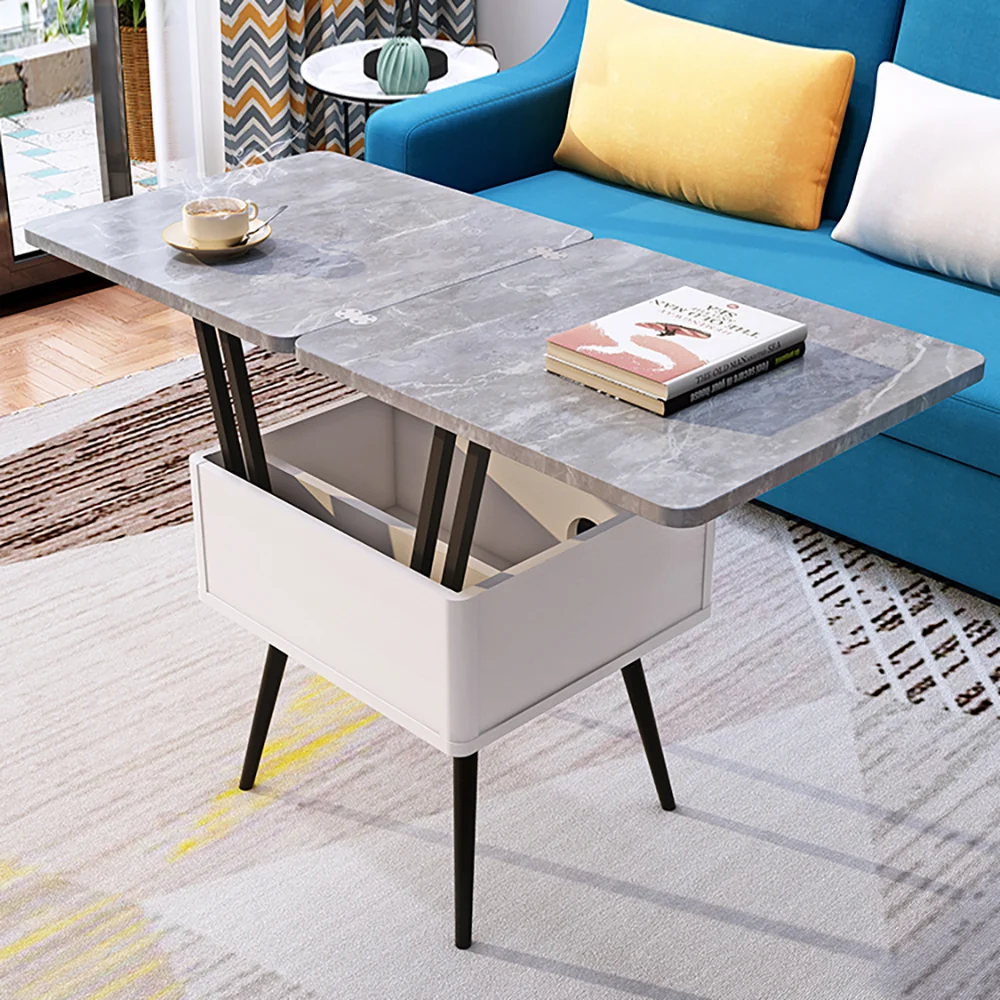
Source Homary
Storage Changes Function
A coffee table with drawers, a lower shelf, lift-top storage, or hidden compartments can be valuable in smaller living rooms.
However, every storage feature changes the usable clearance below the tabletop.
A lower shelf may reduce the space available for baskets or a person's feet. A lift-top table may require additional clearance when the top is raised.
Therefore, compare the table in both:
Closed position → Everyday use
and
Open position → Maximum functional footprint
before purchasing.
Safety for Children and Pets
For homes with young children or active pets, prioritize:
- Rounded or softened corners
- Stable, wide bases
- Strong joints
- A low center of gravity
- Adequate weight for the room
- Minimal sharp protrusions
A heavier table is not automatically safer, but a stable base and sensible weight distribution can reduce the likelihood of tipping.
Glass can create a lighter visual appearance, while wood, engineered wood, and stone offer different combinations of weight, durability, and maintenance requirements. Choose based on how the table will actually be used rather than appearance alone.
DIY Builds, Adjustable Solutions & Coffee Table Buying Guide
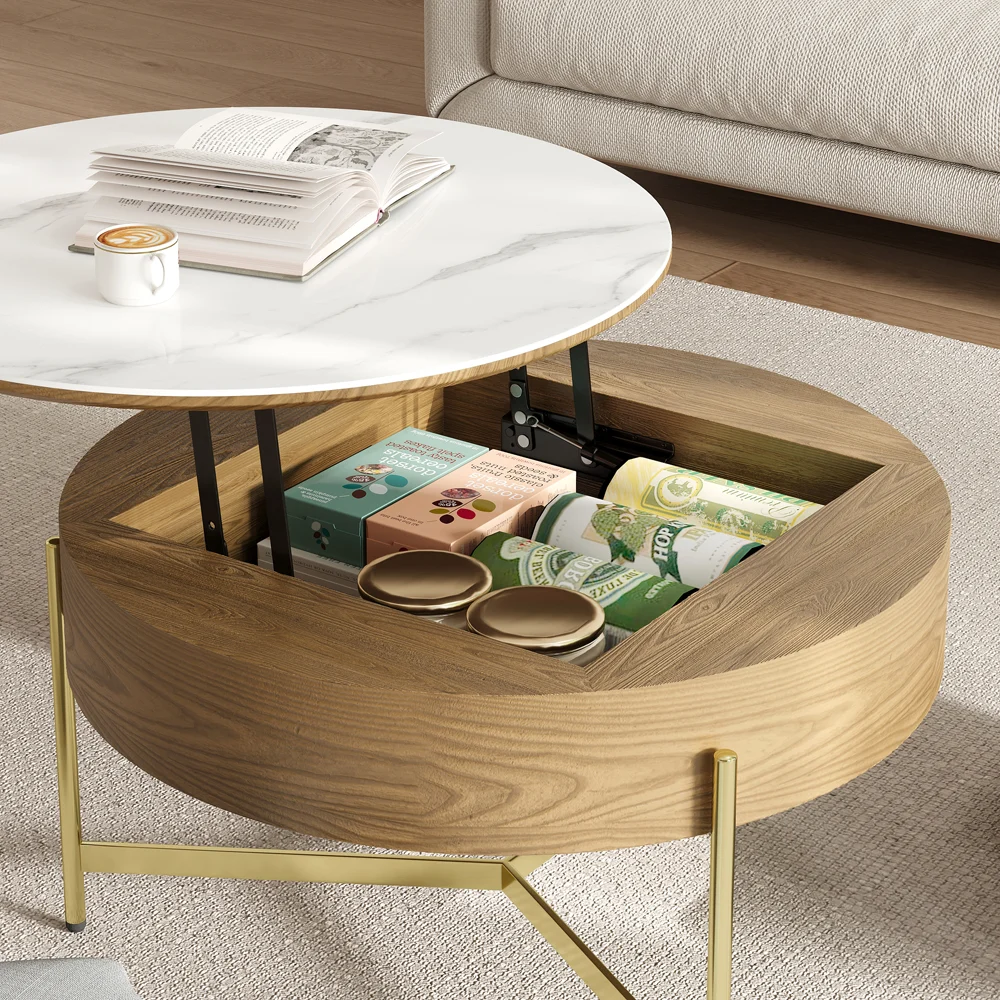
Source Homary
If a standard 16–18-inch coffee table does not work for your seating arrangement, adjustable and multifunctional designs can provide more flexibility.
Table Type | Typical Height Strategy | Advantages | Trade-Offs |
Fixed-height table | 16–18" | Stable and simple | Least flexible |
Lift-top table | Around sofa height when closed | Useful for dining/work | More mechanisms and weight |
Adjustable-height table | Variable | Adaptable to multiple uses | Usually more expensive |
Nesting tables | Different heights | Flexible for guests | Smaller individual surfaces |
Ottoman | Similar to seat height | Soft, multifunctional | Needs a tray for stable drinks |
Fixed-Height Tables
A fixed table is usually the simplest choice when your sofa arrangement is stable. It has fewer moving parts and allows you to focus on proportions, materials, and storage.
Lift-Top and Adjustable Tables
A lift-top table makes sense when the living room also functions as a workspace or casual dining area. The closed height should still work with the sofa, while the raised position can bring the surface closer to the user's seated working height.
An adjustable-height table is useful when several household members use the room differently. However, inspect the lifting mechanism, stability at maximum height, locking system, and manufacturer's stated load capacity before purchasing.
Nesting Tables
Nesting tables are particularly useful in small spaces. Keep the larger table near the sofa for everyday use and separate the smaller tables when guests arrive.
The trade-off is that each individual surface is smaller than a conventional coffee table.
DIY Coffee Table Dimensions
For a basic rectangular DIY coffee table, a practical starting point might be:
Component | Example Dimension |
Overall height | 16–18" |
Length | 42–56" |
Width | 22–30" |
Clearance from sofa | 14–18" |
Tabletop thickness | About 1–2" |
Lower shelf clearance | Adjust according to storage needs |
These dimensions should be adapted to the specific sofa and room rather than treated as a universal blueprint.
For DIY construction, prioritize a rigid frame, properly secured joints, stable legs, and an evenly distributed tabletop load. If using heavy stone or thick hardwood, account for the additional weight when selecting the base and hardware.
What to Check Before Buying
Before ordering a coffee table, compare:
- Height: Is it level with or slightly below the sofa seat?
- Distance: Can people reach the tabletop without leaning excessively?
- Length: Does it visually relate to the sofa without overwhelming it?
- Width: Does it leave enough room for circulation?
- Clearance: Can recliners, ottomans, or chaise sections operate normally?
- Storage: Will shelves or drawers remain useful after seating is positioned?
- Stability: Does the base provide enough support for the tabletop and everyday use?
- Material: Is the surface appropriate for drinks, meals, children, pets, and daily wear?
The best coffee table is therefore not necessarily the table with the most features. It is the one whose dimensions make the entire seating arrangement work better.
Make Coffee Table Height Part of the Whole Living Room Plan
Choosing the right coffee table height starts with one simple measurement: the height of your sofa seat.
For most conventional sofas, 16–18 inches is a reliable starting range, with the tabletop generally level with the seat or about 1–2 inches lower. From there, evaluate the sofa-to-table distance, table proportions, circulation, storage, and any special functions such as reclining or lift-top mechanisms.
Before purchasing, use painter's tape to mark the table footprint and test the height against your actual sofa. This small step helps you evaluate both comfort and proportion before committing to a piece of furniture.
If you are furnishing a new living room, measure the sofa, seating clearance, rug, and available circulation space together. Treat the coffee table as part of the entire living-room system, rather than as an isolated decorative object.
Ready to Choose Your Coffee Table?
Save your sofa seat height, preferred table height, maximum table footprint, and required clearance before shopping. With those four measurements in hand, you can compare fixed, lift-top, nesting, or adjustable designs much more confidently.
The goal is simple: a coffee table that looks proportionate, stays within easy reach, and supports the way your household actually uses the living room.
FAQ
What is the ideal coffee table height relative to my sofa seat height?
For most sofas, the coffee table should be level with the sofa seat or approximately 1–2 inches lower. With a typical 17–19-inch sofa seat, a 16–18-inch coffee table is a useful starting range. Low-profile sofas may require a shorter table, while unusually tall seating may work better with a slightly taller design.
How far should a coffee table be from the sofa for comfortable reach and serving?
A practical starting point is approximately 14–18 inches between the sofa and coffee table. This provides enough legroom while keeping drinks, books, trays, and other everyday items within comfortable reach. Adjust the distance based on the room's circulation and the sofa's shape.
Can I use an ottoman instead of a coffee table, and what height should it be?
Yes. An ottoman can function as both a footrest and a casual coffee table. A height close to the sofa seat—often around 16–19 inches—can create a cohesive arrangement. If you regularly place drinks or serving trays on it, add a stable tray or choose an ottoman with a firmer, flatter surface.
How do I accurately measure and level a coffee table on uneven floors or rugs?
Measure from the actual floor or rug surface to the top of the tabletop. If the table sits on a thick rug, measure with the rug in place. Check the tabletop with a small level and use compatible adjustable feet or furniture glides to correct minor unevenness.
Which coffee table heights work best for different design styles like mid-century, modern low-profile, or farmhouse?
Mid-century rooms often work well with approximately 16–18-inch tables, particularly designs with tapered legs. Modern low-profile sofas usually benefit from shorter tables around 14–16 inches. Farmhouse interiors can accommodate slightly more substantial tables, but the final height should still relate to the sofa seat rather than the style label alone.
Are adjustable or nesting coffee tables a good option for families with kids, pets, or small spaces?
They can be useful when flexibility is more important than simplicity. Nesting tables are effective in small rooms because they provide additional surfaces when needed, while lift-top or adjustable tables can support working and dining. For homes with children or pets, prioritize stable bases, secure mechanisms, rounded edges, and a low center of gravity.
What DIY dimensions, materials, and construction tips ensure a stable and safe coffee table?
Start with a height of approximately 16–18 inches, then adapt the length and width to your sofa and room. A rigid frame, securely fastened joints, properly supported legs, and an evenly distributed tabletop load are more important than following one universal dimension. Heavy materials such as thick hardwood or stone require a base designed specifically for their weight.