

How to choose a dining table starts with measuring your room, determining how many people you typically seat, and checking how much space the table needs when fully in use. Leave enough clearance for chairs to slide out comfortably and for people to walk behind seated guests. Once these practical requirements are clear, consider the table’s shape, base, material, and extension options. Style matters, but the right fit should come first.
One of the most common mistakes is choosing a dining table based on seat count alone. A table designed for six may technically accommodate six chairs but leave little room to move once everyone is seated. Another table with the same capacity may work much better thanks to rounded corners, a pedestal base, a narrower tabletop, or an extension leaf that stays tucked away when not needed. The best dining table is one that fits your space, supports your everyday routine, and adapts to how you actually entertain.
Table of Table
Measure the Usable Dining Zone
Record the room's length and width, then subtract space that is not truly available: door swings, radiators, cabinets, sideboards, kitchen circulation, and major walkways. Measure from the edge of any projecting furniture rather than from the wall behind it.
Next, mark the proposed table footprint with painter's tape. Place chairs or boxes around the outline and pull them back as if people were sitting down. Walk through the room carrying a plate. Open nearby cabinets and doors. If the table extends, repeat the test at full size.
Houzz's dining table guide recommends planning circulation around the table and considering how shape and base affect seating. Its published measurements can be useful reference points, but a taped floor test in your own room is the final check.
Start With Everyday Seating, Then Plan the Peak
Buy for the number of people who dine together regularly. Occasional guests can be handled with an extension leaf, an extra table, flexible chairs, or another seating area. A permanently oversized table makes every normal day harder in exchange for a few events.
Check the manufacturer's seating recommendation and compare it with chair width. Armchairs need more side-to-side room than slim armless chairs. A pedestal base may free up leg space, while corner legs can limit where chairs sit. If diners need extra mobility space, increase the clearance and avoid cross braces that obstruct feet.
Choose a Shape That Follows the Room
Round and Oval Tables
Round tables work well in square rooms, breakfast areas, and compact layouts because there are no corners projecting into circulation. They encourage conversation and can accommodate an extra chair in some situations. A pedestal base often improves flexibility. Large round tables, however, can place the center out of easy reach.
Oval tables soften a long room while retaining useful length. They can offer a similar seating pattern to a rectangle with less visual weight at the ends. Check the narrowest points of the oval to make sure place settings remain comfortable.
Rectangular Tables
Rectangular tables suit long rooms and are easy to align with walls, rugs, pendants, and sideboards. They provide clear end positions and can scale to larger groups. In a narrow space, control the top width and confirm that chairs on both long sides can be used without blocking the main path.
Square Tables
A square table creates an intimate, balanced arrangement in a square room. It can become inefficient when enlarged because the center gets hard to reach. An extendable square-to-rectangle design can provide a useful compromise for households that host occasionally.
Compare Bases as Carefully as Tops
Table legs affect chair placement. Four corner legs are structurally familiar but can trap end chairs or conflict with wider seats. Trestle bases may offer open corners but introduce a stretcher where feet go. Single pedestals maximize perimeter flexibility on many round tables, though the base footprint can still restrict knees. Double pedestals support longer tops and may free the corners.
Look at the underside dimensions, not just the product photograph. Measure the clear distance between supports and the height from floor to apron. If possible, pair the actual chairs with the table before purchase or compare both dimension drawings.
Select Material for the Household
Solid wood can be repaired and refinished, but its appearance changes with light, humidity, heat, and use. Veneered or engineered constructions can deliver a consistent surface and stable shapes; care instructions still matter. Stone and sintered surfaces resist many everyday marks but can be heavy and may chip at edges. Glass keeps sightlines open but shows fingerprints and requires attention to edge safety and base stability.
Finish samples are more useful than screen colors. View a sample near your flooring, cabinetry, and natural light. Ask how to clean the surface, what products to avoid, and whether hot dishes, spills, or standing moisture need special protection. For a home with children or frequent entertaining, ease of wiping and edge shape may matter more than a delicate finish.
Decide Whether an Extendable Table Is Worth It
An extension is useful when the room can support the larger configuration and the household will use it. Check four details:
- where the leaf is stored;
- whether one person can operate the mechanism;
- how the base and leg positions change;
- whether the expanded table still leaves workable circulation.
Measure the closed and open lengths. Also measure chair storage when the extra seats are not in use. A smooth extension mechanism does not solve a room that cannot accommodate the open table.
Product Examples for Three Different Needs
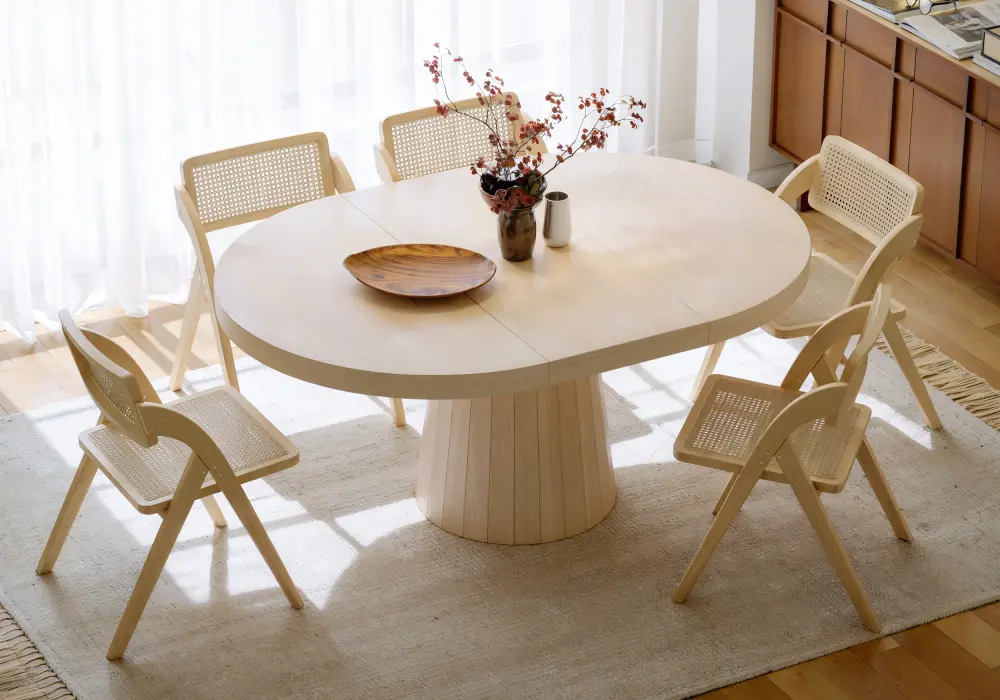
The Japandi 39-55 Inch Extendable Round-to-Oval Wood Dining Table changes from a compact round form to an oval surface and is listed for four to six seats. It suits buyers who want a softer footprint every day and more length when guests arrive.
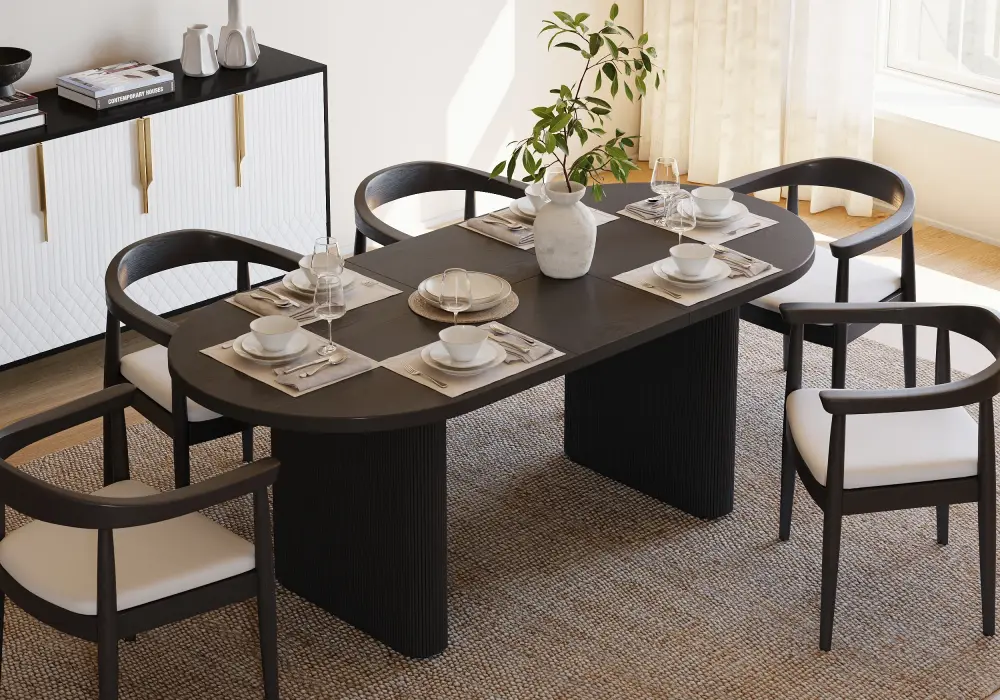
The Fluve 63-79 Inch Extendable Oval Black Dining Table offers a larger oval top, a dark finish, and a double-pedestal base. It is a candidate for a longer room where the table can remain visually substantial while its rounded ends soften circulation.
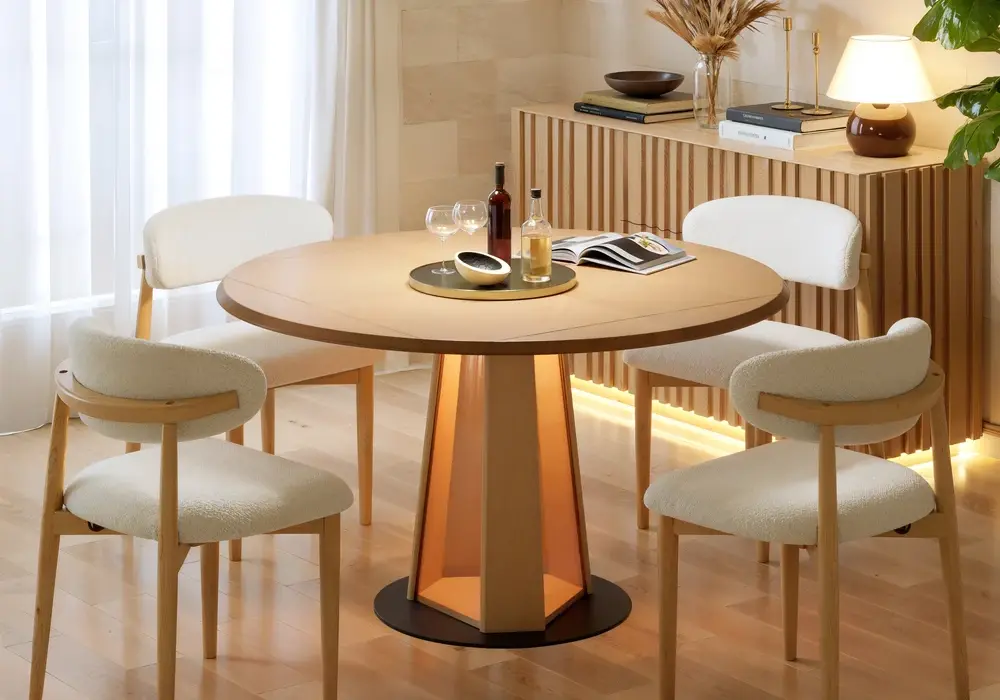
The 36–47 Inch Extendable Natural Wood Dining Table with LED Light is a stylish, space-saving choice for smaller dining areas, comfortably accommodating two to four people. Its compact round design creates an inviting setting for everyday meals, while the extendable tabletop offers extra room when guests arrive. The integrated LED lighting adds a distinctive modern touch, helping this table stand out from ordinary dining furniture.
Coordinate Chairs, Rug, and Lighting
Do not finalize the table without accounting for the objects around it. Chair arms must clear the apron if you want them to tuck in. Upholstered chairs need stain and maintenance planning. A rug should allow chairs to remain on the rug when pulled back, or the room may work better without one. Pendant lighting should align with the final table position and remain visually balanced in both closed and extended configurations.
Mixing chairs and tables can look intentional when one element connects them: repeated wood tone, consistent color temperature, related curves, or shared hardware. Avoid a near match that looks accidental. Deliberate contrast is usually easier to read.
A Purchase Checklist
Before ordering, confirm:
1. closed and extended table dimensions;
2. room clearance with occupied chairs;
3. seating capacity with your actual chair width;
4. clear space between legs or pedestals;
5. delivery path through doors, halls, elevators, and stairs;
6. assembly needs and finished weight;
7. surface care and warranty terms;
8. leaf storage and extension operation;
9. compatibility with the rug, pendant, and adjacent storage.
Frequently Asked Questions
What dining table shape is best for a small room?
Round and oval tables often ease circulation because they remove sharp corners. A compact pedestal table can also improve chair placement. The best shape still depends on the room outline, doors, walkways, and whether the table must extend.
How much space should I leave around a dining table?
Leave enough space for chairs to pull out and people to pass comfortably. Published guides provide starting measurements, but doors, cabinets, sideboards, chair depth, and household mobility needs can require more. Tape the full layout on the floor and test it physically.
Is a round or rectangular dining table more practical?
A round table can suit square or compact spaces and encourage conversation. A rectangular table often uses a long room efficiently and accommodates larger groups. Compare the base, seat positions, and circulation rather than choosing by shape alone.
Are extendable dining tables sturdy?
They can be, but sturdiness depends on construction, hardware, installation, and use. Review the manufacturer's load and assembly instructions, test the mechanism if possible, and confirm that locks, leaves, and supports engage correctly.
What material is easiest to maintain?
There is no universal winner. A sealed, smooth surface with clear care instructions is often easiest for everyday wiping. Consider stain visibility, edge durability, heat and moisture limits, repairability, and the cleaning products you already use.
Should dining chairs match the table?
They do not have to match. Coordinate proportion first: seat height, apron clearance, chair width, and room for knees. Then use a shared color, material, curve, or design period to make the combination feel intentional.
The right dining table is the one that works in its largest real configuration, supports the people you seat most often, and still lets the room function when dinner is over.