

Is your dining room table looking a little too empty, but you are not sure where to start? A thoughtfully decorated dining table can instantly make a dining room feel warmer, more polished, and more inviting. The good news is that you do not need an expensive dining set or professional styling skills to create a beautiful tablescape.
Whether you are preparing for an everyday family dinner, a weekend gathering, or a special celebration, the right combination of scale, color, texture, lighting, and tableware can transform your dining space.
In this guide, you will learn how to decorate a dining room table from start to finish. We will cover centerpiece sizing, seasonal color palettes, centerpiece height and balance, everyday versus formal table settings, and budget-friendly DIY ideas under $150. You will also find practical measurements, styling formulas, and easy ideas you can recreate at home.
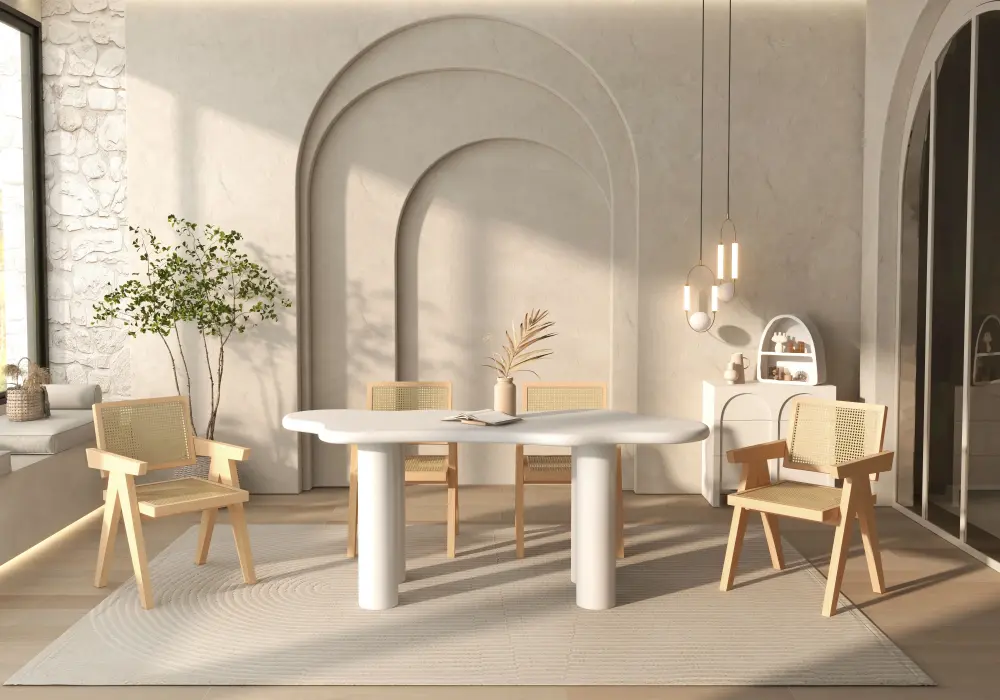
Japandi Style Irregular Wood Dining Table - Homary Pick
Table of Contents
How to Size a Centerpiece for Any Dining Table
When decorating a dining table, scale is one of the most important factors. A centerpiece that is too small can disappear visually, while one that is too large can make the table feel crowded and interfere with conversation.
As a general rule, aim for a centerpiece that occupies approximately one-third to one-half of the table's length. Its overall width should usually stay within about 40% of the usable table width, leaving enough room for place settings, serving dishes, and comfortable movement.
For example, on a 72-inch rectangular dining table, a centerpiece around 24–36 inches long can create a balanced focal point. On a round table, a compact arrangement centered on the tabletop often works better than a long runner-style arrangement.
Dining Table Shape | Suggested Centerpiece | Styling Approach |
Rectangular | 1/3–1/2 of table length | Linear arrangement or grouped objects |
Round | About 1/3 of table diameter | Central floral arrangement or bowl |
Square | About 1/3–1/2 of tabletop width | Symmetrical centerpiece |
Long dining table | Multiple small groupings | Repeat elements along the center |
For narrow tables, consider a slim vase, low floral arrangement, or linear tray instead of a wide decorative display. For larger dining tables, grouping several smaller objects can create visual interest without making the centerpiece feel oversized.
Most importantly, keep the central area functional. Your decor should enhance the dining experience rather than compete with it.
Dining Table Color Palettes & Seasonal Decor Themes
Color is one of the easiest ways to change the mood of a dining room throughout the year. Instead of completely replacing your dining table decor every season, build a flexible foundation with neutral table linens, dinnerware, and serving pieces. Then introduce seasonal colors through flowers, napkins, candles, and small decorative accessories.
A simple 60-30-10 approach can help keep your tablescape cohesive: use a dominant neutral or base color for about 60% of the look, a secondary color for approximately 30%, and an accent color for the remaining 10%.
Spring: Fresh and Natural
Spring dining table decor works beautifully with soft, fresh colors such as:
- Sage green
- Soft blue
- Blush pink
- Cream
- Warm white
- Pale yellow
Pair linen napkins with ceramic dinnerware and fresh or faux flowers. Tulips, branches, eucalyptus, and other lightweight botanical elements can introduce a natural feeling without overwhelming the table.
If fresh flowers are difficult to maintain, high-quality faux stems are a practical alternative. They provide the same visual impact and can be reused throughout the year.
Summer: Light and Airy
For summer, choose materials and colors that make the dining room feel bright and relaxed. Think:
- White
- Sand
- Light blue
- Natural wood
- Soft green
A lightweight linen runner can replace a heavier tablecloth. Clear glass vases, woven placemats, and simple ceramic tableware can create an understated summer tablescape.
Fall: Warm and Layered
Autumn is an ideal time to introduce richer colors and textures:
- Terracotta
- Rust
- Olive green
- Camel
- Cream
- Deep brown
Wooden serving boards, textured linen, ceramic vessels, dried branches, and seasonal fruit can add warmth without requiring themed decorations.
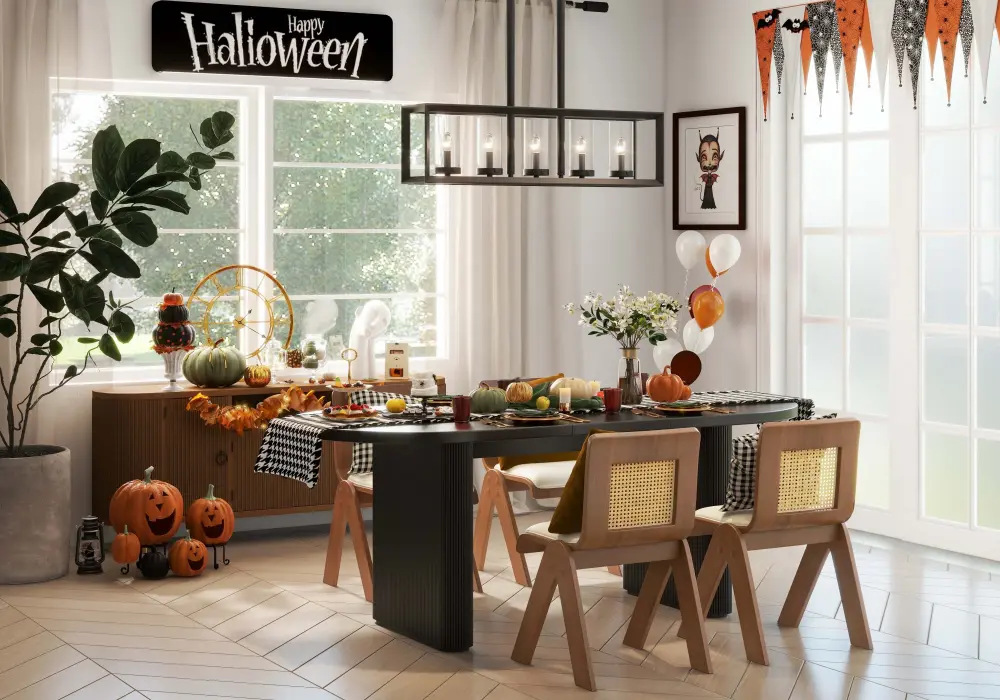
Extendable Oval Black Dining Table - Homary Pick
Winter: Cozy and Elegant
For winter, combine neutral colors with evergreen-inspired elements:
- Forest green
- Ivory
- Charcoal
- Natural wood
- Metallic accents
Pine branches, eucalyptus, textured runners, and warm candlelight can make the dining room feel especially inviting.
Layer Textures for a Designer Look
A stylish tablescape is not only about color. Texture creates depth. Try layering the table from the bottom up:
Tablecloth → table runner → placemats → dinnerware → napkins → centerpiece → decorative accents
You do not need every layer. For example, a runner and placemats together may be unnecessary if the table already has a strong wood finish.
Lighting also changes how your colors appear. Warm candlelight tends to soften neutral and earthy tones, while bright overhead lighting can make pale colors appear cooler. If your dining room has a pendant light, consider a dimmer so you can adjust the atmosphere from everyday meals to evening entertaining.
Dining Table Centerpiece Ideas: Height, Balance & Focal Point Tips
A centerpiece should create a visual focal point while allowing the table to remain functional. The key is finding the right combination of height, width, repetition, and negative space.
Low Floral Centerpiece
For everyday dining, a low floral arrangement is one of the easiest choices.
A practical target is under 12 inches high, particularly when diners are sitting across from each other. This keeps the arrangement visually present without blocking conversation.
To create one:
- Choose a shallow vase or container.
- Add floral foam or another suitable support if needed.
- Place greenery around the edges.
- Add larger flowers as the main focal points.
- Fill open spaces with smaller flowers or foliage.
- Trim stems so the arrangement remains low and balanced.
For longer rectangular tables, use a rectangular container or several small arrangements instead of one oversized bouquet.
Linear Fruit Bowl
A long wooden or ceramic tray filled with lemons, apples, pears, or seasonal fruit can work particularly well on rectangular dining tables.
The tray provides structure, while the natural shapes and colors add visual interest. It is also easy to move when the table is needed for serving.
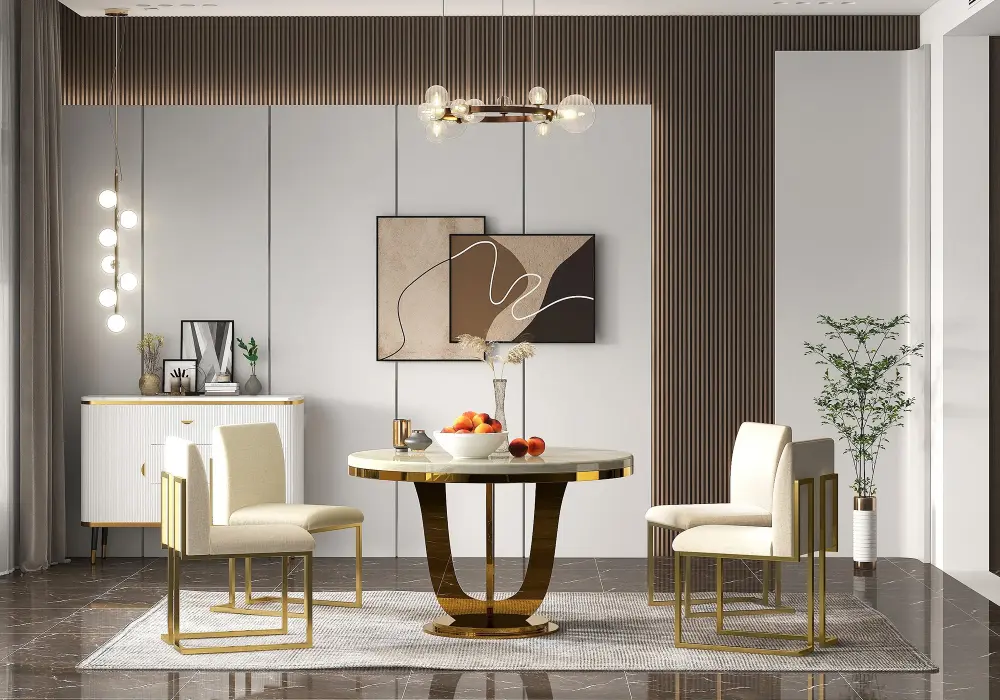
Modern Style Round Faux Marble Dining Table - Homary Pick
Grouped Candle Holders
Instead of using one large decorative object, create a cluster of three to five candle holders in different but related heights.
Keep the grouping visually connected by repeating one element, such as the same finish or material.
For households with children or pets, use flameless LED candles rather than open flames.
Tall Statement Decor
Tall arrangements can create dramatic visual impact, but they require careful planning. If a tall centerpiece sits directly in the center of the table, it should either allow clear sightlines through the arrangement or rise sufficiently above the normal eye level of seated diners.
A useful principle is to avoid placing a solid, opaque object directly at eye level. Instead, use open branches, thin stems, or transparent vessels that maintain visual connection across the table.
Centerpiece Size by Table Width
Table Width | Approximate Centerpiece Width | Good Options |
30–36 in | 8–12 in | Small vase, bowl, candles |
36–42 in | 10–16 in | Floral arrangement, tray |
42–48 in | 12–18 in | Layered centerpiece |
48+ in | 16–20 in | Larger grouped display |
These are styling guidelines rather than strict rules. Always account for the actual place settings and serving requirements of your table.
How to Keep a Centerpiece Stable
Stability matters, especially in busy dining rooms. Use wide-based containers instead of narrow, top-heavy vases. For floral arrangements, distribute stems evenly rather than concentrating weight on one side.
A shallow tray underneath multiple decorative objects can also visually unify the arrangement and make it easier to move.
For homes with young children or pets, consider shatter-resistant acrylic or resin accessories, weighted bases, flameless candles, and low-profile centerpieces. A beautiful dining table should also be a practical one.
Table Setting 101: Everyday vs. Formal Place Setting Guide
Once your centerpiece is in place, the next step is deciding how much tableware you actually need.
An everyday place setting should be simple, functional, and quick to clear. A formal place setting adds additional layers and pieces for a more structured dining experience.
Everyday Table Setting
For a quick daily setup, start with:
- Placemat or table surface
- Dinner plate
- Fork on the left
- Knife on the right with the blade facing the plate
- Spoon to the right of the knife when needed
- Napkin beside the plate or under the fork
- Water glass above and slightly to the right of the plate
This arrangement can usually be completed in about two minutes for a standard family meal.
Formal Table Setting
A formal setup can include:
- Tablecloth or runner
- Charger
- Dinner plate
- Salad or appetizer plate
- Multiple pieces of cutlery
- Folded napkin
- Water glass
- Additional beverage glasses
- Place card when appropriate
The basic rule for cutlery is simple: arrange utensils in the order they will be used, working from the outside toward the plate.
A charger can add another decorative layer underneath the dinner plate. It is especially useful when you want the table to feel more formal without changing the dinnerware itself.
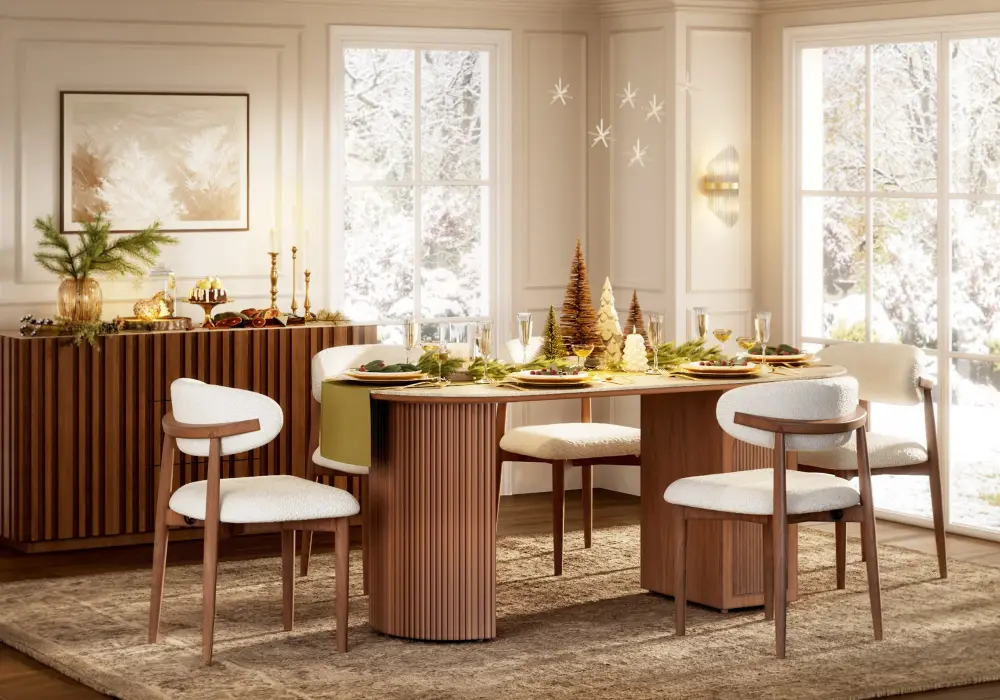
Oval Walnut Faux Travertine Dining Table - Homary Pick
Runner or Tablecloth?
A table runner is ideal when you want to highlight the surface of a beautiful wood dining table or create a relaxed, contemporary look. A tablecloth provides a more complete, traditional layer and can help visually soften a large table.
Use a runner when:
- You want to show the tabletop.
- The table already has a strong finish.
- You prefer a casual or modern tablescape.
Use a tablecloth when:
- You want a formal appearance.
- You need to protect the tabletop.
- You want to create a dramatic color or texture foundation.
Placemats or Chargers?
Placemats define each diner's space and work particularly well for everyday meals. Chargers create a more layered, formal appearance.
You can also combine them, but avoid adding too many competing patterns.
Mixing Metals Without Creating Clutter
Mixing finishes such as brass, black, silver, or brushed metal can make a tablescape look collected rather than overly matched. The trick is repetition.
Choose one primary metal and one supporting finish. Repeat each finish at least twice so it feels intentional.
For example, brass candle holders can be echoed by subtle brass details in flatware or napkin rings. You do not need five different finishes to create visual variety.
For a long table where food is served family-style, keep the central decorative area flexible. Use removable centerpieces or several smaller arrangements that can be moved when serving dishes arrive.
Budget-Friendly & DIY Dining Table Decor Ideas Under $150
Decorating a dining table does not have to mean buying an entirely new collection of accessories. With a few inexpensive materials, you can create a polished tablescape for well under $150.
DIY Idea #1: Minimalist Botanical Centerpiece
Estimated cost: $20–$45
You will need:
- One simple glass or ceramic vase
- Faux greenery or branches
- Small decorative stones or filler
- Optional ribbon or twine
Time: 10–15 minutes
Place the filler in the bottom of the vase to add weight. Arrange a few tall branches first, then add shorter greenery around the base. Keep the arrangement intentionally loose rather than perfectly symmetrical.
For an upgraded version, use a larger handmade ceramic vessel and higher-quality faux botanical stems. The total cost can still remain within approximately $50–$100.
DIY Idea #2: Tray-and-Candle Centerpiece
Estimated cost: $25–$60
Use a wooden, metal, or ceramic tray as the foundation. Add three or five flameless candles, one small vase, and a few seasonal decorative elements.
The tray makes the entire arrangement easy to move before meals.
For a premium version, upgrade the tray and candle holders rather than adding more objects. This keeps the design clean.
DIY Idea #3: Seasonal Fruit Display
Estimated cost: $10–$30
A large bowl or shallow serving tray filled with seasonal fruit can double as functional dining decor.
Try lemons and green leaves in summer, pears in autumn, or apples and evergreen-inspired foliage during winter.
The advantage is simple: when the decor becomes part of the meal, nothing goes to waste.
Budget Guide
Budget | What to Prioritize |
$10–$30 | DIY centerpiece, candles, seasonal fruit |
$30–$60 | Vase + greenery + runner or placemats |
$60–$100 | Coordinated centerpiece and table linens |
$100–$150 | Complete tablescape with upgraded accessories |
Look for affordable basics in neutral colors first. Then spend more selectively on one or two focal pieces.
For homes with children or pets, prioritize washable linens, rounded accessories, shatter-resistant containers, stable bases, and flameless lighting.
FAQ: How to Decorate a Dining Room Table
How do I size a centerpiece for a rectangular dining table?
As a starting point, make the centerpiece approximately one-third to one-half of the table's length, while keeping its width around 40% or less of the usable tabletop width. Leave enough open space for plates, serving dishes, and comfortable dining.
What is the difference between an everyday place setting and a formal place setting?
An everyday place setting typically includes a dinner plate, basic cutlery, a napkin, and a drinking glass. A formal setting may add a charger, multiple plates, additional utensils, multiple glasses, and decorative details such as folded napkins or place cards.
How do I mix textures and metals without making the table look cluttered?
Keep the number of major materials under control. Combine two or three textures—such as linen, wood, and ceramic—and choose one primary metal with one supporting finish. Repeating materials creates cohesion.
Should I use a runner or a tablecloth?
Choose a runner when you want a more casual look or want to show off a beautiful tabletop. Choose a tablecloth when you want more coverage, protection, or a formal appearance.
How can I create a stylish tablescape that is safe for kids and pets?
Use low-profile centerpieces, weighted or wide-based containers, shatter-resistant materials, and flameless LED candles. Avoid unstable tall objects, exposed flames, and small loose decorations that can be easily knocked over or swallowed.
What are safe candle and lighting options for a dining table centerpiece?
For households with children or pets, flameless LED candles are the safest choice. For traditional candles, use stable holders, keep flames away from fabric and greenery, and never leave burning candles unattended. Dimmable overhead lighting can also create atmosphere without adding an open flame.
What are affordable DIY centerpiece ideas and what do they typically cost?
Simple botanical arrangements can cost around $20–$45, tray-and-candle arrangements around $25–$60, and seasonal fruit displays around $10–$30, depending on the materials you already have.