

The easiest way to decorate a dining table is to build three layers: a base such as a runner or placemats, a centrepiece that stays below eye level, and soft lighting. Leave enough of the surface open for plates, glasses, and comfortable dining. Whether you are styling a new dining table or refreshing one you already own, this simple formula works for everything from casual weekday dinners to holiday gatherings.
This guide explains how to put the three-layer formula into practice, which measurements to consider before styling, and how to adjust your arrangement when the table gets crowded.
Table of Contents
Start With the Table You Actually Have
Shape, size and surface determine which styling choices will work. A round tabletop suits one centred arrangement, while an oval surface offers more room for a runner and several smaller accents. For a dining space that needs to accommodate both everyday meals and gatherings, the 1194mm–2007mm Extendable Solid Wood Dining Table offers a flexible solution. It transforms from round to oval, extending from 1194 to 2007 millimetres to adapt to different dining occasions. Its solid wood construction with oak veneer brings natural wood texture to the room, while the fluted pedestal base adds visual interest without requiring elaborate tabletop decor.
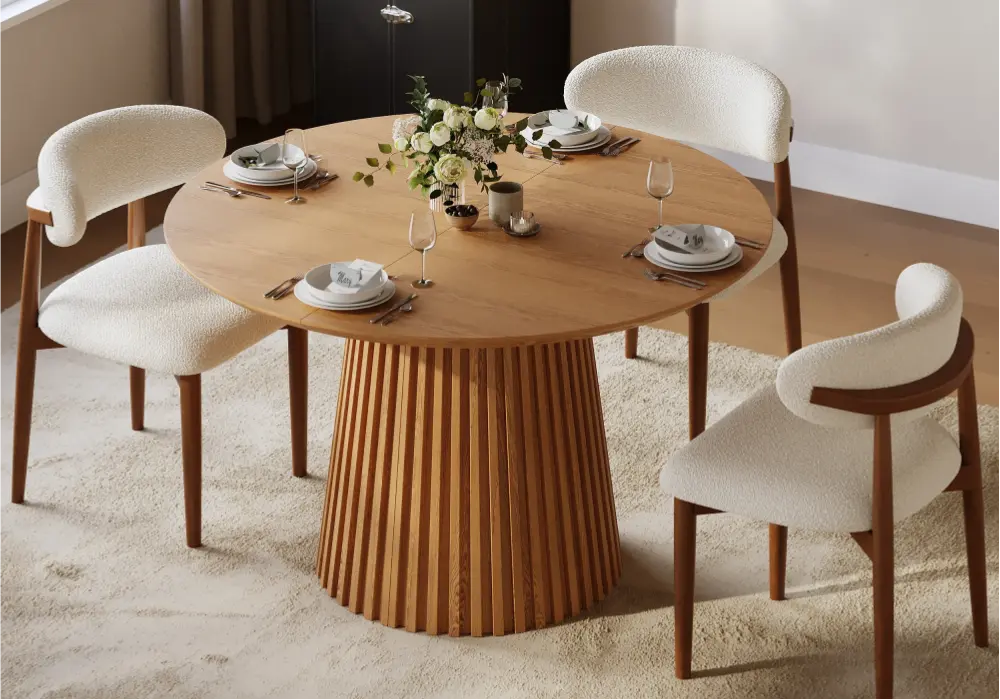
The styling can change along with the table. In its round configuration, place a low ceramic vase, a shallow fruit bowl or a small wooden tray at the centre, keeping the surrounding surface clear for everyday meals. When extended for guests, switch to a narrow runner and arrange two small bud vases or candleholders along the centre. This repeated arrangement makes better use of the longer tabletop while leaving room for place settings and serving dishes.
Check the Numbers Before You Style
Before adding decor, make sure there is enough room for diners to sit comfortably and move around the table. Two measurements are especially useful:
- Space per diner: Allow around 610 millimetres of table edge per person so place settings do not feel crowded.
- Room around the table: Aim for about 914 millimetres between the table edge and nearby walls or furniture, giving chairs enough room to slide out.
These measurements help determine how much space is available for centrepieces, runners and serving dishes. When the table is fully occupied, choose narrow or low-profile decor and leave enough room for plates and shared dishes.
The Three-Layer Formula
Layer One: The Base
The base protects the table and sets the colour story. Your main options are:
- Runner: a common rule of thumb is a runner about one-third the width of the table, hanging 152 to 305 millimetres past each end. It suits rectangular and oval tops.
- Placemats: the best choice for a beautiful wood grain or stone top you want to show off. Natural fibres such as jute, linen or woven rattan work with almost any dish.
- Tablecloth: the most formal option, offering full surface coverage and a softer, more layered look. It is especially useful for formal meals or when you want to conceal a worn tabletop. A drop of roughly 254 to 381 millimetres below the tabletop creates a classic look.
If your table is a feature in its own right, use placemats and skip the runner. A runner adds colour and texture to a plain surface, while a tablecloth offers more coverage when the tabletop is worn.
Layer Two: One Centrepiece
Resist the urge to fill the table. One confident arrangement looks better than six small objects fighting each other. Three rules keep it working:
- Mind the sightline. Keep wider centrepiece arrangements around 305 millimetres high or lower so guests can comfortably see each other. Taller elements, such as slim taper candles or a single branch in a narrow vase, can also work when they do not block seated views.
- Vary height and texture. Combine pieces at different heights, such as a low bowl, a medium vase and a slim taper candle. Mix smooth materials like glass or ceramic with textured accents such as wood, stone or dried stems to create visual depth.
- Use odd numbers for grouped arrangements. Displays of three or five pieces often feel more relaxed and balanced. For longer tables, pairs of matching accents can work just as well when spaced evenly along the centre.
Fresh flowers add the most life, but they are not the only route. A wooden bowl of citrus, a few pears in a low dish or a trio of bud vases with single stems each costs little and resets quickly.
Layer Three: Light
Light is what makes a styled table feel like an occasion. Low candles in glass holders, a pair of battery-operated tapers or a small table lamp on a nearby sideboard all add warmth. Overhead, many designers hang a pendant so its bottom sits about 762 to 914 millimetres above the tabletop. That height lights the surface without glare in anyone's eyes.
Use unscented candles at the table. Food flavours are delicate, and competing fragrance gets in the way.
How to Style a Dining Table for Everyday Meals, Guests, and Every Season
The table below shows how the same three layers change with the occasion.
Occasion | Base | Centrepiece | Light |
Everyday | Bare wood or two placemats | One tray with a small vase and a candle | Overhead light on a dimmer |
Hosting | Runner or tablecloth, cloth napkins | Long, low arrangement or two matching small ones | Low candles plus dimmed pendant |
Holiday | Layered runner over cloth, charger plates | Seasonal garland or a central grouping with height | Taper candles and warm string or battery lights |
Everyday Dining: Make It Easy to Reset
Most dining tables do double duty as a homework desk, a laptop spot and a landing zone for mail. Everyday decor should be easy to clear when it is time to eat. Keep it to one small tray or shallow bowl. Grouping a few decorative pieces on a tray makes them easy to move to a sideboard before meals. Once the table is clear, set the places and return the tray after dining.
A few tips for keeping an everyday table looking intentional:
- Keep the tray small enough that two people could still sit across from each other without leaning around it.
- Choose pieces that do not need water or constant care, such as a ceramic vase with dried stems, a candle or a small plant that tolerates a bit of neglect.
- Store a few seasonal swaps nearby so a change takes minutes: a cloth runner, a different candle, a bowl of whatever is in season.
Hosting: Plan the Place Settings First
When guests are coming, work from the plate outward. Set each place with a dinner plate, napkin and glassware, and give each diner the full 610 millimetres of width. Then fit the decor into the gaps.
- Place settings first. If a charger plate is in play, stack dinner plate and salad plate on top of it. Fold napkins simply, or tuck a sprig of greenery into them.
- Serving dishes next. Decide where platters will land. Leaving a clear lane down the middle for food is the single most useful hosting move, and it dictates how wide the centrepiece can be.
- Centrepiece last. Keep it low and narrow. If the table is long, repeat a small element, such as bud vases or votives, along the centre rather than using one large arrangement.
Place cards are optional but charming, and they help guests settle in quickly. A handwritten name tucked into a napkin or leaned against a glass costs almost nothing.
Seasonal Swaps That Take Ten Minutes
You do not need a new look each season. Change the small things:
- Spring: pale linen, tulips or branches with buds, a ceramic bowl in a soft green.
- Summer: a bowl of lemons or peaches, woven placemats, citronella-free votives indoors for warm light.
- Autumn: a wood tray with mini pumpkins, dried grasses, deeper-toned napkins.
- Winter: evergreen sprigs in a long low dish, brass candle holders, a heavier runner in wool or velvet.
Keep one or two constants, such as the tray or the candle holders, and swap the rest. That way the table always feels like yours.
Mistakes That Make a Dining Table Feel Crowded
Most overstyled tables share a few common problems:
- Too tall or too wide. Centrepieces should not block seated views or take up space needed for plates and serving dishes.
- Too much clutter. Leave visible gaps between decorative pieces. If the table feels crowded, remove one or two items rather than filling every open spot.
- Scented candles. Strong fragrances can compete with the aromas of food. Choose unscented candles for dining areas.
- Everything matches. A little contrast, such as textured ceramic against a smooth wood surface, makes a table look collected rather than overly coordinated.
Frequently Asked Questions
What should I put in the centre of a dining table every day?
A small tray holding a low vase or bowl and a candle is the easiest answer. It looks finished, takes seconds to move and leaves the rest of the surface usable.
How tall should a dining table centrepiece be?
For wider arrangements, around 305 millimetres or lower is a useful starting point for keeping sightlines open. Taller elements, such as slim candles or single branches, can also work as long as they do not block views across the table.
Do I need a runner or tablecloth?
No. If your table has an attractive surface, placemats let it show. Runners and cloths are most useful for hosting, for covering a worn top or for adding a pop of colour.
How do I decorate a table that is also my workspace?
Use one tray as the only permanent decor, and treat everything else as temporary. Clear laptops and papers into a basket or onto a sideboard before meals, then put the tray back in place.
How do I decorate an extendable dining table?
Style the table for its smaller configuration first, using a compact centrepiece that leaves enough room for everyday dining. When the table is extended, add a narrow runner or arrange two smaller accents evenly along the centre. This creates a balanced look without crowding place settings or serving dishes.
How much space does each person need at the table?
Allow about 610 millimetres of table edge per diner for comfortable place settings. Larger chairs, armrests or oversized dinnerware may require additional space.