

A reclining sofa can transform a living room into a comfortable place to relax, watch television, read, or spend time with family. But because reclining sofas tend to be deeper and more substantial than standard sofas, decorating around one requires a little more planning.
The key is to balance comfort, clearance, proportion, and visual harmony. With the right layout, colour palette, textiles, lighting, and accessories, even a large reclining sofa can become an attractive focal point rather than an oversized piece of furniture.
Whether you have a compact apartment, an open-plan living room, or a spacious family room, these ideas will help you decorate with a reclining sofa while making the most of your available space.
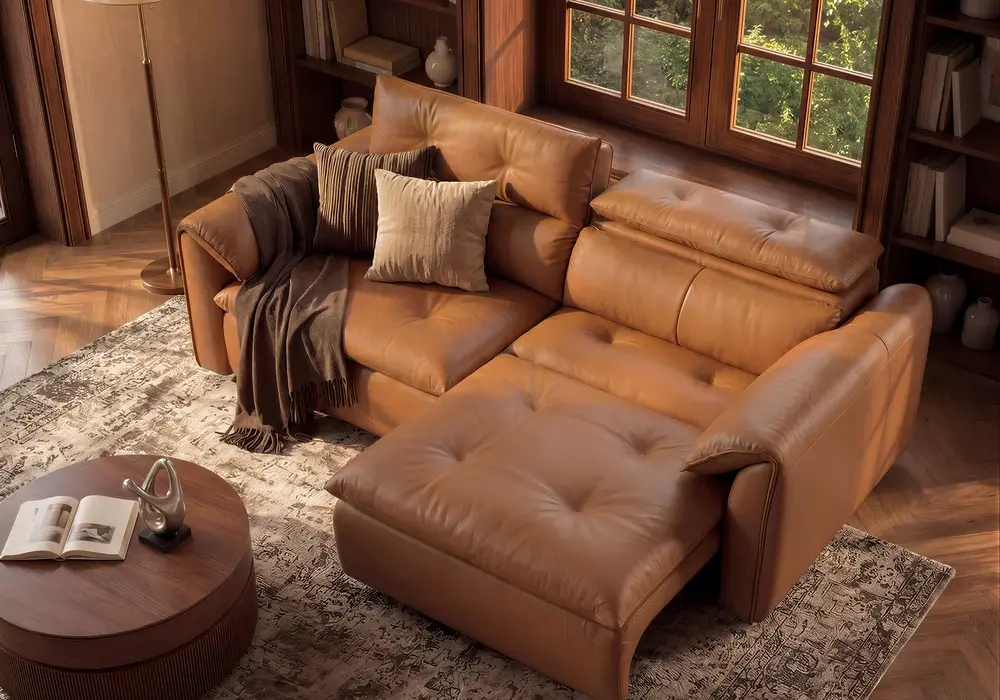
Visual- Genuine Leather Power Convertible Sleeper Sofa- Homary
Table of Contents
Mastering Room Layout and Space-Saving Solutions
The first step in decorating with a reclining sofa is understanding how much space it needs to operate comfortably. Unlike a conventional sofa, a recliner needs additional clearance for its footrest and backrest. Placing it too close to a wall, coffee table, or walkway can make the room feel cramped and prevent the reclining mechanism from working properly.
Leave enough room for the reclining mechanism
Before deciding where your sofa will go, measure it in both its upright and fully reclined positions. You should also consider how people will move around it.
As a general starting point, use the following clearance guidelines:
Reclining sofa type | Suggested clearance behind | Suggested side clearance |
Two-seat electric reclining sofa | 30–45 cm | 15 cm |
Three-seat manual reclining sofa | 45–60 cm | 20 cm |
Corner reclining sofa | 60–75 cm | 20 cm |
These measurements are guidelines rather than universal requirements. Always check the manufacturer's recommended wall clearance, particularly for electric reclining furniture.
For a small living room, choose a layout that keeps the sofa's footprint efficient. A reclining sofa can often work well against a wall if it uses a wall-hugger reclining mechanism, which is designed to recline with less space behind the sofa.
Keep walkways clear
A useful rule is to preserve approximately 75–90 cm of clear walking space through the main circulation routes of the room. If your sofa's footrest extends into a walkway when fully reclined, consider repositioning the sofa or choosing a smaller model.
Avoid pushing every item of furniture against the walls simply to create an open centre. Instead, create a defined seating zone. Positioning a coffee table, side table, or rug in relation to the sofa can make the room feel more intentional.
Make awkward corners work
A bay window or unused corner can be an excellent location for a reclining sofa, particularly when the room has limited wall space. However, avoid placing the sofa where its back or reclined footrest interferes with curtains, window operation, or heating vents.
For corner layouts, leave enough space between the sofa and adjacent walls to accommodate side tables and allow people to enter and exit comfortably. In a compact room, an L-shaped reclining sofa can also define a seating area without requiring multiple individual chairs.
The goal is not simply to fit the sofa into the room. It is to create a layout in which the sofa feels naturally integrated with the architecture.
Creating a Cohesive Colour and Material Palette
A reclining sofa is often one of the largest visual elements in a living room, so its colour and upholstery can influence the entire decorating scheme.
Rather than automatically choosing pale colours to make a large sofa appear smaller, look at the undertone of the upholstery. A warm brown leather sofa, for example, works differently with cool white walls than with creamy beige walls and natural oak furniture.
Match undertones, not just colours
Think about your sofa, walls, flooring, curtains, and woodwork as one connected palette.
Sofa upholstery tone | Recommended wall colours | Wood and accent pairing |
Cool grey fabric | Soft white, pale grey, blue-grey | Light oak, black, brushed metal |
Warm beige fabric | Cream, warm white, greige | Oak, walnut, natural rattan |
Dark brown leather | Warm white, taupe, muted olive | Walnut, medium oak, brass |
Black leather | Off-white, charcoal, stone | Dark wood, black metal, concrete tones |
Deep green fabric | Warm white, mushroom, muted beige | Walnut, oak, aged brass |
If you prefer a Scandinavian-inspired interior, combine a cool grey or light beige reclining sofa with pale walls, light timber, simple black accents, and natural fabrics.
For a mid-century modern look, warm brown leather works beautifully with walnut, muted mustard, olive, rust, or cream. Keep the surrounding furniture relatively streamlined so the sofa remains the comfortable centrepiece without making the room look heavy.
For an industrial-style living room, consider charcoal, black, or dark brown upholstery with concrete-inspired walls, black metal details, reclaimed timber, and textured fabrics.
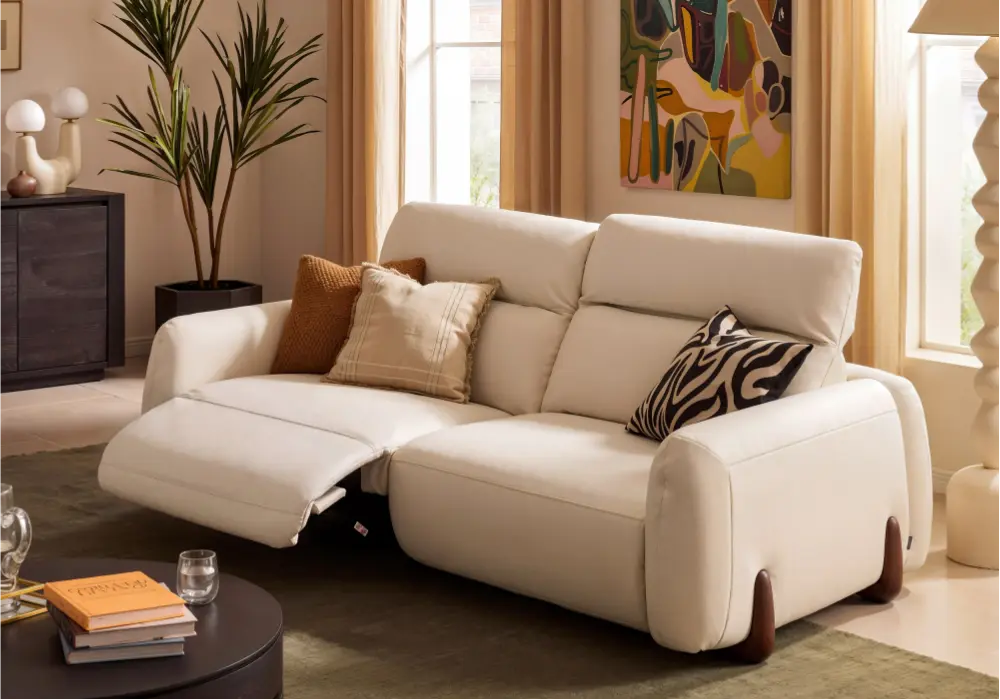
Visual- Genuine Leather Power Reclining Sofa- Homary
Connect the sofa to the room
Don't let your reclining sofa become an isolated block of colour. Repeat one or two of its tones elsewhere in the room through curtains, cushions, artwork, or a rug.
Architectural details can help, too. Matching skirting boards, wall panelling, shelving, or trim to a carefully selected neutral can visually connect the sofa with the rest of the room.
The result is more cohesive than simply matching every item. Aim for repetition with variation: repeat colours while changing textures, finishes, and patterns.
Accessorising with Rugs, Cushions, and Mixed Textiles
Textiles are one of the easiest ways to soften the substantial appearance of a reclining sofa. A well-sized rug anchors the seating arrangement, while cushions and throws introduce layers of texture.
Choose the right rug size
A rug that is too small can make a large reclining sofa look even more dominant. Ideally, the rug should visually connect the sofa with the surrounding furniture.
As a starting point:
Sofa configuration | Recommended minimum rug size |
Two-seat reclining sofa | 160 × 230 cm |
Three-seat reclining sofa | 200 × 300 cm |
L-shaped corner reclining sofa | 250 × 350 cm |
For larger rooms, a bigger rug can be even more effective.
You have two main options when positioning the rug. Placing only the front legs of the sofa on the rug creates a defined seating zone while preserving floor space. Alternatively, placing the entire seating arrangement on a larger rug gives a more luxurious and cohesive appearance.
Make sure the rug does not interfere with the reclining footrest. A thick or loosely woven rug can sometimes catch against moving mechanisms, so check the sofa's operation before finalising the arrangement.
Layer cushions without creating clutter
A common mistake is adding too many cushions to an already large sofa. Instead, use a small selection in different shapes and textures.
For example, combine:
- A larger linen or cotton cushion
- A smaller patterned cushion
- A textured wool or boucle cushion
- One soft throw draped over an arm or corner
The most sophisticated arrangements often use different materials in similar colours. Wool, linen, velvet, cotton, and knitted fabrics can create depth without requiring lots of contrasting colours.
If your sofa is plain, you can introduce a subtle geometric or botanical pattern. If the sofa itself has a strong colour or distinctive texture, keep the cushions simpler.
Lighting and Ambience Around a Bulky Centrepiece
Lighting is especially important when a reclining sofa occupies a large section of the room. Without enough illumination, the sofa can appear visually heavy, particularly if it is positioned in a corner.
Instead of relying on one ceiling fixture, build a layered lighting scheme around the seating area.
Use three layers of lighting
Ambient lighting provides general illumination. This might come from a ceiling light, recessed lighting, or multiple wall fixtures.
Task lighting is useful for reading or other activities beside the sofa. A slim floor lamp or wall-mounted reading light can provide focused illumination without taking up much floor space.
Accent lighting creates atmosphere. A table lamp, LED strip, or carefully positioned wall light can highlight artwork, shelving, or architectural features.
For a living room designed primarily for relaxation, warm lighting generally feels more inviting than very cool white light.
Light type | Typical colour temperature | Suggested wattage* |
Ambient ceiling light | 2700–3000K | 8–12W LED |
Reading/task light | 2700–3000K | 6–10W LED |
Accent/ambient lamp | 2200–2700K | 4–8W LED |
*Wattage varies significantly between LED bulbs, so lumens are a better measure of brightness. Always follow the fixture manufacturer's specifications.
Plan power outlets carefully
Electric reclining sofas introduce another design consideration: power cables.
Whenever possible, position the power outlet close to the sofa and route the cable along the back or underside where it cannot become a trip hazard. Cable clips, under-furniture cable channels, or discreet cord covers can help keep everything tidy.
Avoid running cables beneath loose rugs where they could be damaged or create a hazard.
If you're renovating or designing a room from scratch, consider the sofa's final position before installing outlets. Planning ahead is much easier than trying to hide a cable after the furniture has arrived.
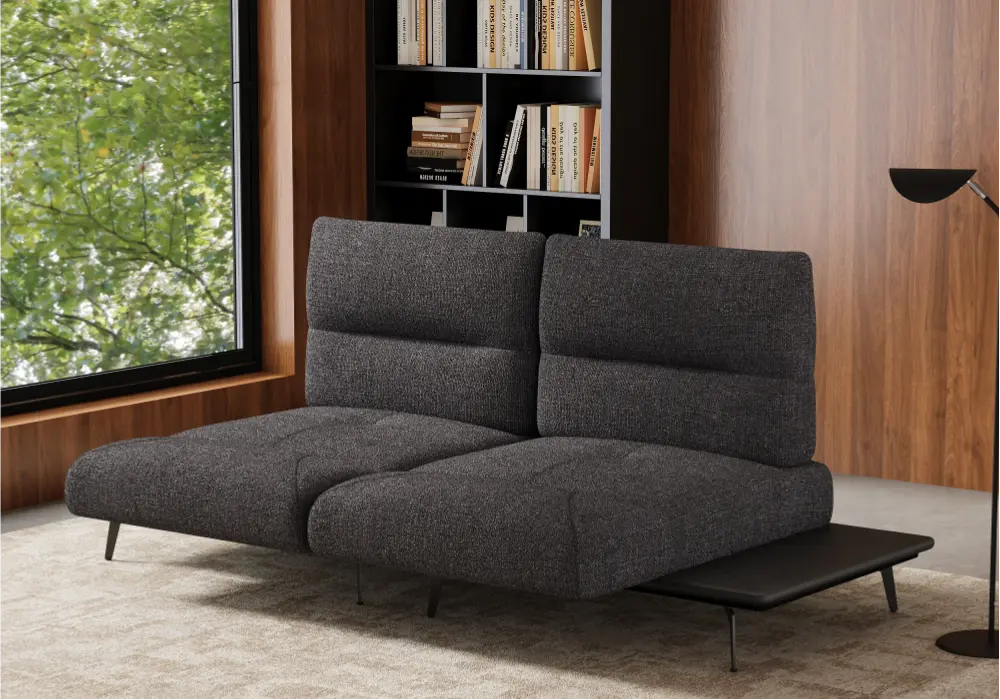
Visual- Reclining Sectional Sofa- Homary
Styling with Art, Plants, and Smart Technology
Once the basic furniture, rug, colours, and lighting are in place, accessories can make the reclining sofa area feel complete.
Hang artwork on the right scale
The wall behind a large reclining sofa can easily look empty. Artwork provides an opportunity to balance the sofa's visual weight.
As a general guideline:
Sofa width | Artwork approach | Approximate artwork width |
Up to 180 cm | Single artwork | 90–120 cm |
180–240 cm | Large single piece or pair | 120–170 cm total |
240–300 cm | Large artwork or gallery arrangement | 160–220 cm total |
300 cm+ | Oversized piece or gallery wall | 200 cm+ total |
Rather than automatically hanging artwork high on the wall, aim for a visually comfortable relationship between the art and sofa. The bottom of the artwork is often around 15–25 cm above the sofa, depending on the sofa's height and the artwork's proportions.
For a pair of artworks, keep the gap relatively narrow—around 5–10 cm can create a unified composition.
A gallery wall can work particularly well above a wide reclining sofa, but keep the arrangement controlled. Too many small frames can compete with the sofa's large silhouette.
Add plants without blocking movement
Plants are an excellent way to soften the straight lines and substantial form of reclining furniture.
Tall plants such as a monstera deliciosa or fiddle-leaf fig can work beside a sofa if you have sufficient space. Place them behind or beside the sofa rather than directly in the reclining path.
For smaller spaces, use a compact plant on a side table or a narrow planter in an unused corner.
Always check the mature size of a plant before placing it near a walkway. A plant that fits perfectly today can become an obstruction as it grows.
Make technology part of design
Modern reclining sofas often include electric controls, USB charging ports, powered headrests, or other smart features. These are convenient, but visible wires and multiple remotes can quickly make a carefully styled room look messy.
Use a small side table, storage basket, or dedicated remote-control holder to keep controllers accessible without leaving them scattered across the sofa.
If your sofa includes USB or charging functions, position a nearby outlet or charging station so users don't need to stretch cables across the room.
For the cleanest appearance, keep technology visually secondary. The sofa should look like an inviting piece of furniture first and a powered device second.
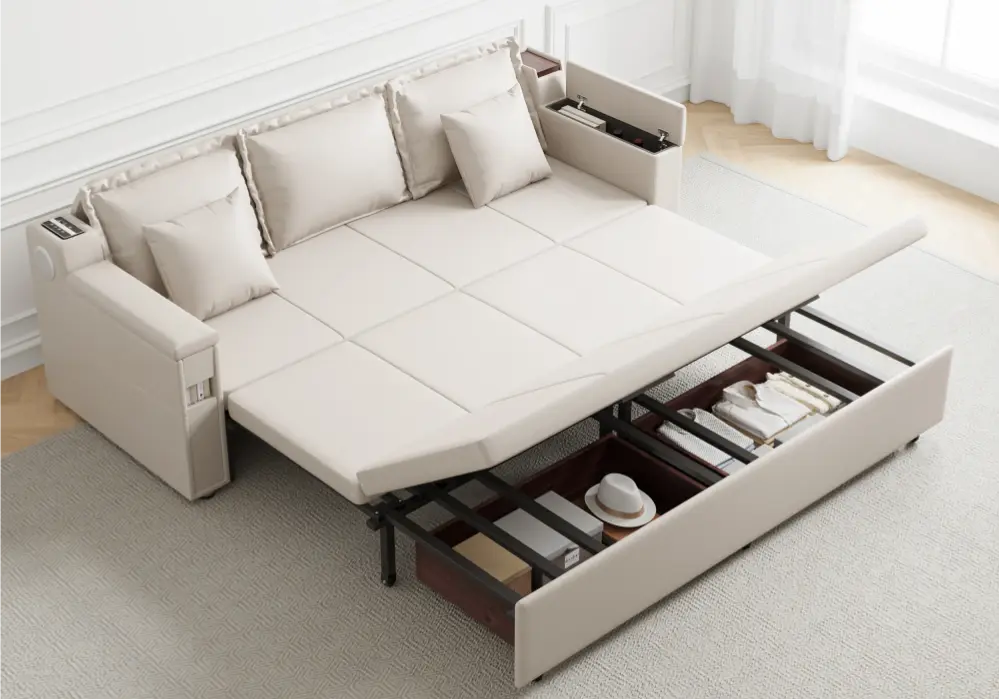
Visual- Leather Sleeper Sofa- Homary
Your Reclining Sofa, Beautifully Styled
Decorating with a reclining sofa doesn't mean choosing between comfort and style. The right approach is to design around the sofa's actual dimensions and movement requirements, then use colour, texture, lighting, artwork, and accessories to integrate it into the wider room.
Start by measuring the sofa in its fully reclined position. Establish clear walkways, select a rug that is large enough to anchor the seating area, and build a palette that complements the upholstery's undertones. From there, layered textiles, warm lighting, greenery, artwork, and discreet technology can turn a practical reclining sofa into the natural focal point of the room.
If you're planning a new living room or considering upgrading your current sofa, use these principles as a starting point. A showroom or online design consultation can also help you assess sofa proportions, upholstery, room layout, and styling options before making a final decision.
The most successful living rooms don't hide practical furniture. They design around it—making comfort an intentional part of the aesthetic.
FAQ
What is the ideal clearance behind a reclining sofa in a small living room?
The ideal clearance depends on the sofa's reclining mechanism. As a general guide, allow around 30–45 cm for a two-seat electric recliner and 45–60 cm for a three-seat manual recliner. Some wall-hugger recliners require significantly less space.
Always check the manufacturer's clearance requirements before positioning the sofa.
How do I choose a rug colour and size to match my dark leather reclining sofa?
A dark leather reclining sofa usually pairs well with lighter, warm neutrals such as cream, beige, taupe, or greige. A textured rug can also soften the visual weight of the leather.
For a three-seat reclining sofa, start with a rug of approximately 200 × 300 cm. In a larger room, consider going bigger so the rug can accommodate the sofa and coffee table together.
What are the best ways to hide the power cord on an electric recliner sofa?
Keep the power cord close to the wall or behind the sofa where possible. Use suitable cable clips or cord-management channels to keep it secure and out of walkways.
Don't place electrical cables where they can be pinched by the reclining mechanism, and avoid routing cords beneath loose rugs.
How can I decorate around a reclining sofa in a bay window or corner layout?
Measure the sofa in both upright and fully reclined positions before placing it near a bay window or corner. Keep curtains, windows, radiators, and walkways accessible.
A corner reclining sofa can define a comfortable seating zone, while a compact wall-hugger model may be better for a smaller bay-window arrangement.
Which indoor plants work well beside a bulky recliner without blocking walkways?
Monstera deliciosa and fiddle-leaf figs can work well beside a large reclining sofa when there is sufficient floor space. For smaller rooms, choose compact plants or place greenery on a side table.
Position plants outside the sofa's reclining and walking paths, and consider their mature size before choosing a location.
What style of coffee table looks best with large reclining sofas in an open-plan space?
A coffee table with rounded or softened edges often works particularly well with a large reclining sofa because it balances the sofa's substantial form and makes circulation easier.
In an open-plan room, choose a table that complements the sofa's material and repeats an existing finish, such as wood, metal, or stone. Make sure there is enough clearance between the table and the sofa's fully extended footrest.