

Style a dining room table by starting with the space people need to eat, then adding a low centerpiece, a limited color palette, and a few practical details. The arrangement should suit the table's shape and be easy to clear when meals begin. When comparing dining tables, think about the daily setup as well as the version you will use for guests, particularly if the tabletop extends.
In This Guide
Decide how the table needs to work
List the jobs your table does
A dining table may be the place for breakfast, homework, dinner, and weekend entertaining. Before choosing a runner or vase, list the jobs it needs to perform. A table used throughout the day benefits from one compact arrangement that moves easily. A separate dining room can support a more permanent display, provided it still leaves room for place settings and serving dishes.
Map your real decorating space
Set out your ordinary dinner plates and glasses first. Add the serving bowl, water jug, or bread basket you use most often. The space left between those items is your realistic decorating area. This approach helps prevent a common problem: a beautiful centerpiece that must be dismantled before anyone can sit down. It also keeps the tabletop ready for meals rather than letting it become a permanent collection of accessories.
Pick a mood from the room
Choose a mood from the room around the table. Warm neutrals, simple ceramics, and greenery suit a relaxed setting; a more formal room might call for linen, glass, and carefully spaced place settings. You do not need a different object for every material in the room. Repeat one or two colors or textures and give the tabletop enough space to show through.
Follow the shape of the tabletop
Round tables
On a round table, a central bowl or short vase can give the arrangement a clear focus. Keep it small enough that plates and glasses do not feel pushed toward the edge. On a round sintered-stone dining table with a leather-wrapped base, for example, one small vase or a single sculptural bowl is enough. The pale top and saddle-colored base already provide contrast, so coasters and a few cloth napkins in a matching tone finish the look.
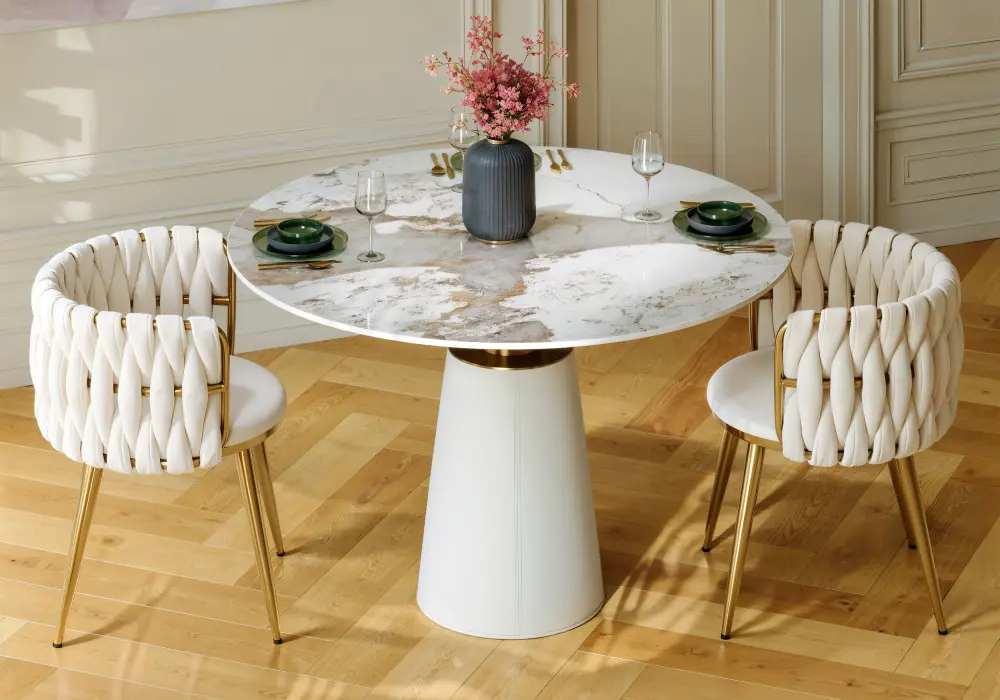
A circular tray is useful when it makes the display easy to move, but it is optional. Several separate objects can make a compact round surface feel crowded. Leave the base visually clear rather than surrounding it with baskets that reduce chair access.
Oval and rectangular tables
An oval or rectangular table can carry a longer arrangement. Try a low central vessel, or a few small pieces spaced along the length. Keep gaps between the objects so people can see and reach across. A runner can help connect the arrangement, but check its width against your plates and serving dishes. It should not bunch under tableware or interfere with an extension joint.
Extendable tables
For an extendable table, style the size you use most days. Clear the surface before operating the extension, then rebuild the arrangement for the open position. A display that looks balanced on a compact round top may need more space between objects when the table becomes oval. Keep fragile items away while you move the panels or insert a leaf.
Build a centerpiece that supports conversation
Check the view from a seated position
Look at the arrangement from a seated position. You should be able to see the person opposite without leaning around flowers or candleholders. A table with a strong surface pattern makes this easy, because it rewards a quieter display. On a faux-travertine-look oval dining table, a few branches in a low vessel or a broad shallow bowl lets the warm stone pattern stay visible, and sand or off-white linen napkins keep the palette calm. Test the display with the chairs occupied so the table still feels welcoming at dinner.
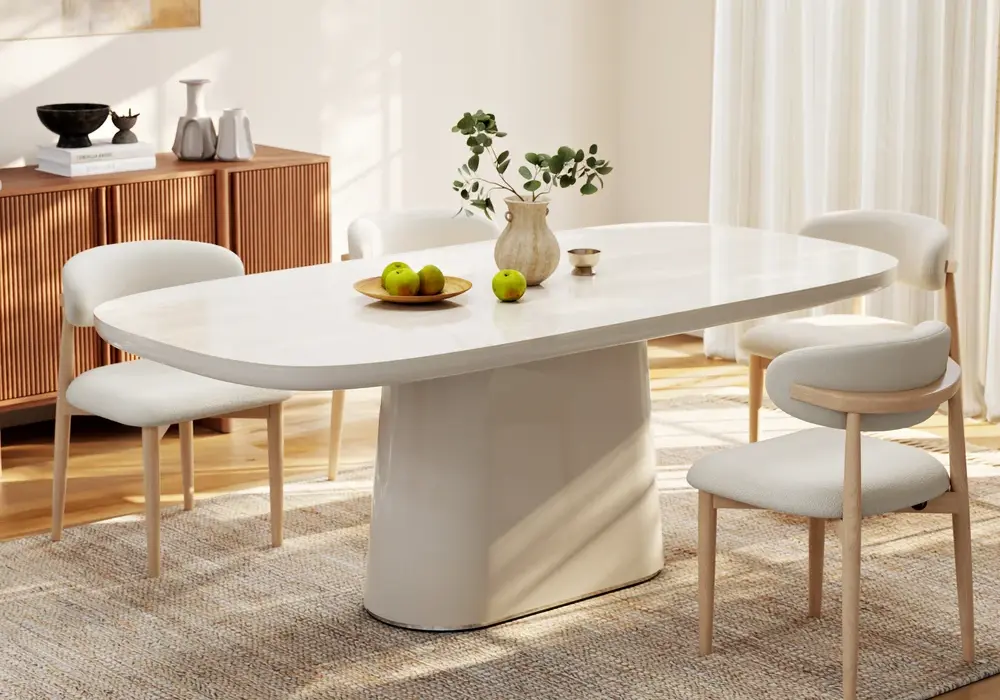
A tall arrangement can work as a display between meals, but move it before dining if it blocks faces or makes serving awkward. A lower centerpiece is usually easier to live with throughout the day.
Keep it stable and safe
Choose a stable vessel that does not tip easily when someone brushes the table. If it holds water, check the base for leaks and use suitable surface protection. Keep loose stems, dried flowers, and fabric away from flames. For a household with children or pets, consider sturdy objects and battery-powered candles rather than fragile glass and open flames within reach.
Choose a focal point that suits your routine
Fresh flowers are optional. A plant, a bowl of fruit, one sculptural object, or a favorite piece of pottery can provide a focal point. Use items that fit the room and your routine. A fruit bowl works well when the fruit is eaten and refreshed; it becomes less useful if it is only another object to move before every meal.
Choose linens and place settings together
Layer textiles with the tabletop
Lay out the runner, placemats, napkins, and dinnerware at the same time. Their combined pattern matters more than any one purchase. If the tabletop has pronounced veining or texture, a plain fabric can provide a quieter background. If the furniture is simple, a patterned napkin or textured runner may add enough character without introducing several competing colors.
Test placemats before buying
Use placemats that sit flat and suit the table's shape. On a compact round table, large rectangular mats can overlap near the center. Test the arrangement before buying a full set, especially with wide plates. If mats collide, try smaller shapes or use a tablecloth with appropriate heat and spill protection instead.
Scale place settings to the occasion
Keep place settings proportional to the occasion. Everyday dining may need a plate, glass, and napkin. A special meal may call for additional pieces, but leave room for diners' hands and serving items. Avoid adding unused glasses or decorative chargers if they crowd the table. The best arrangement is the one people can use comfortably.
Make the transition from everyday use to hosting easy
Style one table for weekdays and weekends
Many households need one table to handle both weekday meals and weekend dinners. An extendable dining table with a fluted storage base suits this rhythm. Day to day, keep a low ceramic bowl and a simple fabric runner in tones that echo the concrete-gray top and natural pedestal. When guests arrive, clear the surface, extend the table, and spread a few small pieces along the longer top. Everyday tableware can stay in the base, so the table is ready to reset quickly.
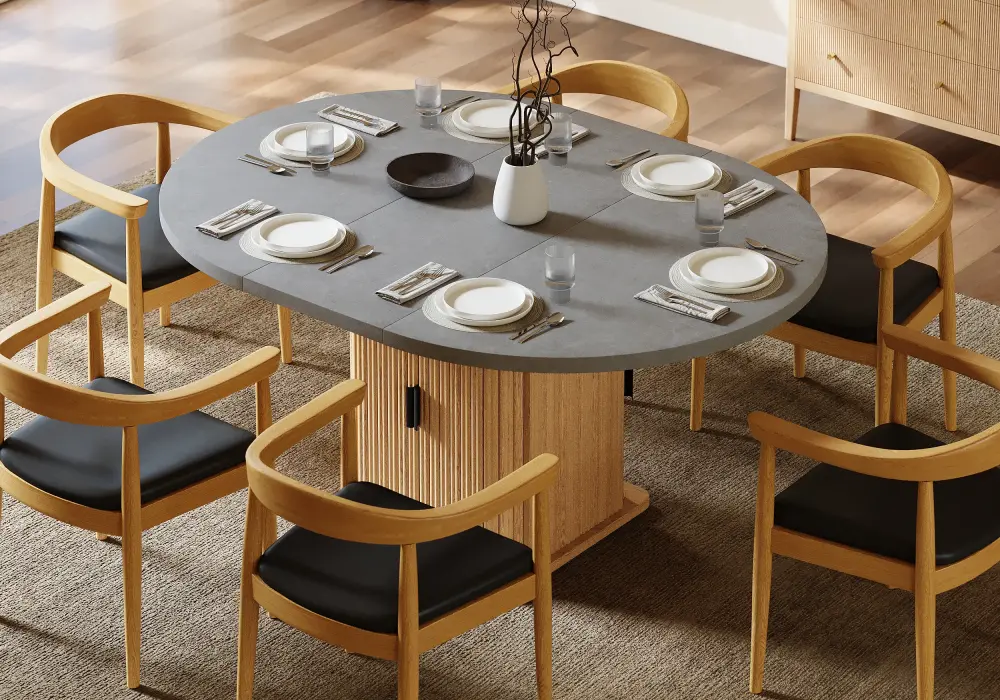
Plan where decor goes when guests arrive
Whatever the table, keep a clear place for decorative items when guests arrive. A tray can carry a small centerpiece to a sideboard, while a dedicated drawer or shelf can hold coasters and napkins. If you serve family-style meals, reduce the display before food reaches the table. If dishes are plated in the kitchen, you may be able to keep a modest centerpiece in place.
Situation | Useful styling approach | What to check |
Everyday meals | One low centerpiece and practical linens | Easy to wipe and clear |
Family-style dinner | Small arrangement with open serving space | Guests can pass dishes safely |
Plated gathering | Coordinated place settings and a low central display | Clear sightlines between diners |
Extended tabletop | Spread a few low pieces along the longer surface | Extension joints and chair positions remain usable |
Refresh without buying more
Refresh the table by changing one element at a time: flowers, napkins, a bowl, or the runner. This keeps the setup coherent and avoids buying a full set of seasonal accessories. Store the extras elsewhere so the dining surface remains a place to gather.
Protect the table while keeping it attractive
Care for the surface
Follow the care instructions for the exact tabletop and base. A wood-look top may be engineered wood; a stone-look top may have a veneer or another finish. Use trivets, coasters, and appropriate placemats rather than assuming a surface can tolerate direct heat or standing water. Wipe spills promptly and avoid abrasive objects underneath vases or trays.
Keep moving parts clear
If the table has a leaf, storage compartment, or moving section, keep access clear. Do not let a tablecloth catch in the mechanism, and remove heavy decor before operating it. Check the finished arrangement after cleaning: a display that takes too long to reset may be more elaborate than your routine needs.
Frequently Asked Questions
What should I leave on a dining table every day?
A low vase, bowl, or small tray is usually enough. Keep the display easy to move and leave space for the household's regular meals, work, and other activities.
Does a dining table need a runner?
No. A runner can connect a long arrangement or add texture, but a bare tabletop with suitable coasters and surface protection can look equally considered. Choose according to the table's finish and daily use.
How tall should a dining table centerpiece be?
Use seated sightlines rather than a fixed height rule. People should see one another comfortably across the table. Move taller arrangements elsewhere when dining if they block conversation.
How do I style a small round dining table?
Start with the place settings, then add one compact central object. Avoid oversized trays and overlapping placemats, and keep enough space for drinks and shared dishes.
How should styling change when I extend the table?
Clear the top before extending it, then reposition the centerpiece and place settings for the new shape. Check the leaf joint, seating positions, and serving space before adding more decor.