

If you are wondering “is teak good for outdoor furniture?”, the short answer is yes. Teak is one of the most naturally durable woods available for outdoor use, thanks to its dense structure, naturally occurring oils, and resistance to moisture, insects, and decay.
Unlike many outdoor woods that rely heavily on stains, sealers, or chemical treatments, high-quality teak can withstand years of exposure to rain, humidity, sunlight, and temperature changes with relatively little maintenance. It is particularly well suited to patios, decks, poolside areas, outdoor dining spaces, and uncovered gardens.
However, not all teak furniture is created equal. The wood's grade, source, construction quality, maintenance routine, and climate all influence how long it will perform.
So, is teak worth the investment? For homeowners looking for long-lasting outdoor furniture with a naturally elegant appearance, teak is often one of the strongest choices available.
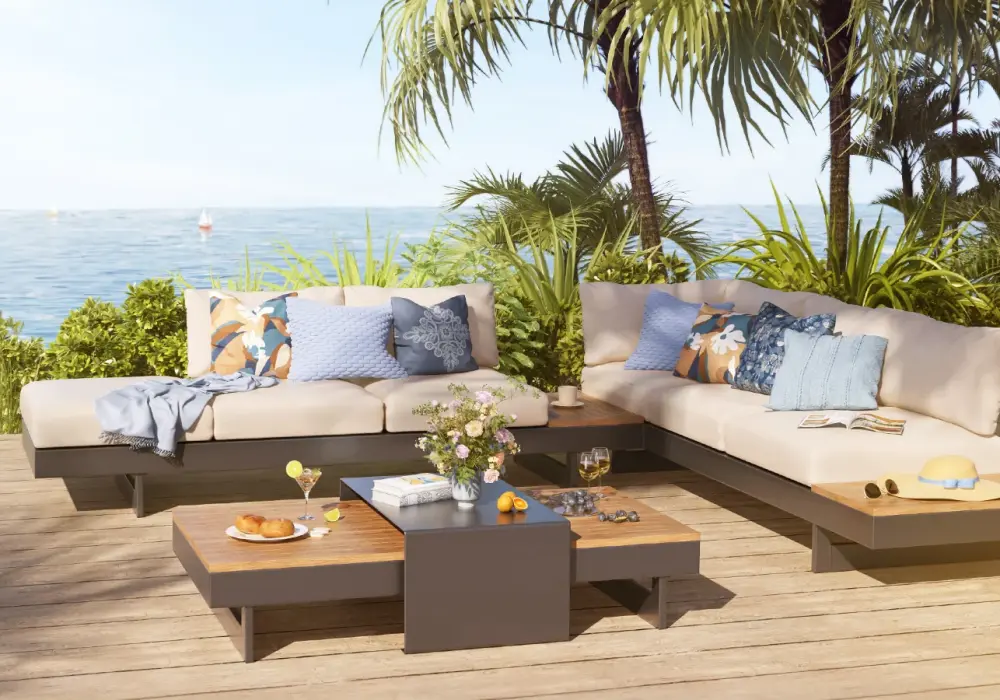
Source Homary
The Natural Longevity of Teak: Why It’s Built for the Outdoors
Teak's reputation as an outdoor furniture wood is rooted in its natural composition rather than simply its appearance.
The heartwood of mature teak contains naturally occurring oils and extractives that help make the wood resistant to water penetration, fungal growth, insects, and decay. Its dense grain also limits how quickly moisture moves through the material. Together, these properties allow teak furniture to remain structurally stable in outdoor environments.
One of the most important advantages is its natural water resistance. Teak oils help repel moisture rather than allowing water to penetrate deeply into the wood. This does not mean teak is completely waterproof, but it significantly reduces the risks associated with repeated wetting and drying.
Teak is also naturally resistant to many organisms that attack untreated outdoor wood. Fungi and insects generally have a harder time penetrating and degrading high-quality teak heartwood than less naturally resistant species.
This makes teak particularly useful across different U.S. climates:
U.S. Climate | Common Outdoor Challenge | How Teak Performs |
Northeast | Snow, freezing temperatures, freeze-thaw cycles | Excellent dimensional stability |
Southeast | High humidity, heavy rain, mildew | Strong natural moisture and decay resistance |
Southwest | Intense UV exposure and dry air | Excellent weather resistance |
Pacific Northwest | Persistent rain and dampness | Strong resistance to moisture and rot |
Coastal Areas | Humidity and salt-laden air | Durable, especially with proper hardware |
Teak also performs well under prolonged sunlight. Like other natural woods, it will gradually change color when exposed to UV radiation, but properly seasoned teak generally remains structurally sound as it develops its characteristic silver-gray patina.
This is an important distinction: color change does not necessarily mean structural deterioration.
Compared with cedar and acacia, teak generally offers a higher level of natural durability and moisture resistance, although properly maintained cedar and well-made acacia furniture can also perform effectively outdoors. The difference is that teak typically requires less protective treatment to achieve long-term outdoor performance.
Teak Maintenance Demystified: Cleaning, Oiling, and the Patina Journey
One of teak's biggest advantages is that you do not have to oil it to keep it functional outdoors.
That surprises many first-time teak furniture buyers. Teak can naturally weather from its original golden-brown color to a soft silver-gray tone. This patina is primarily a surface-level weathering process and does not mean the furniture is becoming unusable.
Your maintenance routine should therefore depend on the appearance you want.

Source Homary
Option 1: Let Teak Develop a Silver-Gray Patina
If you like the classic weathered look, maintenance is relatively simple:
- Remove leaves, dirt, and debris regularly.
- Clean the surface periodically with mild soap and water.
- Use a soft-bristle brush to remove stubborn dirt.
- Allow the furniture to dry naturally.
- Avoid aggressive pressure washing.
A gentle cleaning every few months is usually sufficient for furniture in relatively clean environments. Areas exposed to heavy pollen, coastal moisture, or tree debris may need more frequent cleaning.
Option 2: Maintain the Original Golden-Brown Appearance
If you prefer teak's warm honey color, you will need more maintenance.
A typical process involves cleaning the surface, allowing it to dry completely, lightly sanding weathered fibers when appropriate, and applying a teak-specific protective product according to its instructions.
Teak oil can enhance the appearance of the wood, but it is important to understand that oiling is primarily an aesthetic choice, not a requirement for structural protection. Some oil products can also attract dirt or encourage uneven discoloration if applied incorrectly.
For this reason, avoid treating teak like ordinary indoor wood.
Desired Look | Recommended Maintenance | Oil Required? |
Natural golden teak | Regular cleaning + periodic refinishing | Optional |
Silver-gray patina | Basic cleaning | No |
Heavy outdoor exposure | More frequent cleaning | Optional |
Stained or dirty surface | Prompt spot cleaning | No, unless restoring color |
Regional conditions can also change your routine. Furniture in humid Florida may need more frequent cleaning for mildew and organic debris, while furniture in dry Arizona may require more attention to dust and surface dryness.
For common stains, act quickly. Leaf stains can contain tannins that discolor wood, while barbecue grease and food oils can leave darker marks. Blot greasy stains instead of rubbing them deeper into the grain, then clean the area with mild soap and water. For more persistent discoloration, use a teak-safe cleaner and follow the manufacturer's instructions.
Understanding Teak Grades and Long-Term Value: What You’re Really Paying For
When comparing teak outdoor furniture, price differences can be confusing. One table may cost several times more than another even though both are described simply as “teak.”
The difference often comes down to the quality and portion of the wood being used.
The terms Grade A, Grade B, and Grade C teak are commonly used in the furniture industry, although these grades are not a universal global certification system with one standardized definition.
Generally, Grade A teak refers to high-quality mature heartwood with relatively consistent color, fewer knots, and a dense, straight grain.
Characteristic | Grade A Teak | Grade B Teak | Grade C Teak |
Wood portion | Primarily mature heartwood | More mixed material | Often higher sapwood content |
Grain | Dense and relatively consistent | Less consistent | More irregular |
Knots | Few | Moderate | More common |
Color | More uniform | Some variation | More variation |
Natural durability | Excellent | Good | Lower |
Typical value | Highest | Mid-range | Lowest |
The higher upfront cost of premium teak can make more sense when you consider total ownership cost rather than purchase price alone.
Imagine two outdoor dining sets. The cheaper set may initially cost less, but if it requires frequent refinishing, repairs, replacement parts, or eventual replacement, the savings can disappear over time.
High-quality teak can remain functional for many years with relatively limited maintenance. Its durability can also contribute to stronger resale value compared with lower-quality outdoor furniture.
Warranty terms provide another useful purchasing signal. A longer structural warranty does not automatically prove that a product is superior, but it can indicate that the manufacturer has greater confidence in its construction and materials.
Sustainability certifications are also worth checking. If environmental responsibility matters to you, look for credible certification information such as FSC certification and verify the claim rather than relying solely on marketing language.
Practical Comfort and Handling: Weight, Heat, Assembly, and Climate Adaptation
Teak is dense, and that density creates both advantages and disadvantages.
The biggest advantage is stability. A heavy teak dining table is less likely to move around when exposed to strong winds compared with lightweight plastic furniture. This can be particularly useful for exposed patios and coastal homes.
The downside is obvious: teak furniture can be difficult to move.
A large solid-teak dining table may require two or more people to reposition safely. If you frequently rearrange your patio, consider furniture with practical dimensions or built-in mobility features.
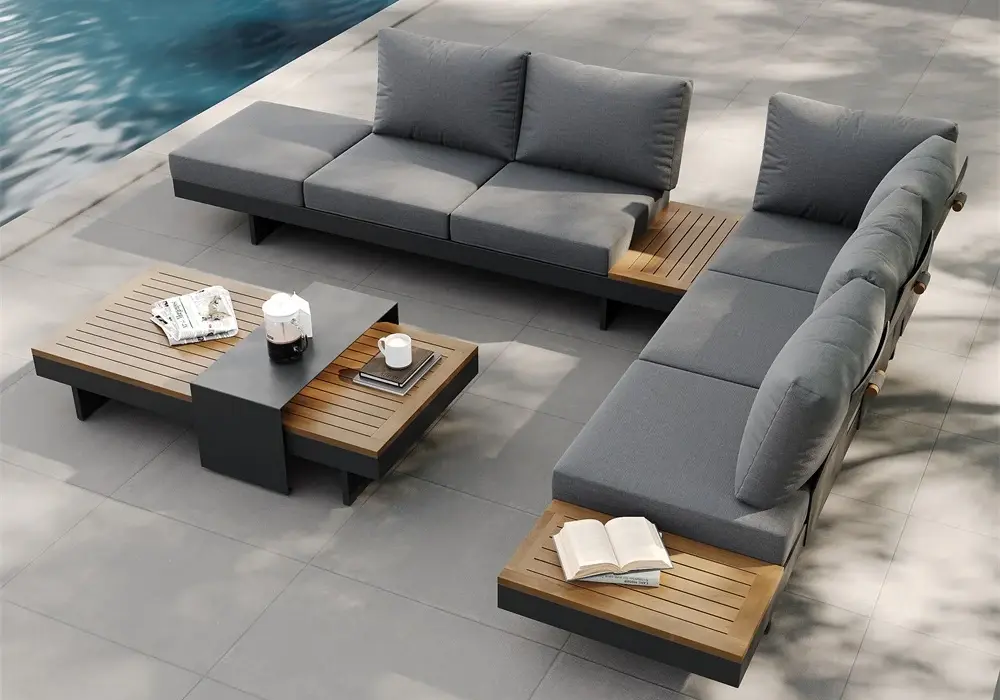
Source Homary
Does Teak Get Hot in Summer?
Yes. Any outdoor furniture exposed to direct summer sunlight can become hot, including teak.
However, teak generally has different thermal behavior from highly conductive metals. Metal furniture can transfer absorbed heat to the body rapidly, while wood is a comparatively poor thermal conductor. This means teak may feel less aggressively hot than metal under identical conditions, although direct sun can still make the surface uncomfortable.
The best solution is not to rely on the material alone. Use umbrellas, pergolas, shade sails, or strategically positioned outdoor cushions to reduce direct solar exposure.
For coastal properties, use stainless-steel hardware whenever possible. Salt-laden air can accelerate corrosion of ordinary steel fasteners even when the teak itself remains structurally sound.
In northern climates, teak can also tolerate winter exposure well, but good winter storage practices are still beneficial. Remove standing water, clean the furniture before snow arrives, and avoid trapping moisture beneath waterproof covers. If you cover teak furniture, choose breathable outdoor covers rather than tightly sealed materials that can trap condensation.
Another advantage is teak's relatively good resistance to ignition compared with some lightweight synthetic materials, although no wood should be considered fireproof. Always follow local fire-safety requirements and keep outdoor furniture away from open flames and heat sources.
Sustainable Sourcing: Certifications, Plantations, and Environmental Impact
Teak's durability makes it attractive from a sustainability perspective because a long-lasting piece of furniture does not need to be replaced as frequently. However, durability alone does not automatically make every teak product environmentally responsible.
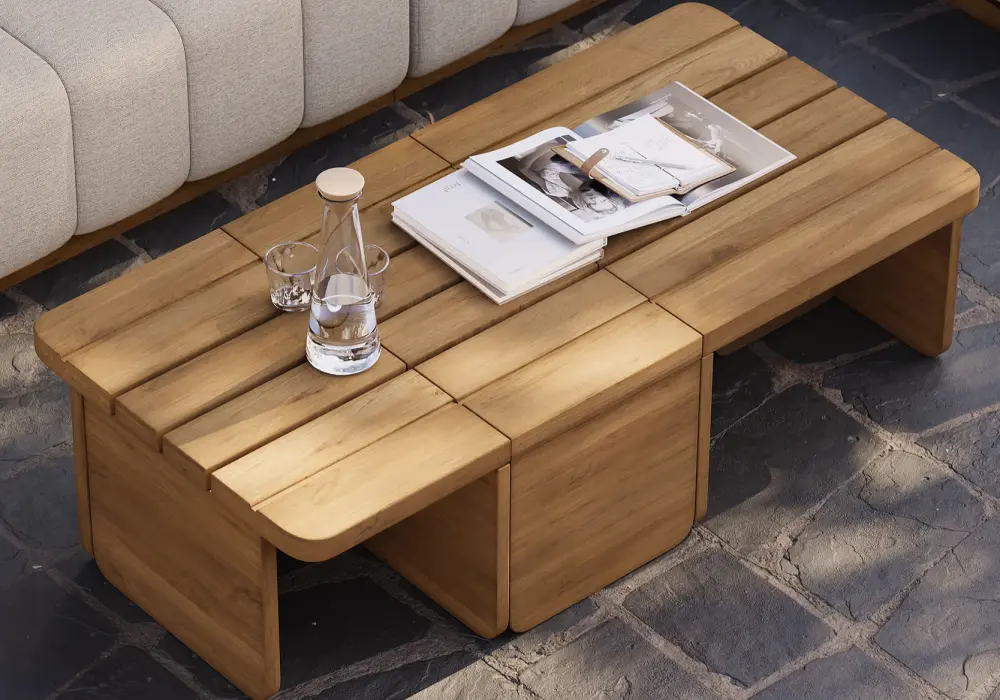
Source Homary
Where the teak comes from matters.
Consumers may encounter teak sourced from natural forests as well as plantation-grown teak. Historically, Myanmar has been an important source of natural teak, while Indonesia has developed extensive teak plantations, particularly on Java.
The environmental impact depends heavily on forest management, harvesting practices, land-use history, and traceability.
For American consumers, one of the most useful signals is FSC certification. The Forest Stewardship Council establishes standards for responsible forest management and chain-of-custody systems designed to track certified material through the supply chain.
When purchasing teak furniture, look for specific certification claims rather than vague statements such as “eco-friendly” or “sustainably sourced.” If a seller provides an FSC license or certificate number, consumers can use FSC's public certification database to verify the claim.
Plantation-grown teak can also play a role in responsible sourcing when plantations are properly managed. Well-managed plantations can provide a renewable supply of timber while reducing pressure on natural forests. However, the environmental value of a plantation depends on factors such as biodiversity, water management, soil protection, and whether natural ecosystems were cleared to establish the plantation.
Another increasingly popular option is reclaimed teak. Old teak from buildings, boats, bridges, or previously used furniture can sometimes be repurposed into new tables, benches, and decorative pieces. This approach extends the useful life of existing timber and can give furniture a distinctive character.
Ultimately, the most responsible purchase is not simply “buy teak.” It is buy durable teak from a transparent, traceable, responsibly managed source.
Is Teak Worth It for Your Outdoor Space?
So, is teak good for outdoor furniture? For most homeowners, yes—especially if durability, natural appearance, and low structural maintenance are priorities.
Teak's natural oils, dense heartwood, moisture resistance, and dimensional stability make it particularly well suited to outdoor conditions. It can handle humidity, sunlight, rain, and seasonal temperature changes while developing an attractive silver-gray patina over time.
Its main disadvantage is price. High-quality teak furniture can cost substantially more than furniture made from lower-cost wood, plastic, or lightweight metal.
But the better question is not simply, “How much does teak cost?”
Ask instead:
How much will this furniture cost me over its entire lifetime?
If a well-made teak dining table remains attractive and functional for decades while requiring relatively little structural maintenance, its higher initial price may represent a better long-term value.
Before buying, check the wood grade, construction method, hardware, warranty, dimensions, and sourcing information. Those details often matter just as much as the word “teak” on the product page.
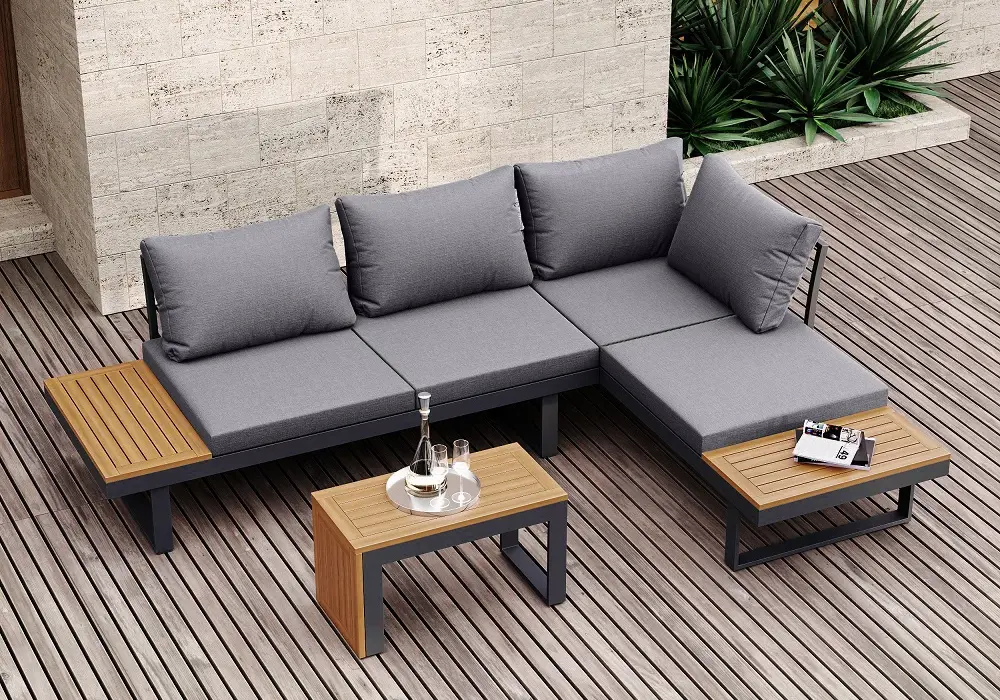
Source Homary
Frequently Asked Questions About Teak Outdoor Furniture
How should I clean and remove mildew from my teak outdoor furniture?
Start with a soft-bristle brush, mild soap, and water. Gently scrub the affected area and rinse thoroughly. Avoid overly aggressive pressure washing because high pressure can damage the surface fibers and leave the wood rough. For persistent mildew, use a teak-safe cleaner specifically designed for outdoor wood.
Do I need to oil or seal teak furniture to protect it outdoors?
No. High-quality teak does not require oil or sealer to remain structurally durable outdoors. Oiling is mainly used to preserve or enhance the original golden-brown appearance. If you prefer teak's natural silver-gray patina, basic cleaning is generally enough.
What is Grade A teak and why is it the best choice for outdoor furniture?
Grade A teak generally refers to high-quality mature heartwood with dense grain, relatively few knots, and consistent coloration. However, “Grade A” is an industry term rather than a universal certification, so buyers should also evaluate the actual wood source, construction quality, and manufacturer documentation.
Will teak furniture become too hot to sit on in summer sun?
Teak can become hot when exposed to direct sunlight, but wood generally conducts heat less aggressively than metal. For maximum comfort, use cushions or shade structures such as umbrellas and pergolas, particularly during peak afternoon sun.
Can teak withstand freezing winters and repeated freeze-thaw cycles?
Yes. Teak's dimensional stability and natural moisture resistance make it well suited to climates with seasonal freezing. However, winter maintenance still matters. Keep surfaces clean, prevent standing water, and use breathable covers if furniture must remain outdoors.
How can I ensure my teak furniture is sustainably and ethically sourced?
Look for transparent sourcing information and credible certifications such as FSC. If a seller claims FSC certification, ask for the relevant certification or license information and verify it through the FSC certification database. Plantation-grown teak can also be a responsible option when the plantation is properly managed and traceable.
How does teak compare to other popular outdoor woods like cedar and acacia in terms of longevity?
Teak generally has the strongest natural durability of the three and requires less protective treatment. Cedar is naturally resistant to decay and relatively lightweight, but it is softer and can weather more quickly. Acacia can provide good outdoor performance at a lower price, although its longevity depends heavily on species, construction, finish, and maintenance.
Protect Your Teak Investment for Years to Come
A quality teak furniture set is more than a seasonal patio purchase. With the right wood, responsible sourcing, durable construction, and a simple maintenance routine, it can become a long-term part of your outdoor living space.
The key is knowing what your teak actually needs—and what it doesn't.
You don't need to constantly oil it. You don't need to panic when it turns silver-gray. And you don't need to replace it every few seasons simply because it has developed signs of natural weathering.
Choose responsibly sourced teak, keep it clean, protect it from unnecessary environmental stress, and let its natural durability do the rest.
Ready to make your teak furniture last longer? Get your personalized outdoor teak maintenance checklist and protect your investment through every season.