

A rectangle patio furniture layout should make the most of your available space without sacrificing comfort or movement. The best arrangement depends on your patio's dimensions, entry points, and how you plan to use it.
Before choosing furniture, measure the patio and identify any obstacles that affect placement. Then explore layouts that suit your space, from a sofa along one edge to a complete lounge and dining arrangement.
These five rectangle patio furniture layout ideas will help you plan a functional outdoor space and choose furniture that fits your lifestyle.
Table of Contents
1. Measure Your Patio and Identify Constraints
Start by measuring the patio's length and width. Draw a simple floor plan and mark doors, steps, gates, railings, fixed planters, and other features that cannot easily be moved.
Next, identify the main walking route. A door at one short end creates different circulation needs from a sliding door along the long side. Keep the route clear before adding furniture.
Measure the complete footprint of each piece, including sofa arms, chaise sections, sectional returns, coffee tables, and dining chairs when pulled out. Consider the occupied arrangement, not just how the furniture looks when nobody is using it.
Also identify your primary activity. A patio designed for relaxing needs a different arrangement from one used for outdoor dining or entertaining guests.
The goal is to create a layout that fits your furniture and everyday routine, rather than filling every available inch.
2. Choose a Layout That Matches Your Patio
Layout option | Best for | Main consideration |
Sofa along one long edge | Narrow rectangular patios | Table depth and walking space |
L-shaped seating at one end | Dedicated lounge areas | Entrance and sectional orientation |
Lounge and dining zones | Long patios | Space for pulled-out dining chairs |
Facing seating | Wider patios | Combined furniture depth |
Modular seating | Flexible entertaining | Configuration and storage |
Use these options as a starting point. Choose the arrangement that supports your main activity while keeping entrances and essential routes accessible.
3. Five Rectangle Patio Furniture Layout Ideas
Layout 1: Place a Sofa Along the Long Edge
For a narrow rectangular patio, place the main sofa parallel to a long edge. This creates a defined lounge while leaving the opposite side available for movement.
Position a coffee table within easy reach, then check whether enough space remains for the main route. If the arrangement feels cramped, replace the coffee table with compact side tables or choose a shallower sofa.
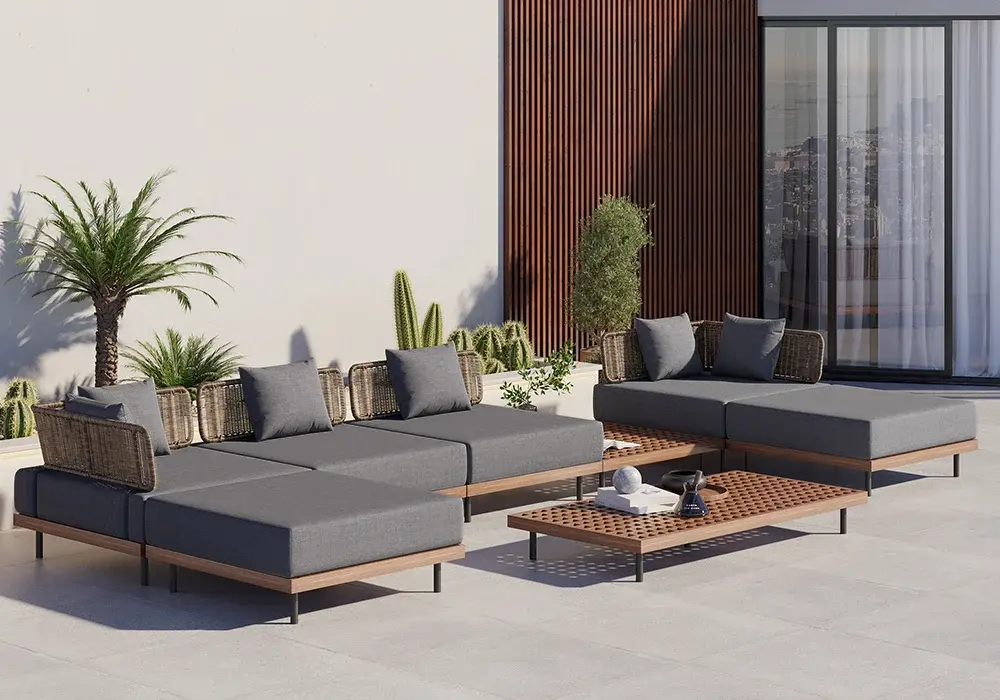
For a more complete outdoor lounge, consider Homary's 8 PiecesTeak & Aluminum & Rattan Outdoor Sectional Sofa Set with Coffee Table. Its combination of natural teak, handwoven PE rattan, an aluminum frame, and gray cushions creates a coordinated look without mixing unrelated furniture styles. The set includes a teak-top coffee table and two versatile ottomans that can serve as footrests or additional seats.
With seating for up to six and modular components, it is particularly appealing for a medium-to-wide rectangular patio where you want a more substantial lounge.
Layout 2: Create an L-Shaped Lounge at One End
An L-shaped sectional can turn one end of a rectangular patio into a comfortable gathering area. The remaining length stays open for circulation or another activity.
Position the return so it frames the lounge without blocking the entrance. Place the table within reach of both seating sections, and check that people can approach and leave their seats without squeezing around furniture.
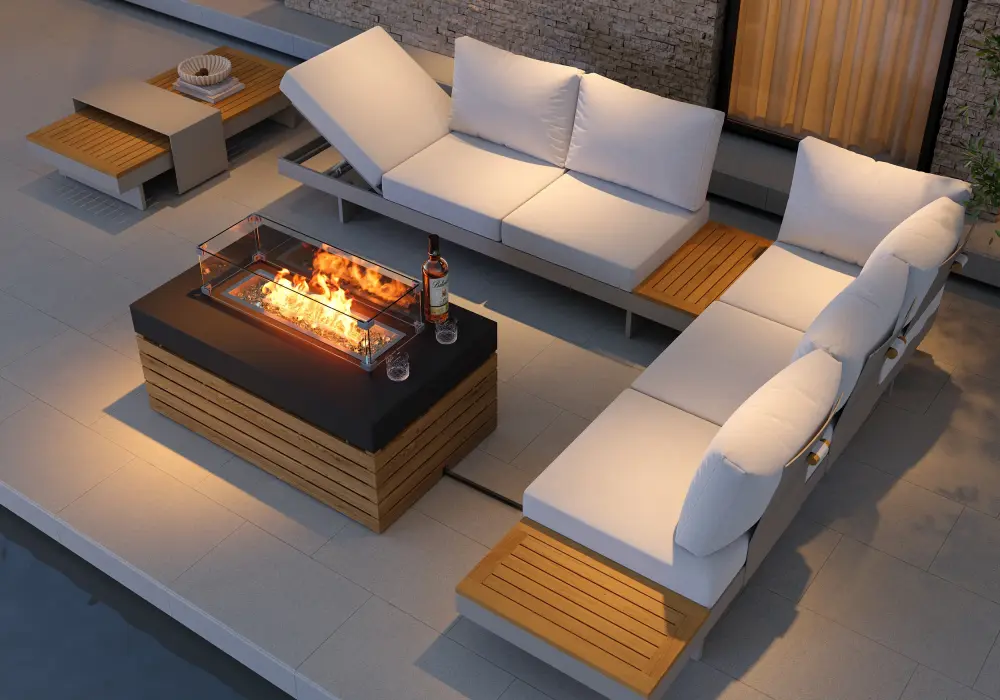
For a lounge that doubles as an evening entertaining space, Homary's Tevara 5-Pieces Modular Teak Outdoor Sofa Set with Smokeless Fire Pit 6 Person in Warm White is a compelling choice. Its teak and aluminum construction, warm white cushions, matching table, and integrated fire pit create a coordinated focal point rather than a collection of separate pieces.
The modular seating can be arranged in different configurations, including L-shaped and linear layouts, making it easier to adapt the lounge to your patio's proportions. Designed for up to six people, it suits homeowners who want their outdoor seating to feel like a destination for conversation and relaxation.
Layout 3: Divide a Long Patio Into Lounge and Dining Zones
A long rectangular patio may accommodate two functional areas arranged along its length. Place the dining zone near the kitchen or house entrance, then position the lounge near a view or planted area.
Start with the larger or more frequently used activity. If outdoor meals are a priority, choose the dining table first and account for chairs when pulled out. Then fit the lounge into the remaining space.
Keep the connection between the zones open. Avoid filling the transition with extra tables or planters that interrupt the route between dining and seating.
Use complementary furniture finishes or cushion colors to create a cohesive design without making both areas look identical. If the patio cannot accommodate both zones comfortably, consider a smaller dining set or a compact serving table instead.
Layout 4: Arrange Facing Seats on a Wider Rectangle
A facing seating arrangement works well when conversation is the main purpose of the patio and enough width is available.
Position a sofa on one side and one or more chairs opposite, with a coffee table between them. Before adding the second seating side, calculate the combined depth of both groups and the table.
Remember to account for the space needed to approach seats and move around the grouping. If a chair obstructs the entrance when occupied, reposition it or choose a more compact arrangement.
This layout can create a balanced, welcoming conversation area. However, if your patio is narrow, a sofa along one edge may offer a better balance between seating and circulation.
Layout 5: Use Modular Furniture for Everyday Living and Gatherings
If you regularly switch between quiet lounging and entertaining, modular furniture allows you to adapt the arrangement to different occasions.
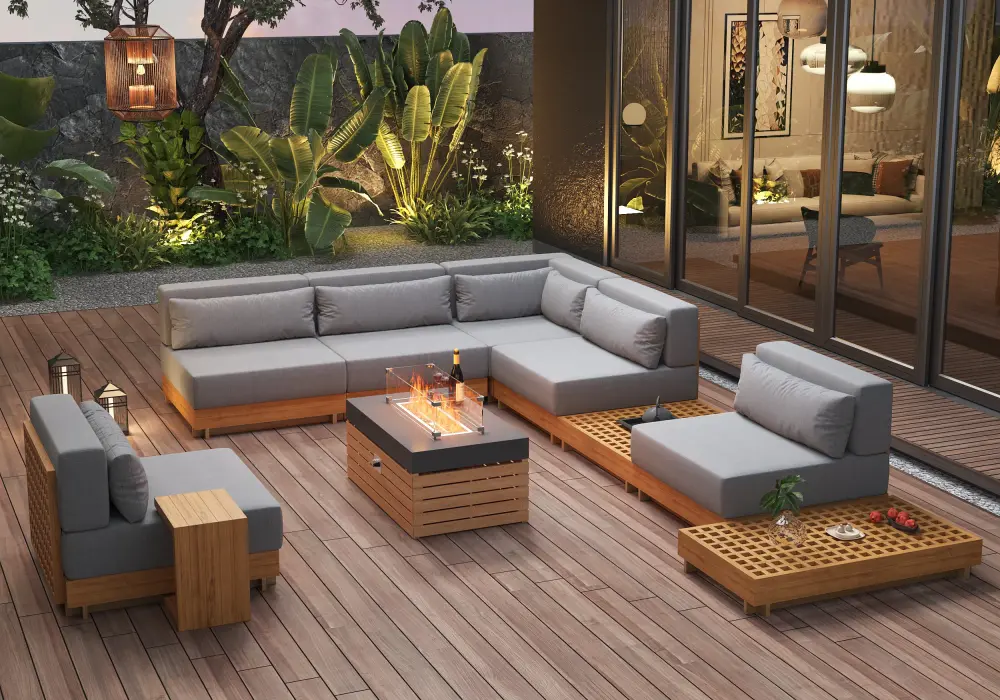
For a larger rectangular patio, Homary's Grida 10-Pieces Premium Teak Modular L-Shaped Outdoor Sofa Set with Fire Pit in Gray is worth considering. Its teak seating, gray cushions, multiple tables, and propane fire pit help create a substantial outdoor gathering area with a coordinated, premium appearance.
The set combines six sofa chairs with three coffee tables and a fire pit, providing several components for organizing a spacious lounge. The modular design is especially useful when you want to adjust the seating arrangement for different gatherings rather than keep a single fixed configuration.
This is a better match for a generous patio than a cramped one. Map the full configuration before buying, and decide where extra components will go when they are not needed. With a larger set, flexibility is valuable only when every configuration leaves the main routes accessible.
4. Calculate Furniture Spacing Before Buying
A simple calculation can help determine whether a proposed layout is realistic.
Suppose your patio is 12 feet wide, or 144 inches. Imagine an arrangement with:
- Sofa depth: 36 inches
- Gap between sofa and table: 18 inches
- Coffee table depth: 24 inches
- Walking route beyond the table: 48 inches
The total is:
36 + 18 + 24 + 48 = 126 inches
This leaves 18 inches within the hypothetical patio width. However, those remaining inches do not automatically provide enough room for another chair or furniture piece.
These figures are illustrative, not universal spacing rules or product measurements. Check the actual furniture footprint, required access, and site conditions before deciding on the final arrangement.
Repeat the calculation along the patio's length, including the sectional return and any dining zone. You can also use painter's tape to mark the proposed furniture positions on the ground and test the walking routes before ordering.
5. Add Tables and Accessories After the Main Layout Fits
Once the primary furniture fits, add the smaller details.
Choose coffee and side tables based on which seats need access to a surface. For dining or serving, place tables near the natural route between the house and seating areas without obstructing doors or walkways.
Use outdoor rugs and planters to distinguish functional zones, but avoid letting accessories crowd the main route. Consider where cushions and decorative items will be stored when they are not in use.
For evening gatherings, make sure entrances, steps, and table surfaces remain visible. Any lighting or outdoor appliance should be suitable for its installation conditions.
6. Test the Layout Before Ordering
Before committing to furniture, walk through the activities the patio needs to support.
Enter from the house, approach the seating area, sit down, and imagine serving drinks or carrying plates outside. If the patio includes dining, test the arrangement with chairs pulled out.
Check the assembled dimensions of the exact furniture configuration you plan to buy. For modular sets, verify the supported arrangements rather than assuming every piece can be positioned in any combination.
The best rectangle patio furniture layout is not the one that fits the most furniture. It is the one that makes everyday use comfortable while leaving enough flexibility for gatherings.
Frequently Asked Questions
What Is the Best Layout for a Narrow Rectangular Patio?
A sofa along one long edge is a useful starting point because it can preserve space for a route on the opposite side. Measure the sofa and table together before adding more seating.
Should an L-Shaped Sofa Go in the Corner?
It can, provided the sectional return does not block the entrance or main route. Check the sofa's orientation against the door location and available space.
Can I Fit Dining and Lounge Furniture on the Same Patio?
Yes, if both arrangements and the route between them fit comfortably. Start with the larger activity, account for pulled-out dining chairs, and add the second zone only when enough space remains.
How Do I Know Whether a Modular Set Will Fit?
Check the manufacturer's assembled dimensions and configuration diagrams, then mark the footprint on your patio. Allow for tables, projecting sections, and access to every seat.
Can I Put a Fire Pit in the Middle of a Rectangular Patio?
The location depends on the specific appliance and site conditions. Follow the manufacturer's instructions for clearances, fuel placement, and safe operation before finalizing the furniture arrangement.