

A small wood TV stand has two jobs in a compact room: keep the walkway clear and hold everything you watch with. Shallow depth does both. A console that is 16 to 18 inches deep sits close to the wall and leaves floor space in front. That works in a studio, a living-dining combo or a bedroom TV wall.
This guide shows how to size a stand for your room and TV, what the wood terms on a product page mean, and how to set up a media wall that looks calm and works every day. It then walks through three wood-toned consoles that suit rooms with one clear wall. To see the full range first, browse our TV stands and media consoles.
Table of Contents
What "Small" Really Means for a TV Stand
"Small" describes how a piece fits your room, and it covers four measurements:
- Width decides whether the stand fits the wall you have. Measure the clear stretch between trim, curtains, radiators and door swings, not the full length of the wall.
- Depth decides how much floor you keep. A stand 15 to 18 inches deep reads as slim. A stand over 20 inches deep takes noticeably more space in a narrow room.
- Height shapes how light the wall feels. Low consoles (under about 20 inches) leave windows and wall art visible. Taller ones (around 30 inches) double as a sideboard and add storage.
- Visual weight is about how heavy the piece looks. Raised legs, light wood tones and open space under the cabinet make the same footprint feel smaller.
A stand that is wide but shallow and raised on legs can feel smaller than a narrow, deep, boxy one. When you compare options, look at all four, not just the width.
Measure Before You Shop
Five minutes with a tape measure saves a lot of returns. Work through these steps:
- Clear wall width. Measure between the real obstacles: trim, curtains, radiators, outlets you need to reach, and door swings.
- Front clearance. Add the stand's depth to the space drawers or doors need to open fully. Then check the path in front. Aim for at least 30 to 36 inches of walkway where people move through the room.
- Rear clearance. Leave a couple of inches behind the stand for plugs and cable bends so it sits straight against the wall.
- TV width. Measure your TV's actual width, not just the diagonal. Then check the spacing of its feet or stand, because some feet sit at the far edges of the screen.
- Viewing distance. A comfortable range is roughly 1.5 to 2.5 times the screen diagonal. A 55-inch TV works well about 7 to 11 feet from the sofa.
Quick TV-to-stand sizing guide
TV size (diagonal) | Approx. screen width | Stand width to look for |
43" | 37.5" | 42"+ |
50" | 43.6" | 48"+ |
55" | 48" | 52"+ |
65" | 56.7" | 60"+ |
75" | 65.4" | 70"+ |
These are guidelines for freestanding TVs. A stand that is at least as wide as the TV, with a few extra inches on each side, looks balanced. If you mount the TV on the wall, the stand no longer has to match the screen width, and a shorter console can anchor the wall with storage and décor.
What the Wood Terms on a Product Page Mean
Furniture listings use several terms for wood. Knowing them helps you pick the style and care level you like.
Term | What it is | Why people choose it |
Solid wood | Boards cut from a single piece of timber | Natural grain, strong joinery, can be refinished |
Wood veneer | A thin layer of real wood bonded to a stable core | Real grain with consistent look and good resistance to warping |
Plywood | Thin layers of wood glued in alternating directions | Strong, stable, works well for frames and long spans |
Engineered wood (MDF, particleboard) | Wood fibers or chips pressed with resin | Smooth surfaces for painted or finished fronts, good value |
Finish / wood-look | A stain, paint or printed surface applied to a base | Lets a color, such as walnut, appear on a range of materials |
Many well-made consoles combine these on purpose, for example a solid wood frame with veneer panels and a stone top. Each material does the job it suits best. When you compare pieces, read the specification for the frame, the fronts and the top, and look for details such as kiln-dried wood, which is dried to a stable moisture level before it is built.
Wood species you will see most often
- Ash is light in color with a clear, flowing grain. It suits Scandinavian and mid-century rooms.
- Walnut is deeper and richer, often chosen to give a room warmth and contrast.
- Oak has a bold grain and comes in light to medium tones, and it pairs with many styles.
- Pine is lightweight and takes stain well, which makes it a popular frame wood.
- Acacia and mango show lively grain and color variation, common in casual and rustic looks.
Choosing a Wood Tone for a Small Room
Color affects how big a room feels. A few guidelines help:
- Light tones (natural ash, whitewashed oak) bounce light and keep a compact room airy. They suit north-facing rooms and pale walls.
- Mid tones (honey oak, natural pine) feel warm without taking over. They are forgiving with mixed furniture.
- Dark tones (walnut) add depth and a focal point. In a small room, balance them with light walls or a light rug so the room doesn't feel closed in.
Pick a tone that echoes something already in the room, such as the floor, a coffee table or the picture frames. You do not need to match exactly. Two woods of similar warmth look intentional, and a contrast looks deliberate when it repeats elsewhere in the room.
Our Picks: Three Wood-Toned Consoles for Small Rooms
All three consoles below are 16 to 18 inches deep, so they leave walkway space in front. Pick by the wall you have and how you live in the room.
Velar Extendable Console: The Flexible Fit for Studios and Open-Plan Rooms
The Velar 71–114-inch Sintered Stone Top Extendable TV Stand is only 14 inches high and 16 inches deep. Its multilayer plywood frame, fluted front and pale sintered stone top give it a light, low profile.
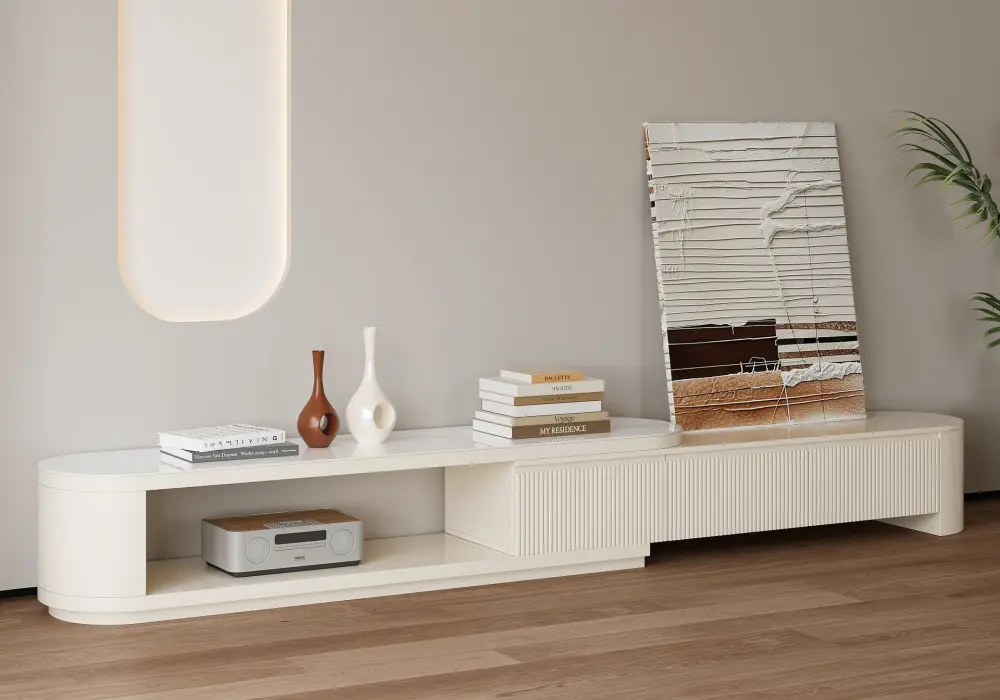
Three drawers keep remotes, controllers and chargers one pull away. The sintered stone top is a good spot for a soundbar, a plant or a small lamp.
Best for: renters, studio dwellers and anyone who wants a low, airy media wall that can change with the room.
Aura 65" Ash Wood Console: The Wood-Forward Pick
The Aura 65" Ash Wood Slatted TV Stand with Sintered Stone Top is the shortest of the three at 65 inches wide, and its ash-wood slatted front shows the most grain. The sintered stone top has a travertine-style surface and resists heat and scratches. It wipes clean in seconds. Kiln-dried ash resists warping and cracking.
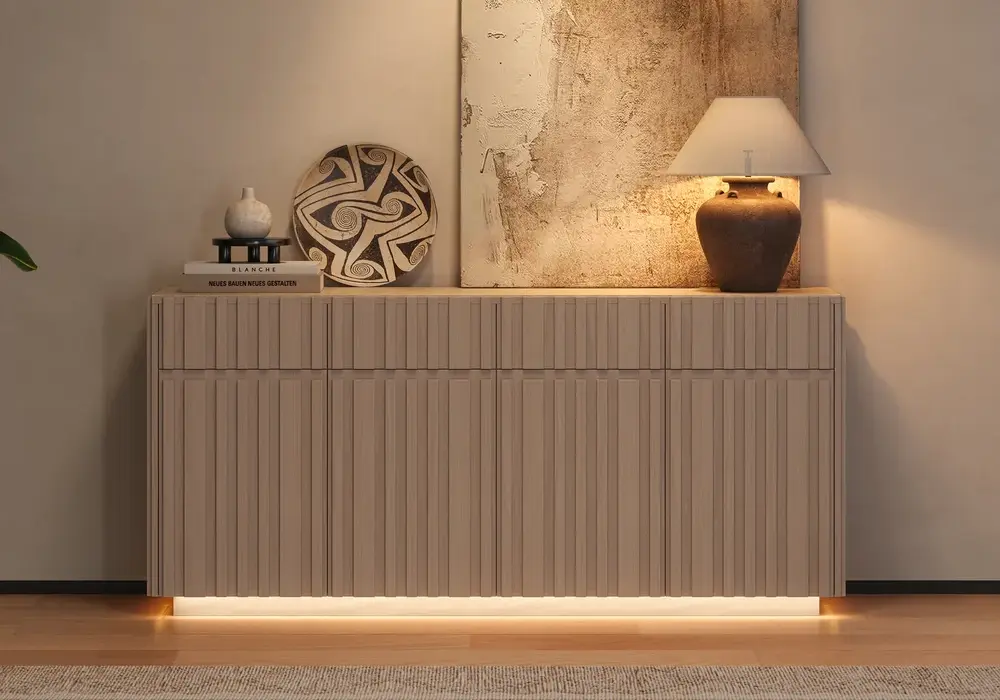
The heat-resistant top also handles a warm mug or serving dish when you entertain.
Best for: small living rooms that want a warm wood look and one piece that does the work of several.
Lake Wavy-Front Console: Mid-Century Warmth With Four Silent-Close Drawers
The Lake Mid-Century TV Stand with 4 Wavy Walnut Drawers is 71 inches wide, 16 inches deep and 20 inches high. A solid pine frame carries wavy walnut-finish fronts and gold-tipped legs. It is sized for TVs up to 75 inches and supports up to 220.5 pounds. Assembly is just attaching the legs, about 15 minutes.
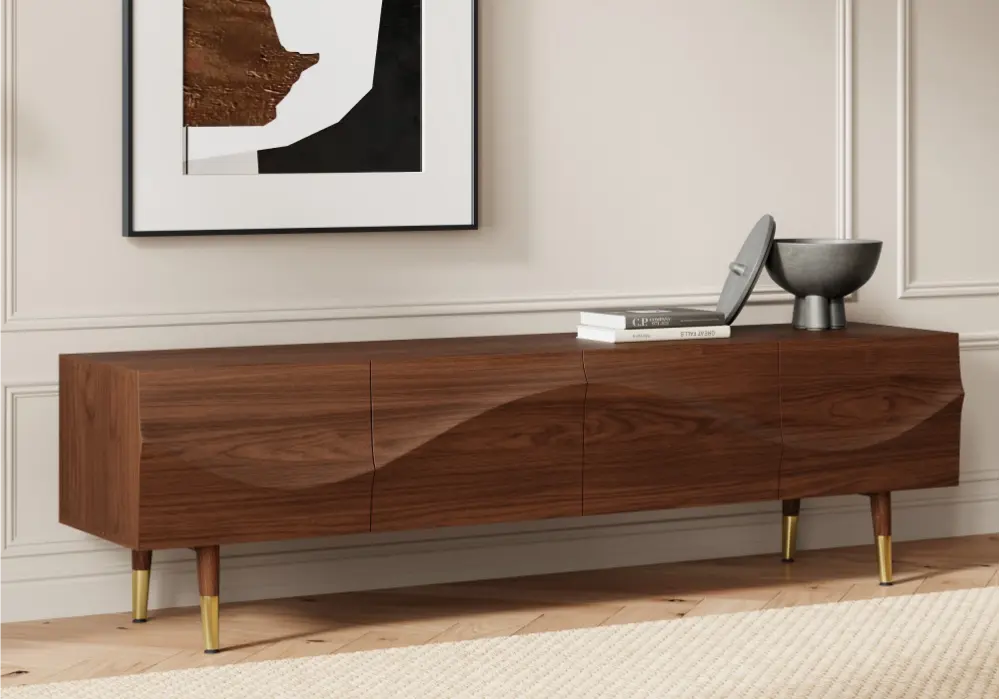
Best for: people who want a statement walnut look and a drawer for every category of clutter.
Caring for a Wood TV Stand
A little routine care keeps wood and stone surfaces looking good for years:
- Dust weekly with a soft, dry microfiber cloth that follows the grain.
- Wipe spills right away with a damp cloth, then dry the surface.
- Use coasters and trays on wood tops. Stone tops tolerate heat and scratches well but still benefit from wiping after spills.
- Avoid direct sun for long periods, which can fade finishes. Curtains or a sheer shade help in bright rooms.
- Keep humidity steady. Wood prefers a stable indoor range, roughly 30 to 50 percent humidity, so avoid placing it right beside a heater or vent.
- Check hardware every few months. Tighten leg screws and drawer pulls if they loosen.
Frequently Asked Questions
What width counts as a small wood TV stand?
There is no single cutoff. In a small room, depth and clear wall length matter as much as width. Stands that are 15 to 18 inches deep with a width that fits your wall and your TV give the best balance of storage and floor space.
How deep should a TV stand be in a small room?
A depth of 15 to 18 inches suits most compact rooms. It holds a TV base, a soundbar and standard media gear, and it leaves walkway space. Check the depth of your TV's feet and any equipment you plan to put on top.
Should the TV stand be wider than the TV?
Yes, for a freestanding TV. A stand at least as wide as the screen, with a few extra inches on each side, looks balanced and keeps the feet well supported. With a wall-mounted TV, the stand can be shorter.
What is the difference between solid wood and wood veneer?
Solid wood is made from boards of timber. Veneer is a thin layer of real wood bonded to a stable core, which gives a consistent grain and good resistance to warping. Many quality pieces use both, such as a solid wood frame with veneer panels.
Does a walnut TV stand have to be solid walnut?
No. Walnut often describes the color or finish of the piece. A walnut finish can sit on a pine frame, a plywood panel or a veneer, and the result can be both attractive and sturdy. Read the specification to see how each part is made.