

Powder-coated aluminium is a practical outdoor sofa frame for many wet or humid climates. For a low-maintenance alternative, look for outdoor-grade HDPE lumber. Teak suits buyers who want real wood and are comfortable with its finish changing outdoors. When comparing outdoor sectionals and sofas, check the cushions, weave, fasteners, and drainage as closely as the frame. A sofa’s weakest exposed component can determine how much upkeep the entire set needs.
Start with the conditions the sofa will face most often. A windy deck needs a different setup from a rainy covered porch. Below, you can match materials to the climate, then compare the details that matter when choosing a complete seating set.
Table of Contents
Most Durable Outdoor Sofa Frame Materials by Climate
Powder-coated aluminium for routine rain and humid air
Aluminium is an everyday choice for people who need furniture that is relatively easy to move and clean. It does not form iron rust, though it can corrode and its finish can deteriorate. A smooth, continuous coating, well-finished joints, and hardware intended for outdoor use matter, especially near the coast. Look underneath the frame as well as at its visible edges. Feet and brackets can be exposed to splashback and can be harder to rinse than the upper rails.
Consider the trade-off between easy handling and weight. A light sectional module is helpful when you need to rearrange a patio. In a wind-exposed location, it also makes planning where to put the module before storms more important. Ask for individual piece weights, check the maker’s placement and storage guidance, and include loose cushions and tables in your storm plan.
Teak for outdoor wood with a changing finish
Teak is commonly used for outdoor furniture, and its exposed surface can weather to a silvery grey. If you want to preserve a warmer original appearance, ask which treatments the furniture maker approves and how often they need attention. Check for trapped moisture where wood meets the frame or where the sofa sits on damp paving. Elevated feet and open construction make these spots easier to inspect and dry.
On a mixed-material sofa, care for the wood and metal separately. A cleaner or finish that is appropriate for teak may be unsuitable for a coated frame or textile. Check the instructions before applying teak products to an adjacent material, and make sure you can reach the wood surfaces without saturating the cushions.
Outdoor-grade HDPE lumber for low-maintenance seating
High-density polyethylene lumber is a useful option for moisture-prone patios if you prefer a solid, painted-wood look. Look for outdoor-rated construction and a stated approach to UV exposure, such as UV inhibitors in the material. Ask about the fasteners, the support under the seat, and the maker’s guidance for a hot deck or exposed winter storage. Product-specific construction matters as much as the label on the boards.
Coated steel can also work on a sheltered patio if you prefer its weight or appearance and can inspect the finish. Pay attention to coating damage around feet and connections. Where a steel frame will be regularly exposed to salt spray or standing moisture, get the maker’s guidance before choosing it. Which material is easiest to live with depends in part on what you can realistically clean, move, or cover.
Best Weaves and Cushions for Sun, Rain, and Salt
Outdoor rope and resin wicker are different surface constructions. Rope can add a softer, open texture over a metal frame. Synthetic wicker gives a tighter woven look. For either, look for the actual fibre or resin, a specific UV claim if it will receive strong sun, and a cleaning method that you can use on the assembled furniture. Check the underside and ends of the weave. A patio with airborne grit or pollen can make a tight weave more demanding to maintain than an open frame.
Choose the cushion assembly as a whole. Solution-dyed acrylic or olefin may be sensible choices for strong sun when the specific fabric is outdoor-rated. In a wet climate, ask about the drained seat base, quick-drying foam if available, and air circulation under the cushion. Water-resistant fabric can shed a brief shower while water still reaches the interior through seams or zips. Removable covers help you follow the care instructions, but check whether those instructions allow machine washing.
Main exposure | What to prioritise | What to check before buying |
Persistent rain and humidity | Coated aluminium or outdoor-grade HDPE, open drainage, cushions you can dry | Whether rain collects below the seat and whether the inserts can be lifted out easily |
Strong sun | UV-rated weave or finish and outdoor fabric with stated fade resistance | Which components the UV claim actually covers |
Coastal salt or frequent pool splash | A frame and hardware approved for the exposure, with a finish you can rinse and inspect | Care instructions for salt or pool residue, including feet and joints |
Freezing weather or wind | A dry storage plan, serviceable parts, and furniture you can manage before storms | Weights of separate pieces and the maker’s storage instructions |
Where the patio is both sunny and wet, keep the drying plan simple. Which cushions will you move, and where will you put them when they come indoors damp? At the coast, find out whether the manufacturer recommends fresh-water rinsing and how to do it without letting water collect in joints or recesses. Manufacturer care guidance takes priority because coatings, fabrics, and weaves vary by product.
Check repair options before committing to the set. A replacement foot, cover, or cushion can keep a sound frame in service after one exposed component wears out. Ask whether the replacement parts can be ordered individually and whether the upholstery uses standard dimensions. This is especially useful for curved seats or corner sections that need shaped inserts.
How Three Homary Designs Handle Different Priorities
Aluminium with a handwoven rope finish
The grey 6-piece outdoor rope weave sofa set with coffee table layers handwoven rope over an aluminium seating frame. It gives you separate seating and tables for a larger patio, with removable cushion covers for cleaning.
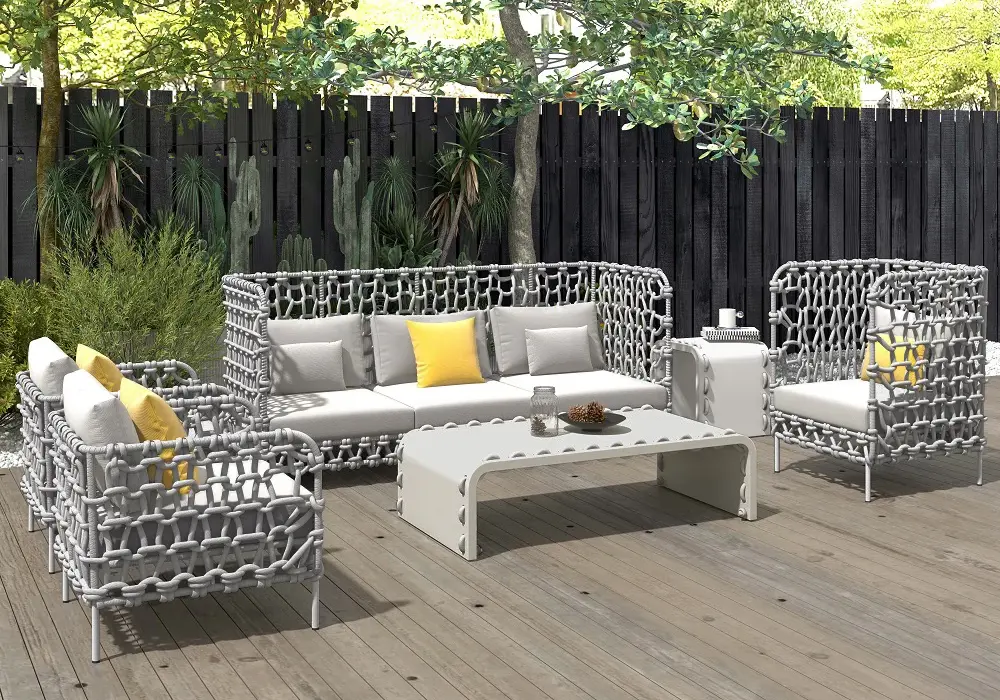
The product specifications list the covers as unsuitable for machine washing. If your yard collects a lot of pollen, check whether you can reach behind the cushions and between the ropes with the approved tools. A clear route around the pieces is useful for cleaning as well as for guests.
Teak and aluminium with swivel seating
The Tevara set of two outdoor teak swivel lounge chairs shows how a mixed-material patio layout can combine an aluminium frame with teak details. These chairs can add seating to an existing sofa arrangement when you want to turn between two conversation areas.
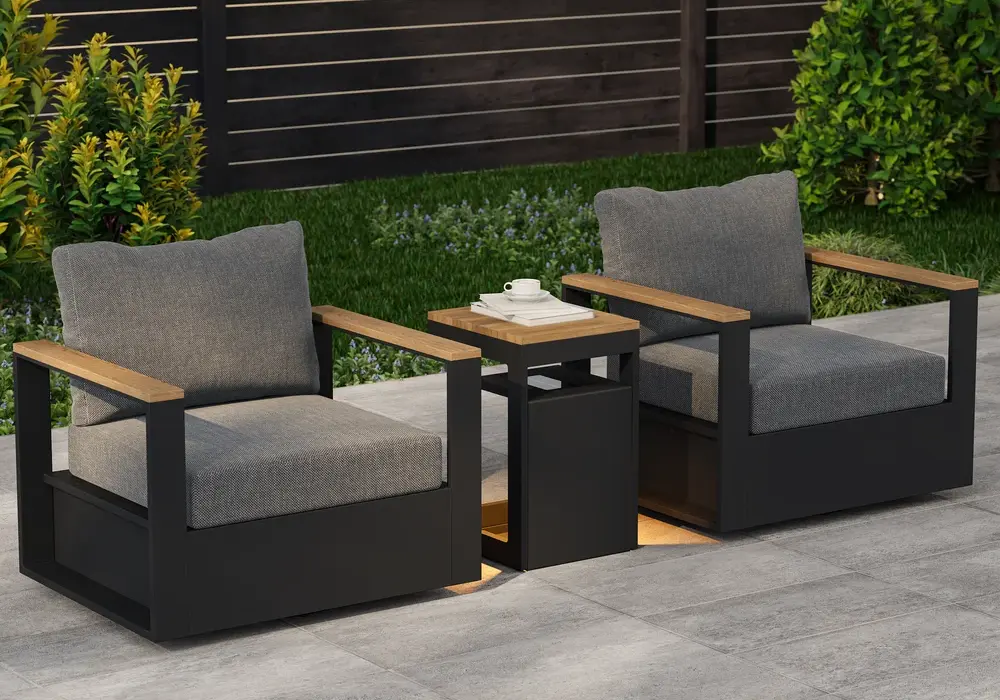
A moving base introduces a component to look after. Follow the manufacturer’s cleaning instructions around the swivel assembly and leave enough space for the chair to turn without contacting a table or wall. For a very exposed patio, ask whether the chosen location and your planned care routine suit the finish and moving parts.
Synthetic wicker with removable cushions
The 4-piece outdoor rattan modular sofa set uses synthetic wicker and comes with a glass-top coffee table and removable cushions. It is a useful comparison for buyers who want a woven surface and a separate table in a small conversation group.
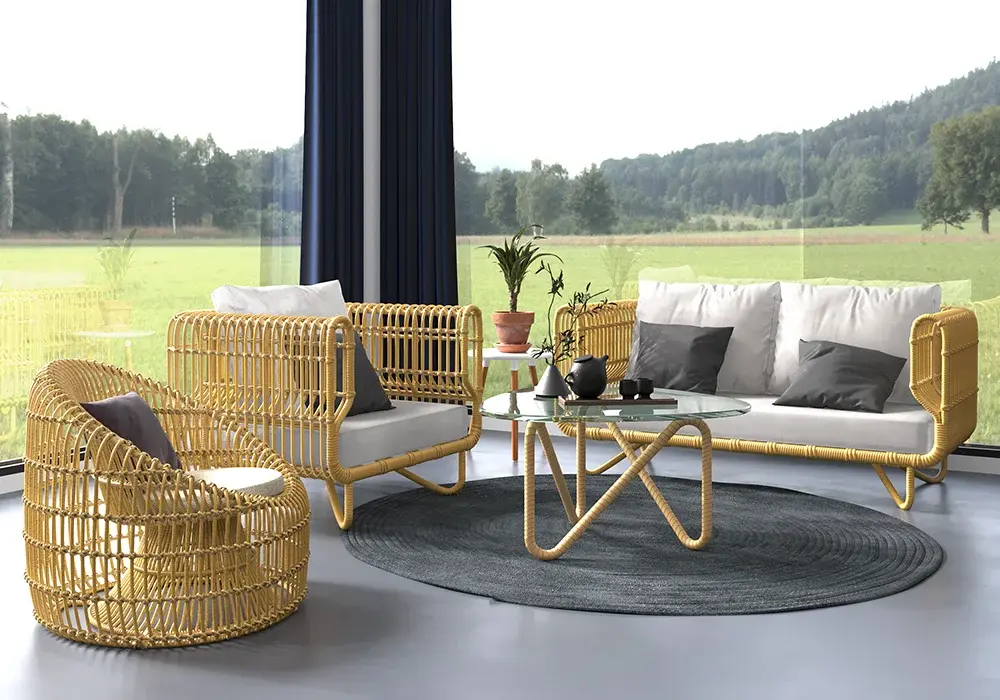
Homary lists the frame as water resistant. For an exposed location, check the exact weave care instructions, including how to clean debris beneath the cushions and around the table frame. Plan for separate indoor or sheltered storage of loose cushions when the forecast calls for extended rain or strong wind.
How to Keep Outdoor Sofa Materials in Good Condition
Build the maintenance routine around what lands on the furniture. Remove loose leaves and grit before they sit in seams. Clean each surface with the method approved for that product. In a coastal setting, pay particular attention to the lower frame and hardware, where salt-laden splash can dry out of sight. Check for loose fasteners and finish damage at the start and end of the main patio season.
Dry the cushions and furniture before putting a cover on for storage. A ventilated cover can help when the maker approves it, and covered furniture still needs periodic checks in a damp climate. If you store pieces off-season, choose a dry place with airflow and follow the manufacturer’s guidance on positioning and stacking.
Before buying, pick the two weather conditions your sofa will face most often. Compare the frame, hardware, upholstery, and care instructions on two or three models against those conditions. If the best-looking option depends on a maintenance routine you are unlikely to keep, choose a simpler construction you can clean and dry regularly.
Frequently Asked Questions
Is aluminium or teak better for outdoor sofas that get rained on?
Coated aluminium is generally easier to wipe down and may be simpler to maintain. Teak is a suitable option when you want wood and accept changes in its appearance. With either frame, inspect the seat base for drainage and check how to dry the cushion inserts.
Does water-resistant upholstery make the whole sofa waterproof?
Water resistance refers to the test or rating for a particular material. Seams, zips, fill, and frame joints still need to be considered. Follow the stated exposure and care limits for the assembled sofa.
Will synthetic wicker crack in full sun?
Sun exposure can affect outdoor resins over time. Composition, UV stabilisation, and local exposure influence performance. Check the weave’s own UV specification and warranty terms before selecting a set for an uncovered patio.
What should I look for in a coastal outdoor sofa?
Ask about the frame coating, the type and care of the fasteners, and whether salt exposure changes the warranty. Check that you can rinse or clean joints, undersides, and feet as directed. A chair or sofa that is hard to reach underneath can be harder to maintain near surf.
Can outdoor sofas stay outside through winter?
Follow the product’s seasonal storage instructions. If temperatures freeze, keep water from collecting in the furniture and store loose cushions dry. Before winter, confirm how to protect or relocate lightweight pieces and accessories during strong winds.