

Water-resistant outdoor patio furniture is designed to handle a degree of moisture exposure, but it still needs appropriate placement, drying, and care. When choosing outdoor sofa sets, evaluate the frame, upholstery, cushion filling, seams, and protective storage separately. A water-resistance claim on one component does not mean the complete furniture set can remain saturated indefinitely.
The most useful purchase is furniture that stays practical in your actual setting. A covered courtyard, an exposed deck, and a poolside lounge have different demands. Start with where water comes from, how long the furniture stays damp, and how easily you can protect it between uses.
Table of Contents
Understand the Limits of Water Resistance
Water-resistant materials can slow wetting or penetration without creating a completely sealed assembly. Upholstery may shed droplets while water still enters through seams or prolonged exposure. A fabric claim therefore needs to be read alongside the cushion’s construction and care instructions.
Waterproof language also needs a defined scope. Ask whether it describes the fabric surface, a protective coating, or a tested finished cushion. Without that information, do not assume the term establishes a guaranteed duration of rain exposure.
Weather resistance is broader still. It may refer to outdoor suitability without telling you exactly how the product handles water, sunlight, or deposits. Treat each performance claim as a specific question to resolve, rather than combining several labels into one promise of maintenance-free use.
Map the Moisture Sources Around Your Patio
Rain is not the only way furniture gets wet. Sprinklers, pool splashes, roof runoff, condensation, and damp leaves can affect different parts of a set. Observe the intended location after ordinary use and after rain to identify where attention is needed.
Water coming from a roof edge can repeatedly soak one cushion while the rest of the set stays dry. A planter can hide damp debris near a leg or connection. Moving the furniture slightly may reduce that exposure more effectively than changing the colour of the upholstery.
Airflow matters to the layout as well. Avoid packing the sofa into a corner where you cannot reach the back or inspect the underside. Leave enough access to clean around the feet and remove debris without dismantling the entire arrangement.
Finally, check the surface beneath the set. Stable placement and drainage support practical use. Do not position furniture in a persistent puddle and expect a material label to solve the site condition.
Evaluate Each Part of the Furniture
Part | Water-related questions | Practical buying action |
Frame | What material, finish, and care instructions apply? | Review the exact selected version |
Connections | Can you inspect and maintain them? | Ask about approved checks and replacement parts |
Weave | Can dirt and trapped debris be removed? | Confirm composition and cleaning method |
Fabric | What resistance is claimed and documented? | Request the current textile description |
Cushion filling | What happens if moisture enters? | Ask about construction and drying guidance |
Cover | Does it fit and permit the specified ventilation? | Measure the complete arrangement |
The table is a way to structure questions, not a universal performance rating. Different products need different routines. Ask for written information when a characteristic is central to your decision.
Look Beyond Water Beading on Fabric
Water beading is easy to demonstrate, but it does not describe the whole cushion. Seams, piping, zips, and the underside can create other paths for moisture. The filling may also retain water after the surface feels dry.
If you want to reuse the seating soon after rain, ask for guidance about the complete cushion. Do not assume that thick cushions contain quick-dry foam or that a removable cover means the interior can be routinely exposed and washed.
Cleaning instructions should be specific. Some removable covers permit machine washing; others do not. Confirm the method for the selected fabric and construction before removing a cover or choosing a cleaner.
For ordinary care, remove loose debris promptly and address spills according to the label. Allow the cushion to dry as instructed before extended storage. Avoid adopting strong cleaning methods from a different fabric brand or a generic outdoor-furniture tip.
Choose a Layout That Makes Care Easy
A large sectional can create a welcoming conversation zone, but its size also affects the care routine. Count the cushions, consider where they will dry, and check whether you can handle them easily. A set that requires storage you do not have may be inconvenient in a rainy location.
Separate chairs can provide flexibility and easier access around each piece. They also introduce individual bases and movement zones to inspect. A swivel chair needs room to rotate without brushing against wet planters, walls, or neighbouring furniture.
If you are planning modular seating, decide which configuration you will actually use. A cover designed for one arrangement may not fit another. Keep the protected footprint in mind when choosing both the furniture and the cover.
Use a simple rehearsal: imagine rain beginning while you are preparing to leave home. Where does each cushion go, where is the cover, and can one person complete the routine? The answer helps identify a manageable arrangement.
Three Homary Options to Evaluate by Component
The Grida ten-piece outdoor teak modular sofa set with fire pit combines several furniture pieces with an appliance. Compare the seating materials and cushion instructions separately from the fire feature. A large modular arrangement also needs a realistic plan for cleaning, drying, and reaching all components.
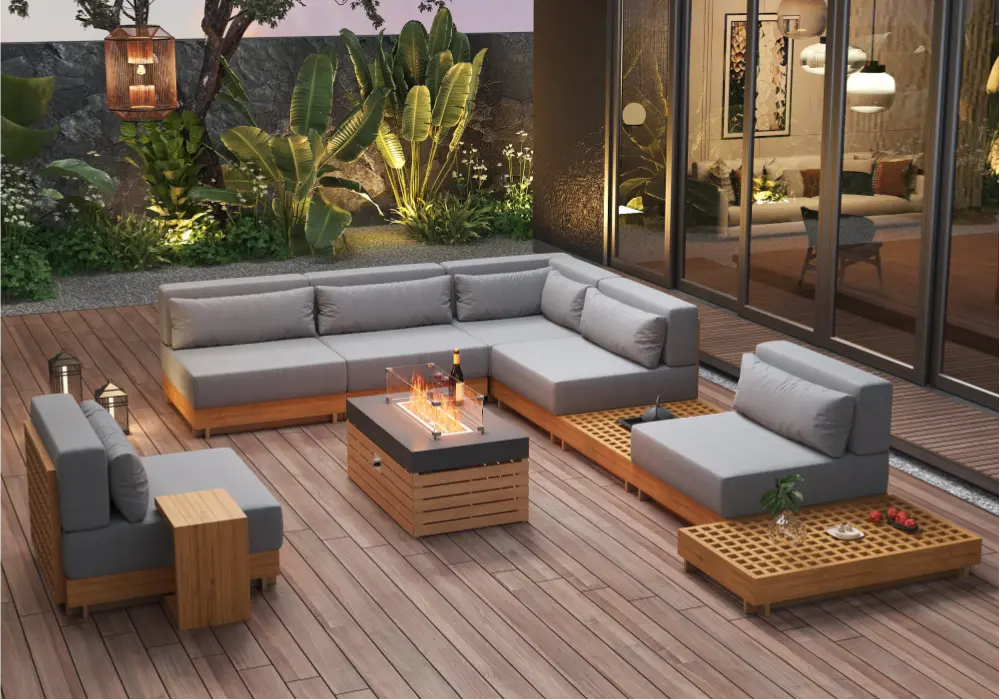
The grey nine-piece outdoor teak modular sofa set with fire pit provides another gathering format. Its water-related product language should be checked against the care information for the selected cushions and frame. Do not extend an upholstery description into a claim that every part of the fire-pit system can tolerate unrestricted water exposure.

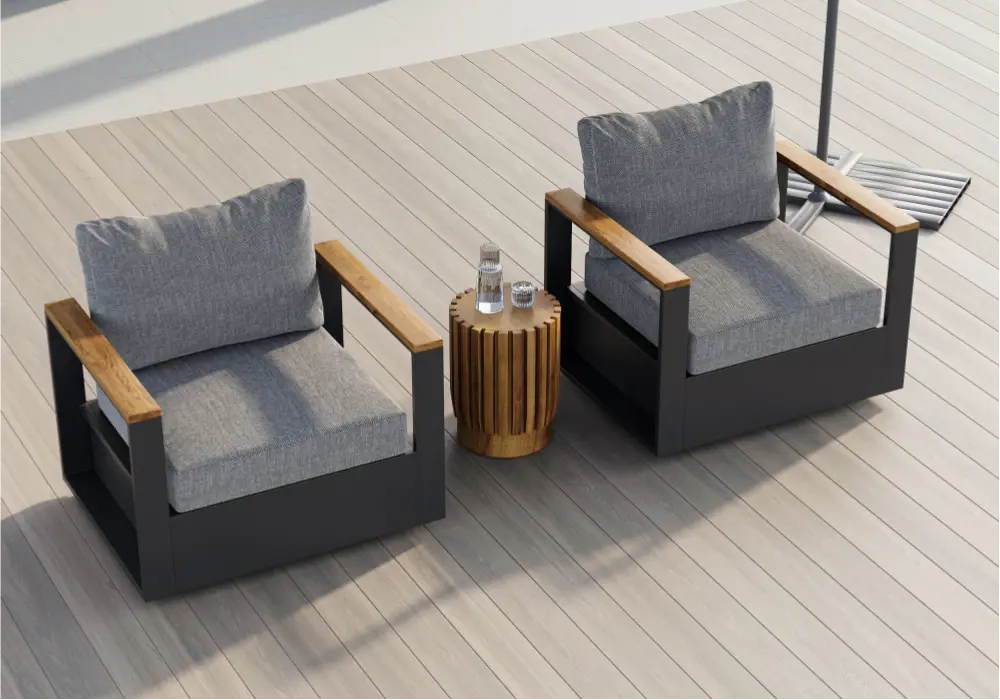
The Tevara pair of outdoor teak-accent swivel lounge chairs offers a smaller addition to a patio seating plan. Inspect the cushion care requirements and the access around the rotating bases. Movement is part of their function, so leave room for it in both the everyday layout and the protection routine.
Choose among these formats by space and use, then verify the relevant component details. Their appearance or product names alone do not provide a comparable whole-set water-ingress rating.
Protect Fire Features According to Their Own Instructions
A sofa set with a fire pit includes more than weather-exposed furniture. The burner, ignition system, fuel connections, and protective components have specific instructions. Obtain and read the manual for the exact appliance before planning its position or care.
Use the stated clearances and approved operating location. Do not move the set into an enclosed space simply to protect it from rain while keeping the fire feature in use. Weather protection and appliance operation are separate decisions.
After use, allow the appliance to cool as required before fitting any approved cover. Do not assume that a glass guard, decorative lid, or sofa cover protects every working part. Follow the shutdown, inspection, and storage procedures supplied for the model.
If water exposure has affected operation, use the manufacturer’s service guidance rather than repeatedly attempting ignition. Keep maintenance of the furniture and the appliance as separate tasks so neither is overlooked.
Use Covers Without Trapping Moisture
Choose a cover for the actual assembled dimensions, including protruding backs or table corners. A loose cover can be difficult to secure, while an overly tight one may not sit as intended. Follow the cover’s fitting instructions and ventilation guidance.
Before extended covering, check that the furniture and cushions are dry. Covering a damp assembly can restrict drying, especially in a shaded location. Storage should protect the furniture while still following the product’s requirements for air circulation.
Check the covered set after severe weather or an extended absence. Look for displaced covers, accumulated debris, and unexpected moisture. Protection is a routine to maintain, not a one-time action that makes later inspection unnecessary.
Make a Purchase Decision You Can Maintain
Write down the exposure conditions and the care tasks you are willing to do. Use that list to screen products before comparing decorative details. If a seller cannot explain a claim that matters to you, ask for more information before relying on it.
Then check replacement support and the current warranty terms. Future cushion availability, approved maintenance, and accessible service can matter as much as the original appearance. Avoid assigning an exact lifespan unless the manufacturer provides an applicable basis for it.
The strongest choice is a complete arrangement that fits your patio, has understandable care instructions, and remains convenient after ordinary wet weather. Material names become useful when they connect to those practical requirements.
Frequently Asked Questions
Can water-resistant cushions stay out in heavy rain?
Do not assume so. Check the fabric and complete cushion instructions for prolonged exposure. Water resistance can reduce wetting without preventing all moisture entry. A practical storage or protection routine is still valuable, particularly during long periods of rain.
Does a waterproof cover prevent all moisture problems?
No. Fit, ventilation, the condition of the furniture underneath, and correct use still matter. Follow both the furniture and cover instructions. Avoid leaving damp cushions sealed beneath a cover for an extended period.
Can I machine-wash removable outdoor cushion covers?
Only if the product’s care instructions permit it. Removable and machine-washable are different features. Check the exact fabric, washing conditions, drying method, and refitting instructions instead of using a generic upholstery routine.
Does a fire-pit set need different rain protection?
Yes. The appliance has separate working components and care requirements. Follow its manual for protection, cooling, inspection, and storage. Do not assume that the furniture’s water-resistance description also applies to the ignition system or fuel connections.
What is the easiest first step before buying?
Observe the intended location after rain and identify a dry storage plan. Then compare furniture whose documented care requirements fit those conditions. Start with manageable daily use, and choose the material and configuration that support it.