

A waterfall kitchen island is an island whose countertop surface continues vertically down one or both ends to the floor, creating a continuous, inverted-U outline. The surface appears to "pour" over the edge like a waterfall, which is where the name comes from.
The look is popular because it turns the island into a sculptural centerpiece, especially in open-plan homes where the island's ends are visible from the living area. It appears in custom stone installations and in furniture-style islands with engineered surfaces, so there is a waterfall option for many kitchens.
This guide covers the main edge types, how to choose materials, the pros and cons, and three ready-made options to compare.
In This Guide
What Makes an Island a Waterfall Design?
On a conventional island, the countertop rests on the cabinet and a separate end panel finishes the base. On a waterfall island, the horizontal surface turns downward at the end and runs to the floor, so top and side read as one continuous piece.
To confirm the feature, look at the end view of the island: you should see a vertical panel in the same material or finish as the top, meeting the surface in a clean corner.
In its classic form, the countertop material continues down an island end to the floor, which is a handy visual definition when you compare custom slab work with a freestanding furniture piece.
Types of Waterfall Edges
- Single-sided waterfall. The surface turns down at one end only. This works well when one end of the island faces the living area and the other sits near a wall or appliance. It delivers the signature look with less material.
- Double-sided waterfall. Both ends carry the descending panel, forming a full inverted U. This is the most dramatic version and frames the island from every angle. It suits freestanding islands that are seen from both sides.
- Mitered waterfall. This describes how the corner is joined rather than how many ends are finished. The top and side are each cut at a 45° angle and bonded so the seam sits right at the corner, which lets patterned veining wrap around the edge. A mitered joint is the most common fabrication method for stone waterfalls, and a skilled fabricator can make the seam nearly invisible.
Materials for Waterfall Islands
Waterfall treatments work with a range of surfaces, and each has its own character:
- Quartz: consistent patterns, low maintenance, and plenty of marble-look options.
- Natural stone (granite, marble): one-of-a-kind veining; marble brings classic elegance.
- Sintered stone: a dense, modern surface available in bold stone and concrete looks.
- Engineered wood and laminate finishes: furniture-style islands use these to bring the waterfall silhouette to a wider range of budgets.
- Wood, concrete and other options: useful for warm or industrial looks.
When you shop, ask for the material name for the top and for the vertical panel. Marble-pattern finishes can be produced in several materials, so the product specification tells you what the surface is made of and how to care for it.
Vein alignment is a design detail worth appreciating: when the pattern flows from the top down the side, the continuous effect is at its strongest. Pattern alignment is a key factor in fabricated waterfall installations.
Pros and Cons of Waterfall Islands
Pros
- Striking focal point. The continuous outline gives the island a custom, high-end look.
- Finished ends. The vertical panel covers the cabinet side, so the island looks complete from the living area.
- Protection for the island's sides. A durable end panel stands up well to everyday bumps.
- Pattern showcase. Veining that wraps around the corner highlights the beauty of the material.
- Fits many styles. It suits modern, minimalist, transitional and even bold contemporary kitchens.
Cons
- Higher cost for custom stone. More material and more fabrication work add to the price.
- Planning needed. The end panel takes the place of an open cabinet end, so decide early which sides carry storage.
- Material and seam quality matter. The best results come from careful fabrication and pattern matching.
Three Homary Islands to Compare by Priority
All three islands feature a waterfall silhouette, and each is best for a different priority: lighting and style, compact size, or a stone work surface.
For a Waterfall Look With Lighting
Homary's 72-inch LED-Lit Kitchen Island pairs a waterfall edge with fluted panels, storage, and dimmable LED lighting. The top is engineered wood, giving you the sculptural look in a ready-to-assemble piece.
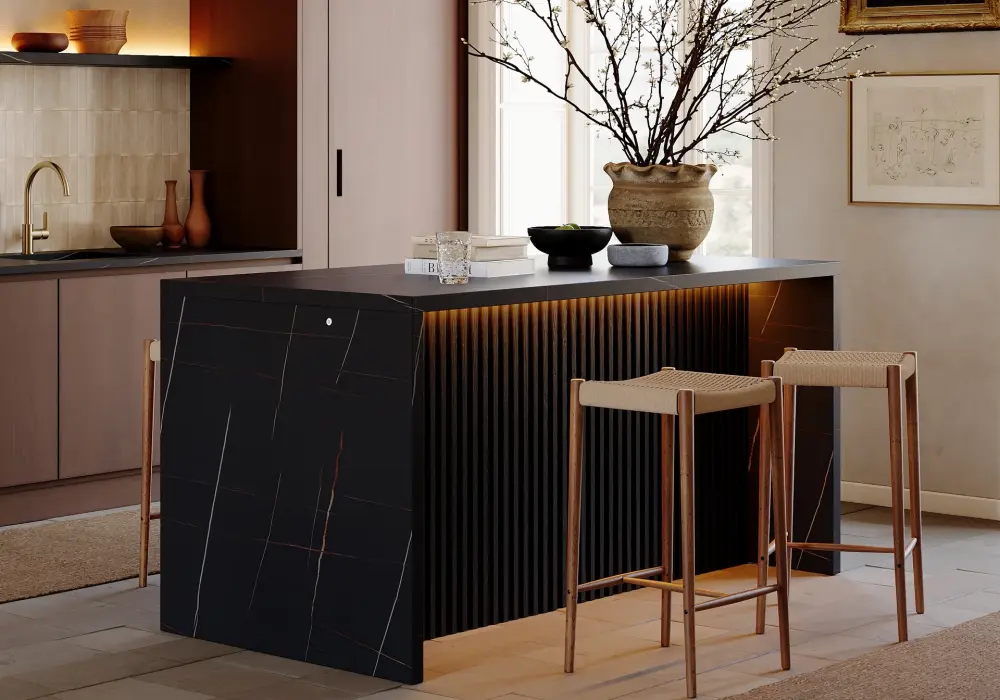
It is a great fit when the island's end is a big part of your open-plan view. The dimmable lighting adds ambiance for evening gatherings, and the plug-in design keeps setup simple.
For Compact Kitchens and Dining Rooms
The 50-inch Japandi Wood Kitchen Island brings the waterfall look to a smaller footprint at 50" W × 30" D × 35" H. Its Japandi styling pairs natural wood tones with clean lines, and it includes multi-storage and an LED light. It is available in multiple sizes and colors.
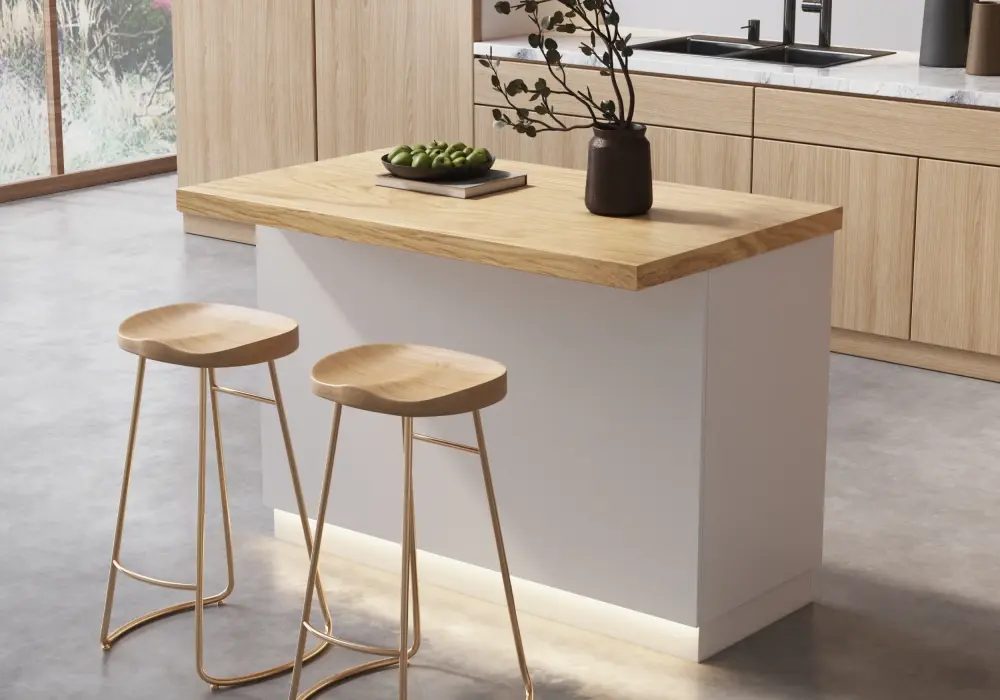
The scratch-resistant, easy-to-clean tabletop suits daily cooking and family meals, and the engineered-wood construction keeps the piece stable for long-term use. Choose it when you want a waterfall island with storage that fits a kitchen or dining room without taking over the floor plan.
For a Sintered-Stone Working Surface
The 72-inch Sintered Stone Kitchen Island combines a waterfall silhouette with a sintered-stone top over an engineered-wood base, plus drawers, cabinets, and shelving.
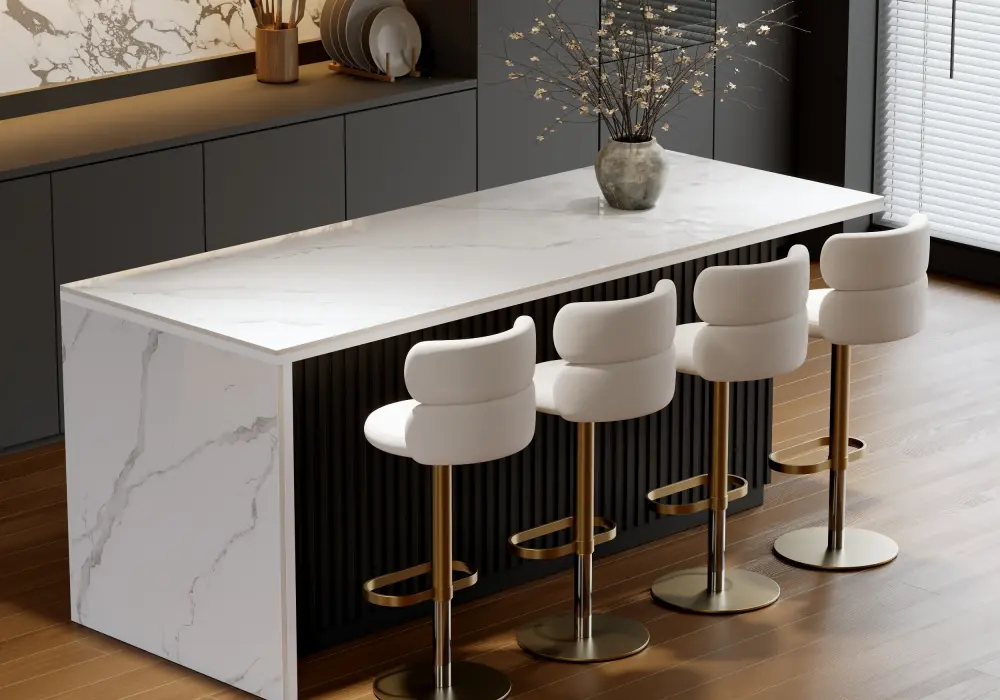
It is a strong pick when you want a stone surface for prep work along with generous storage in a clean, modern package.
Is a Waterfall Island Right for You?
A waterfall island is an excellent choice when:
- the island's ends are visible from the living or dining area,
- you love a clean, unified outline and a statement piece,
- your kitchen has room for the island with comfortable walkways. Kitchen design guidelines generally recommend work aisles of at least 42 inches for one cook and 48 inches for multiple cooks.
If an island end faces a wall, a single-sided waterfall or a standard end panel can deliver a polished look at a lower cost. Whichever style you pick, choose a finish you will enjoy in daily use, surrounded by dishes, stools, and everyday life.
Frequently Asked Questions
What are waterfall kitchen islands made of?
Custom islands commonly use quartz, granite, marble, or sintered stone for the top and descending ends. Furniture-style versions use engineered wood and other finishes. Check the product specification to see what the top and side panels are made of.
Does a waterfall island need two finished ends?
No. The treatment can appear on one end or both. A single-sided waterfall suits an island with one highly visible end, and a double-sided design frames an island seen from both directions.
What is a mitered waterfall edge?
A mitered waterfall edge joins the top and side panels with matching 45° cuts so the seam sits at the corner. It lets veining flow around the edge for a continuous look.
Can you sit at a waterfall kitchen island?
Yes. Many waterfall islands include an overhang for seating. Pick a model with enough clear space between the end panels for your stools.
Is a waterfall island the same as an extendable island?
No. Waterfall describes the end treatment, while extendable describes a surface that changes size. A model can offer either feature or both.
Are waterfall kitchen islands easy to clean?
Yes, with the right routine. Follow the care instructions for your surface material, and wipe the top and the vertical panels with suitable cleaners.