

A zero gravity reclining sofa is designed to support a reclined posture with the legs elevated and the body’s weight distributed across the seat and back. When comparing power reclining sofas, verify that the manufacturer explicitly identifies the intended zero gravity position. A motorised footrest, a deep recline, or a zero-wall mechanism alone does not establish that a sofa has it.
The term describes a supported seating position rather than literal weightlessness. The important questions are how the backrest and leg support move, whether the position fits your body, which seats can reach it, and how much space the complete mechanism needs.
Table of Contents
Understand the Position Before the Product Label
In zero gravity seating, the chair or sofa reclines to support the torso and elevate the legs. Manufacturers may use different mechanisms and describe the final position differently. There is no reason to assume that every sofa using the term reaches an identical angle or fits every person the same way.
Look for an operating diagram or demonstration showing the complete movement. A photograph with the footrest raised may show only an intermediate position. Ask whether the advertised position is a preset, an adjustable range, or a particular configuration reached through separate controls.
Comfort depends on support as well as angle. The headrest, lumbar area, seat depth, and leg platform need to suit the user. A person whose lower legs extend far beyond the support may experience the same mechanism differently from someone whose body fits its dimensions closely.
Separate Zero Gravity, Power Reclining, and Zero Wall
Power reclining means a motor changes the seating position. It can be convenient and allow gradual adjustment, but it does not specify the final geometry. Some power sofas raise a footrest and recline the back without a documented zero gravity mode.
Zero wall describes a mechanism intended to operate with limited clearance behind the sofa, often by moving the seat forward as it reclines. It is a space-planning feature, not another name for zero gravity. The exact rear clearance still comes from the product instructions.
Term | What it tells you | What still needs verification |
Power reclining | A motor adjusts part of the seat | Available positions and supported movement |
Zero gravity | A particular supported reclined posture is advertised | Exact mode, geometry, and user fit |
Zero wall | Rear-clearance management is part of the design | Required distance and forward travel |
Adjustable headrest | Head support can change position | Manual or powered operation and range |
Dual motor | Two motors are specified | Which functions each motor controls |
Do not use the motor count as a shortcut. Two motors can control different functions in different designs. Ask exactly what moves independently and whether the controls are available on each reclining seat.
Decide What You Want the Sofa to Do
Start with your normal activity: watching television, reading, resting briefly, or sharing the sofa with someone who prefers sitting upright. A useful reclining sofa should support those activities without requiring every user to adopt the same position.
For television, check whether the headrest supports a comfortable viewing angle while reclined. A deeper backrest position can direct your gaze upward unless the head support adjusts appropriately. Test the relationship with your actual screen position rather than assuming more recline means better viewing.
For reading, consider arm support and the ability to hold a book without lifting your shoulders. Controls should be reachable without awkward twisting. If you frequently change position, evaluate the adjustment sequence and speed during a demonstration.
For shared use, confirm which seats recline. A three-seat sofa may have powered end seats and a fixed centre. The advertised total seating capacity does not tell you how many people can use the reclining function simultaneously.
Test the Fit With the Regular Users
Sit fully back with your pelvis supported, then move gradually through the available positions. Check whether your shoulders and head meet the intended support areas. Avoid judging comfort while perched at the front of a showroom seat.
Notice the leg support. It should accommodate the intended user within the manufacturer’s instructions and capacity limits. Ask about any separate restrictions for the footrest; it should not be treated as an extra seat or a step.
Return to upright and stand up. A sofa that feels pleasant while reclined may still be inconvenient if its seat is too low or deep for easy entry and exit. Evaluate the complete sequence, including reaching the controls from your usual sitting position.
If household members differ substantially in height, test each reclining position with both people. Independent adjustment may help, but no mechanism automatically eliminates differences in body fit. Prioritise a comfortable range over a single dramatic display position.
Measure the Sofa in Its Fully Open Position
Record the overall width, upright depth, full reclining depth, and required rear clearance. Then mark the maximum occupied footprint on the floor. A sofa that fits against the wall when closed can still conflict with a coffee table or walkway when open.
Include the movement path, not just the final position. The footrest and seat may travel through areas that appear clear in a static drawing. Keep other furniture, loose objects, and electrical cords outside the operating zone.
Check access to power and follow the supplied electrical instructions. Charging ports are a convenience feature; they do not indicate the reclining system’s performance. Do not route a cable where it can become trapped in the mechanism.
Delivery planning is separate from room fit. Compare carton or component dimensions with doors, stairs, lifts, and turns in the route. Confirm assembly and handling requirements before assuming a large sofa can reach the intended room.
Evaluate the Three Supplied Homary Options Accurately
The Genuine Leather Zero Wall Power Reclining Sofa is explicitly named for its zero-wall feature. That wording does not confirm zero gravity. Review the selected version’s operating information, upholstery coverage, and fully reclined measurements before deciding whether it meets your desired posture.
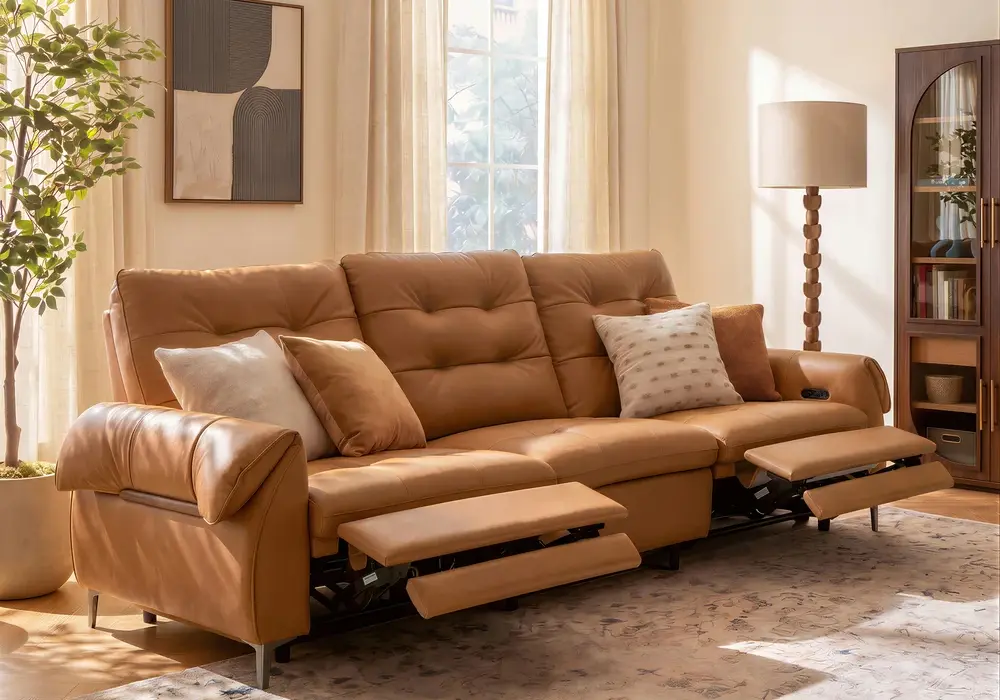
The Glidio Curva headrest power reclining sofa is described with motorised end seats and manually adjustable headrests. Those features support a useful discussion about shared seating and head support, but they should not be converted into an undocumented zero gravity claim.
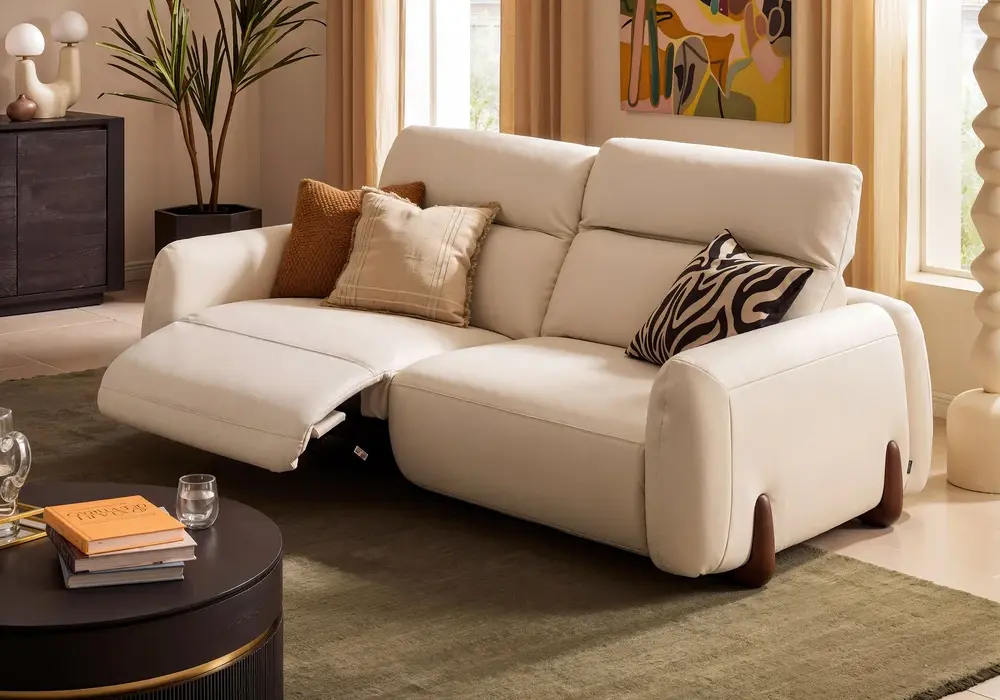
The Softplume pet-friendly chenille power reclining sofa offers another upholstery and seating direction. Check its adjustment sequence, cleaning instructions, and movement envelope. “Pet-friendly” does not mean damage-proof, and power adjustment does not by itself establish a zero gravity mode.
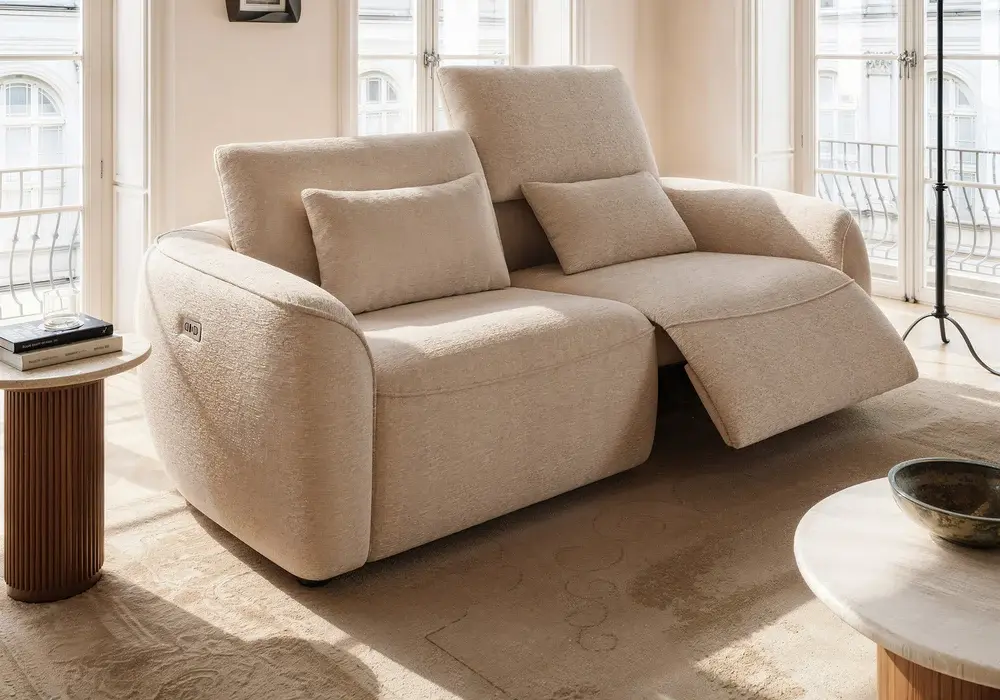
These are power-reclining options to assess. The available descriptions reviewed here do not establish a verified zero gravity mode for all three. If that specific feature is essential, request explicit confirmation for the exact model before ordering.
Review Maintenance and Serviceability
Reclining furniture includes upholstery and moving components. Ask how to access approved maintenance points, what routine checks are required, and who handles service if the mechanism stops working. Keep the operating instructions and purchase information together.
Compare warranty terms by component rather than assuming one promise covers everything equally. Motors, controls, mechanisms, upholstery, and structural parts may have different conditions. Ask whether service involves an in-home visit, replacement parts, or another process.
Follow the upholstery instructions for the selected version. A leather product name does not always mean every external surface uses the same material. Confirm contact-area coverage and the care method rather than applying a generic treatment to the entire sofa.
Before operating the sofa, make sure the mechanism’s surroundings are clear, including beneath the furniture. Children and pets should remain away from moving parts. Use the manufacturer’s procedure if movement is obstructed or the mechanism behaves unexpectedly.
Keep Comfort Claims in Perspective
People may enjoy the supported, elevated-leg position, but the zero gravity label is not proof of a medical benefit for an individual. Choose furniture for fit and comfort rather than expecting it to diagnose, treat, or cure a health condition.
If a clinician has advised you about leg elevation or particular seated positions, ask whether the proposed recline is appropriate for you. The useful product information is the actual movement and support, not a broad promise about wellness.
Make the final decision by testing ordinary use, checking the full dimensions, and verifying the advertised mode. A sofa that supports your preferred activities comfortably is more valuable than a feature name you cannot connect to its actual operation.
During a demonstration, ask how the sofa returns to upright and what happens if power is interrupted. Features vary, so do not assume a battery backup or manual release is supplied. Understanding the normal return procedure helps you assess practical use without assigning the sofa functions that are absent from its documentation.
Frequently Asked Questions
Is zero gravity the same as lying flat?
No. Zero gravity describes a supported reclined posture with elevated legs. A lie-flat position has different geometry. Check the operating diagram and available settings instead of assuming that the deepest recline automatically provides both functions.
Does every power reclining sofa offer zero gravity?
No. Power describes how the sofa moves, while zero gravity describes an advertised position. Ask for explicit confirmation and a demonstration of the exact mode. Do not infer it from a raised footrest or the presence of a motor.
What is the difference between zero wall and zero gravity?
Zero wall concerns the clearance needed behind the sofa during movement. Zero gravity concerns the supported reclining posture. A sofa may advertise one, both, or neither, and each claim requires its own model-specific information.
Can the centre seat recline too?
That depends on the design. Some three-seat sofas recline only at the ends. Confirm the number and location of powered seats, the controls for each position, and whether one person’s adjustment affects another seat.
Should I buy one without trying it?
If an in-person test is unavailable, request detailed dimensions, an operating demonstration, and clear return and service terms. Compare the measurements with seating you already find comfortable. Verify zero gravity explicitly if it is a purchase requirement rather than an optional preference.