

Choosing the best material for outdoor furniture means looking beyond appearance and purchase price. Patio furniture has to handle rain, humidity, UV exposure, temperature changes, and everyday use while remaining comfortable and attractive. Teak, aluminum, resin wicker, steel, and recycled materials all have different strengths.
The best choice ultimately depends on your climate, maintenance expectations, budget, and how you use your outdoor space. This guide compares the most popular outdoor furniture materials and explains how to choose the right option for a patio, deck, garden, or poolside setting.
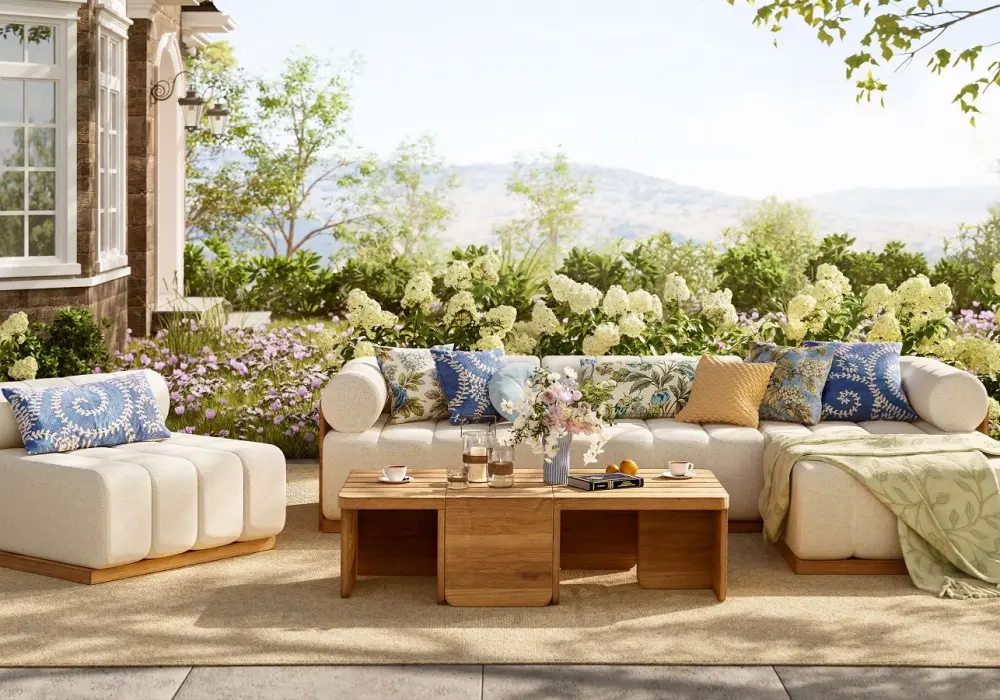
Source Homary
Teak vs. Aluminum vs. Wicker vs. Steel: Which Outdoor Furniture Material Is Best?
The frame material has a major effect on durability, maintenance, weight, and appearance. However, construction quality and protective finishes can be just as important as the material itself.
Material | Strength | Typical Lifespan* | Weather Resistance | Maintenance | Best For |
Teak | High | 15–30+ years | Excellent | Low–Medium | Natural, premium outdoor spaces |
Aluminum | High | 10–20+ years | Excellent | Low | Lightweight, low-maintenance furniture |
Resin Wicker | Medium | 5–15+ years | Good–Excellent | Low–Medium | Casual and contemporary patios |
Steel/Iron | Very High | 10–20+ years | Good with coating | Medium–High | Heavy, stable furniture |
Recycled Plastic | High | 15–25+ years | Excellent | Low | Sustainable, low-maintenance spaces |
*Actual lifespan depends on construction, climate, finish, usage, and care.
Teak Outdoor Furniture: Natural Durability and Timeless Style
Teak remains one of the most popular premium materials for outdoor furniture because its natural oils help it resist moisture, insects, and decay. It also has a distinctive grain that works well with both traditional and modern patio designs.
One advantage of teak is that it can be left unfinished. Over time, exposed teak naturally develops a silver-gray patina. If you prefer the original golden-brown appearance, periodic cleaning and appropriate teak treatment may be necessary.
Teak is heavier than aluminum, which makes it less convenient to move but can be beneficial in windy outdoor areas.
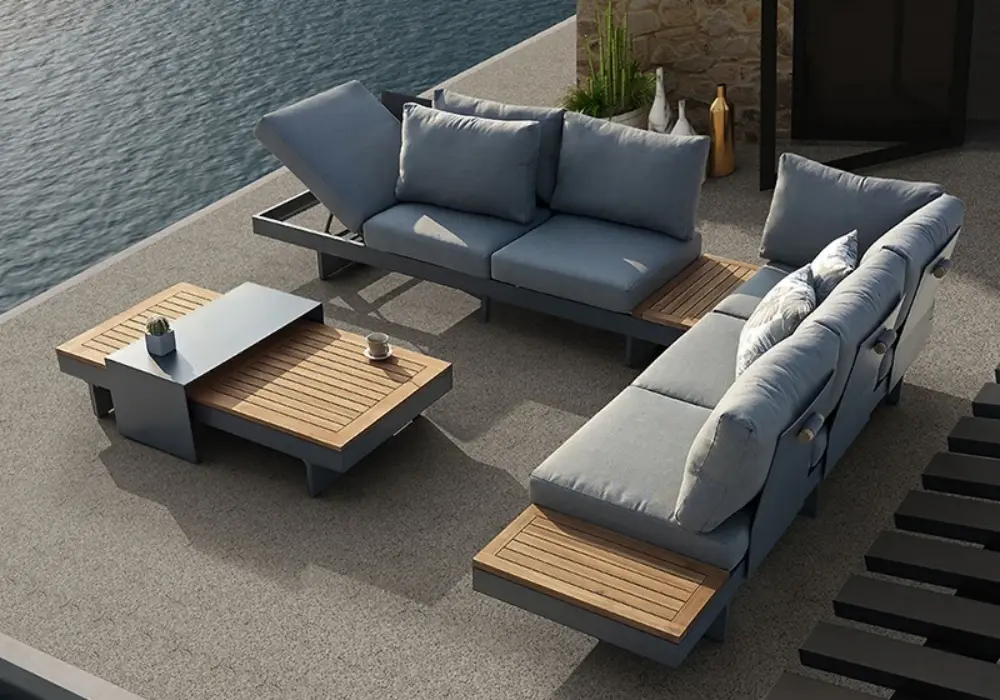
A good example is Homary's Tevara 4-Piece Outdoor Teak & Aluminum Modular Sofa Set, which combines FSC-certified teak with an aluminum frame and a modular seating configuration. The set accommodates up to six people and includes a matching coffee table, making it a practical example of how teak and aluminum can work together rather than having to choose between the two materials.
Source Homary
Aluminum Outdoor Furniture: Lightweight and Low Maintenance
Aluminum is one of the best choices for homeowners who want durable outdoor furniture with minimal maintenance. Unlike ordinary steel, aluminum does not develop the same type of red rust when exposed to moisture.
Powder-coated aluminum is particularly useful outdoors because the coating provides another protective layer while allowing manufacturers to create a wide range of colors and finishes.
Aluminum is also considerably lighter than teak, steel, and many recycled-plastic products. That makes it easier to rearrange a patio or move furniture into storage.
However, coastal environments require additional attention. Scratches or chips in the powder coating can expose the underlying metal, while salt can accelerate corrosion of certain components and hardware. Choosing quality finishes and corrosion-resistant fasteners is therefore important near the coast.
Resin Wicker Outdoor Furniture: Comfortable and Stylish
Natural wicker is generally not the best choice for prolonged outdoor exposure because it can absorb moisture and deteriorate. For patios and decks, resin wicker or PE rattan is usually the better option.
Synthetic wicker combines a woven appearance with better resistance to moisture and outdoor wear. Its main limitation is that individual strands can eventually fade, crack, or break. Repairability depends on the design and construction.
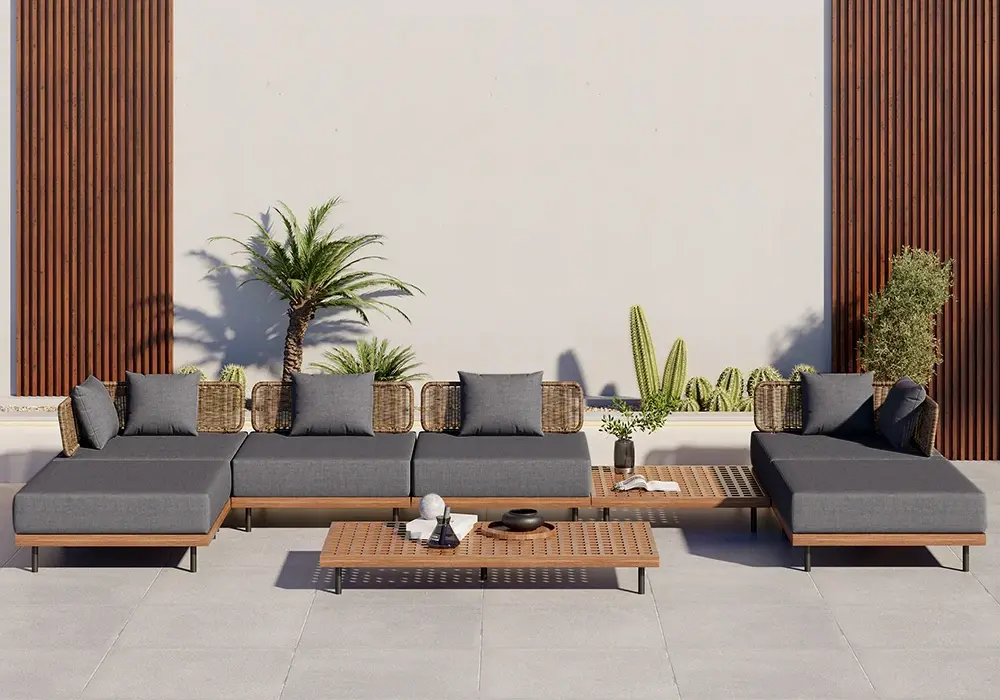
For larger entertaining areas, a combination of materials can offer more flexibility. For example, Homary's 8-Piece Teak, Aluminum & Rattan Outdoor Sectional Sofa Set combines teak, an aluminum frame, and handwoven PE rattan, with modular pieces that can be rearranged for different layouts.
Source Homary
Steel and Iron Outdoor Furniture: Strong but Coating-Dependent
Steel and iron provide excellent structural strength and substantial weight, which can make them useful for windy locations. Their major weakness is corrosion.
Unlike aluminum, ordinary steel and iron can develop rust when moisture and oxygen reach the surface. Protective paint, powder coating, galvanization, or other treatments are therefore essential.
Pay particular attention to welds, joints, scratches, and fasteners. If the protective coating is damaged, repair it promptly rather than allowing moisture to reach the underlying metal.
How Weather and Climate Affect Outdoor Furniture Materials
Weather resistance is not one universal characteristic. The material that works best depends on the combination of moisture, UV exposure, temperature, wind, and salt in your outdoor environment.
Best Outdoor Furniture Materials for Humid and Coastal Climates
High humidity can contribute to mildew, corrosion, and moisture-related deterioration. Coastal locations add salt, which can accelerate corrosion on exposed metal.
Teak performs well in humid conditions, while properly finished aluminum is another strong option. For coastal furniture, stainless steel hardware is worth considering because hardware can become a weak point even when the main frame is highly corrosion-resistant.
If you choose resin wicker, make sure the furniture has adequate airflow and drainage. Water trapped inside cushions or underneath the frame can create problems even when the outer material is weather-resistant.
Best Materials for Hot, Sunny, and High-UV Climates
Strong sunlight can fade fabrics, degrade some synthetic materials, and damage poorly protected finishes. Dark furniture can also become extremely hot.
Choose UV-resistant outdoor fabrics and finishes designed for extended sun exposure. Light-colored surfaces generally absorb less solar heat than dark ones, while shade and airflow can further improve comfort.
If your patio receives direct afternoon sun, consider the furniture's surface temperature as well as its resistance to UV exposure.
Outdoor Furniture Materials for Cold and Freeze-Thaw Conditions
Freeze-thaw cycles can be particularly damaging when water becomes trapped in cracks, joints, or porous materials. As water freezes and expands, it can contribute to cracking and surface deterioration.
Before winter, clean furniture thoroughly and make sure water can drain freely. Where practical, move furniture into sheltered storage or use breathable outdoor covers.
Cushions should ideally be stored in a dry location rather than left outdoors for months.
Best Materials for Wet and Rainy Climates
In consistently wet environments, drainage and ventilation are just as important as the frame material.
Look for raised bases, breathable cushions, open drainage paths, and surfaces that do not hold standing water. Regular cleaning also helps because accumulated dirt and organic debris can retain moisture against the furniture.
Which Outdoor Furniture Materials Stay Cool in Direct Sun?
Durability is only one part of outdoor comfort. A patio chair can be highly weather-resistant but unpleasant to use if its surface becomes extremely hot.
How Different Outdoor Furniture Materials Handle Heat
Metal generally transfers heat efficiently, so aluminum and steel can become hot after prolonged exposure to direct sunlight. Dark finishes tend to make the problem more noticeable.
Wood such as teak generally has a different tactile experience in direct sun, although any outdoor surface can become hot under intense sunlight.
Shade is often the most effective solution. A pergola, umbrella, retractable awning, or strategically positioned tree can reduce surface temperatures regardless of the frame material.
Best Outdoor Cushion Materials for Hot Weather
Cushions deserve more attention than they usually receive. Traditional indoor-style foam can retain considerable amounts of water after heavy rain.
Quick-dry or reticulated foam is designed with a more open structure that allows water to drain through the cushion more readily. Combined with breathable outdoor fabric, this can significantly improve post-rain drying.
Look for:
- Quick-dry or reticulated foam
- Breathable outdoor fabric
- UV-resistant upholstery
- Water-resistant and stain-resistant covers
- Removable covers for cleaning
- Good drainage beneath cushions
How to Prevent Outdoor Furniture From Getting Too Hot
Material selection is only one part of the solution. Consider lighter colors, shade, breathable cushions, and furniture placement.
Also pay attention to dark metal armrests and frames. After several hours in direct sunlight, these surfaces can become uncomfortable or dangerously hot to touch.
Outdoor Furniture Cost: Materials, Maintenance, and Long-Term Value
The cheapest outdoor furniture is not necessarily the most economical. A better approach is to consider the total cost of ownership, including cleaning, refinishing, repairs, replacement cushions, and eventual replacement.
Outdoor Furniture Material Cost Comparison
Price Tier | Common Materials | Initial Cost | Maintenance | Long-Term Value |
Budget | Basic steel, entry-level resin | $ | Medium | Good for occasional use |
Mid-range | Aluminum, quality resin wicker | $$ | Low–Medium | Very good |
Premium | Teak, premium aluminum, high-grade steel | $$$ | Low–Medium | Excellent with proper care |
Sustainable Premium | Certified timber, recycled plastic | $$–$$$ | Low | Excellent depending on lifespan |
Actual prices vary considerably based on size, construction, brand, cushions, finishes, and craftsmanship.
How Much Does Outdoor Furniture Cost Over 10 Years?
A higher initial price can make sense when the furniture lasts considerably longer.
For example, teak can require more money upfront but can remain serviceable for decades. Aluminum can provide an excellent balance between purchase price, mobility, and maintenance. Replacing inexpensive furniture several times may ultimately cost more than purchasing a durable set from the beginning.
When comparing products, consider the following:
Initial price + maintenance + repairs + replacement parts + replacement cushions + expected replacement date = realistic ownership cost.
Seasonal Outdoor Furniture Maintenance Checklist
Spring: Clean frames, inspect fasteners, check for rust or finish damage, and wash outdoor cushions.
Summer: Remove standing water, clean spills promptly, and reduce prolonged UV exposure where practical.
Autumn: Deep-clean furniture and completely dry cushions before storing them.
Winter: Use breathable covers or move furniture into sheltered storage. Never trap wet cushions under covers.
Best Sustainable Materials for Outdoor Furniture
Sustainability is increasingly important when choosing outdoor furniture. However, an eco-friendly material should be evaluated by more than its marketing claims.
Consider where the material comes from, how long the furniture will last, whether it can be repaired, and what happens at the end of its useful life.
Recycled Plastic Outdoor Furniture
Recycled plastic lumber can incorporate post-consumer plastic and is highly resistant to moisture, insects, and rot.
It is particularly suitable for wet outdoor environments because it does not require the same sealing routine as many wood products.
The main drawback is weight. Recycled plastic furniture can be surprisingly heavy, which may be inconvenient on balconies or spaces where furniture needs to be moved frequently.
FSC-Certified Wood and Sustainable Timber Options
If you prefer natural wood, look for credible forest-management certification such as FSC certification.
Responsibly sourced wood can provide the appearance and tactile quality of timber while giving buyers a way to consider the environmental impact of the material's supply chain.
Thermally Modified Wood for Outdoor Furniture
Thermally modified timber is treated with controlled heat to change some of its physical properties. The process can improve dimensional stability and resistance to moisture-related deterioration without relying on some conventional chemical preservation methods.
It can be an interesting alternative for buyers who want a wood appearance without automatically choosing tropical hardwood.
Low-VOC Finishes and Durable Outdoor Furniture Coatings
Finishes are part of the sustainability equation. Where suitable, low-VOC coatings can reduce emissions associated with finishing products.
For metal furniture, durable powder coating can provide a protective surface that helps extend the useful life of the frame. A longer-lasting finish can reduce the frequency of refinishing and replacement.
Why Furniture Lifespan Matters for Sustainability
A product that lasts longer can reduce the need for replacement, transportation, packaging, and disposal.
For this reason, don't evaluate sustainability solely by the material label. Ask whether the furniture can be repaired, whether cushions and covers can be replaced, and whether the manufacturer provides replacement components.
How to Choose the Best Material for Your Outdoor Furniture
The best material depends on your priorities rather than a universal ranking.
Best Outdoor Furniture Material for Low Maintenance
Aluminum is one of the strongest choices for low-maintenance outdoor furniture. Quality resin wicker and recycled plastic are also worth considering.
Best Outdoor Furniture Material for Coastal Areas
Teak and properly finished aluminum are strong options. Use corrosion-resistant hardware and regularly rinse away accumulated salt.
Best Outdoor Furniture Material for Hot Climates
Consider teak, lighter-colored aluminum, and well-designed synthetic materials, but don't overlook cushions, shade, and fabric UV resistance.
Best Outdoor Furniture Material for Long-Term Value
Teak and high-quality aluminum can both provide strong long-term value. The better choice depends on whether you prioritize natural aging and substantial construction or lightweight, low-maintenance performance.
Best Outdoor Furniture Material for Entertaining
For larger patios, modular sectional furniture can provide greater flexibility than fixed seating. A modular design lets you rearrange seating according to the number of guests or the layout of your patio.
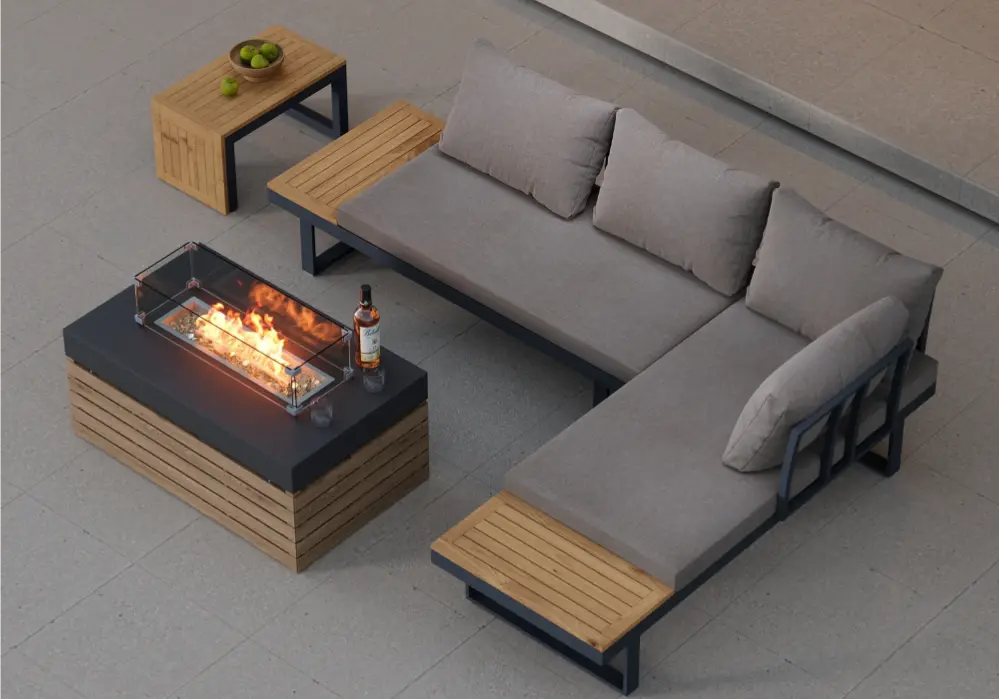
For example, a 4-Piece Modular L-Shaped Teak Sectional Outdoor Sofa Set with Fire Pit combines teak, an aluminum-alloy frame, modular seating, and a propane fire-pit table. The fire-pit table is rated at up to 50,000 BTU and includes a glass cover; because it uses propane, installation and operation should follow the manufacturer's safety instructions.
Source Homary
Outdoor Furniture Material Checklist
Before buying, compare more than just the frame material:
What to Check | Why It Matters |
Frame material | Determines weight, strength, and corrosion resistance |
Protective finish | Influences UV and moisture resistance |
Hardware | Weak hardware can corrode before the frame |
Cushion foam | Affects comfort and drying speed |
Fabric | Determines UV, water, and stain resistance |
Drainage | Helps prevent trapped moisture |
Repairability | Can reduce long-term replacement costs |
Warranty | Provides additional protection for major defects |
Sustainability | Helps evaluate sourcing and environmental impact |
The smartest purchase is usually the one that fits both your environment and your maintenance habits.
FAQ About the Best Outdoor Furniture Materials
What is the most weather-resistant outdoor furniture material for a rainy or humid climate?
Teak and properly finished aluminum are among the strongest choices. Teak naturally handles moisture well, while aluminum avoids the red rust associated with ordinary steel. Good drainage and ventilation are also essential.
Is teak or aluminum better for long-term durability and low maintenance?
For low maintenance, aluminum is usually easier to care for. Teak offers excellent durability and natural weather resistance but may require additional cleaning or treatment if you want to preserve its original golden color.
Which outdoor furniture materials stay coolest in direct sun?
Wood surfaces such as teak can generally feel less aggressively hot than exposed dark metal, but surface color, shade, airflow, and cushions also have a major influence on comfort.
What are the best low-maintenance outdoor furniture materials for a deck or patio?
Powder-coated aluminum, high-quality resin wicker, and recycled plastic are excellent low-maintenance options. Teak is also relatively easy to maintain if you allow it to develop its natural gray patina.
How much should I budget for high-quality outdoor furniture by material type?
There is no universal price because size, construction, brand, cushions, finish, and craftsmanship can change the cost significantly. In general, entry-level steel and resin furniture tends to be more affordable, while quality teak and premium aluminum occupy the mid-to-high price range.
What is the most sustainable or eco-friendly alternative to teak outdoor furniture?
Recycled plastic lumber, FSC-certified wood, and thermally modified timber are all worth considering. Evaluate recycled content, responsible sourcing, expected lifespan, repairability, and end-of-life options rather than relying solely on an "eco-friendly" label.
How do I choose outdoor furniture that will hold up in salt air near the coast?
Look for corrosion-resistant materials and finishes. Properly finished aluminum and teak are strong candidates, while stainless steel hardware can help reduce corrosion at joints and fasteners. Regularly rinsing away salt deposits can also extend the life of outdoor furniture.