

Buying an outdoor sofa is less about finding a piece that looks good on the patio today and more about choosing furniture that can remain comfortable, attractive, and structurally sound through years of sun, rain, humidity, and everyday use.
That is why the warranty deserves attention before you place an order. A long warranty can be reassuring, but the number of years alone does not tell you how well the sofa is protected. A five-year warranty that excludes the frame, fabric, weather exposure, or most outdoor conditions may offer less practical value than a shorter warranty with clearer coverage.
For most homeowners, the better approach is to evaluate what is covered, how long it is covered, what outdoor conditions are excluded, and whether the sofa's materials match the environment where it will be used.
This guide explains what to look for when buying an outdoor sofa, with particular attention to frames, finishes, cushions, weather-resistant fabrics, coastal exposure, and long-term outdoor use.
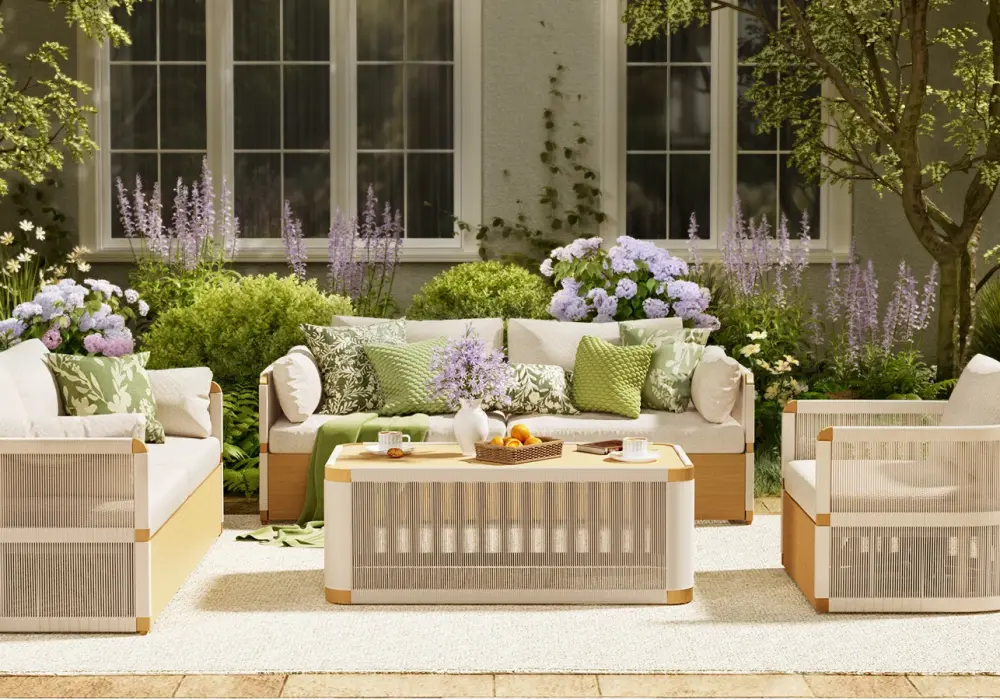
Source Homary
What Warranty Length and Terms Should You Demand?
There is no single warranty length that every outdoor sofa must have. Different components experience different levels of stress, so a good warranty should distinguish between the frame, finish, hardware, cushions, and upholstery.
As a practical purchasing benchmark, you can use the following ranges when comparing outdoor sofas:
Component | Useful warranty benchmark | What to look for |
Aluminum or teak frame | 3–5+ years | Structural defects and workmanship |
Powder coating/finish | 2–5 years | Peeling, cracking, or manufacturing defects |
Hardware | 1–3 years | Rust, breakage, or defective components |
Outdoor fabric | 1–3+ years | Manufacturing defects and, where stated, excessive fading |
Cushions/fill | 1–3 years | Defective construction or premature failure |
Commercial use | Separate terms | Confirm whether coverage applies |
These are buying benchmarks rather than universal legal or industry requirements. Always read the actual warranty supplied with the specific product.
In the U.S., written consumer warranties are subject to federal requirements under the Magnuson-Moss Warranty Act, including rules concerning disclosure and the availability of warranty terms before purchase. The FTC also distinguishes between “full” and “limited” warranties, so buyers should read the coverage language rather than relying on a headline such as “5-Year Warranty.”
The warranty should also clearly state when coverage begins. In most cases, the clock starts at purchase or delivery, but the exact definition matters if an item is delivered weeks after ordering.
Also check whether the warranty is intended for residential use only. A sofa placed on a family patio may qualify, while furniture used in a restaurant, hotel, rental property, or other commercial setting may have different coverage or exclusions.
Don't judge an outdoor sofa by warranty length alone
A useful way to compare two sofas is to ask four questions:
- What component is covered?
- What type of failure qualifies?
- What outdoor conditions are excluded?
- What remedy does the manufacturer provide?
The answers are usually more important than the headline warranty period.
For example, a frame warranty is valuable when the frame is built from durable materials such as powder-coated aluminum or properly constructed teak. But if the cushions use ordinary indoor fabric, a long frame warranty does not necessarily protect the sofa from premature upholstery deterioration.
That is why warranty research should begin with the sofa's construction rather than the warranty page itself.
Component-Specific Coverage: Frame, Finish, Cushions, and Hardware
An outdoor sofa is really a system of several materials. Each responds differently to moisture, ultraviolet exposure, temperature changes, and physical use.
Frame: prioritize structural coverage
The frame is usually the most important component to examine because structural failure can make an entire sofa unusable.
For outdoor furniture, aluminum and teak are popular choices because they are well suited to outdoor environments when properly designed and finished. Aluminum is lightweight and does not rust like untreated steel, while teak naturally contains oils that help it withstand outdoor exposure.
When comparing warranties, look for language covering structural defects, broken frame components, weld failures, or manufacturing defects.
A strong frame warranty is particularly relevant for modular sectionals because multiple seating modules create more connection points and moving components.
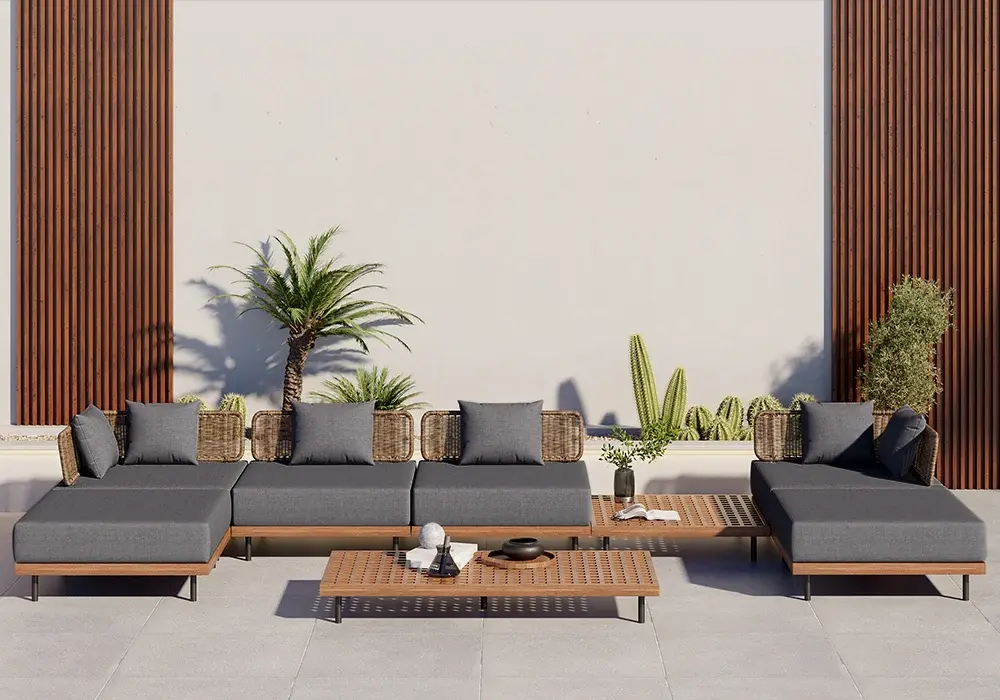
For example, the Rattan Outdoor Sectional Sofa Set with Coffee Table combines several outdoor-oriented materials in one larger seating configuration. For a set like this, buyers should evaluate not only the frame warranty but also how the woven components, cushions, and connectors are covered.
Finish and powder coating
The frame itself may remain structurally sound while its finish deteriorates.
Powder-coated aluminum can provide a durable exterior surface, but buyers should still determine whether the warranty covers defects such as abnormal peeling, cracking, or manufacturing-related finish failure.
This is different from normal color change caused by years of ultraviolet exposure.
A warranty that excludes normal fading is not necessarily a poor warranty. Instead, it means you should place greater emphasis on the actual fabric and finish specifications before purchasing.
Outdoor fabric and cushions
For long-term patio use, fabric deserves as much attention as the frame.
A high-performance outdoor fabric should be evaluated for:
- UV resistance
- Water resistance or water repellency
- Resistance to mildew and moisture
- Colorfastness
- Abrasion resistance
- Ease of cleaning
- Cushion drying performance
Importantly, water-resistant does not mean permanently waterproof. Outdoor cushions may resist light rain or moisture while still requiring drainage and drying after significant exposure.
The same principle applies to warranty coverage. Many warranties cover manufacturing defects in fabric but exclude ordinary fading, staining, mildew caused by improper care, or damage from prolonged exposure to extreme conditions.
For buyers who expect their sofa to remain outside most of the year, choosing the right fabric can therefore reduce risk more effectively than simply buying the longest warranty.
Hardware and connectors
Modular outdoor sofas often rely on brackets, clips, bolts, or other hardware to keep individual sections aligned.
Check whether these components are covered separately. A replacement frame may have little practical value if a proprietary connector fails and is not readily available.
This is particularly important for modular furniture that may be rearranged over time.
Common Exclusions, Prorated Coverage, and Plain-Language Limitations
The most important part of an outdoor furniture warranty may be the section buyers are least likely to read: exclusions.
Outdoor furniture is exposed to weather by design, but warranties do not automatically cover every form of weather-related damage.
Common exclusions may include:
- Normal wear and tear
- Accidental damage
- Scratches and dents
- Improper assembly
- Improper cleaning or maintenance
- Unauthorized modifications
- Commercial use under a residential warranty
- Damage caused by extreme weather
- Certain forms of fading or discoloration
- Corrosion caused by environmental exposure where specifically excluded
- Damage resulting from storage or installation contrary to instructions
Coastal buyers should pay particular attention to salt-air language. Salt exposure can accelerate corrosion on susceptible metals and hardware, so a buyer near the ocean should prioritize material selection and protective finishes before relying on warranty coverage.
Full replacement vs. prorated coverage
Suppose a component has a five-year prorated warranty. If a covered issue occurs during the later years, the remedy may be reduced based on how long the product has already been used.
A full replacement provision is easier to understand: if the problem qualifies under the warranty, the manufacturer provides the stated remedy without reducing it based on the product's age.
That does not automatically make a full warranty better in every case, because the exact exclusions and remedy still matter.
Before purchasing, look for wording that answers:
Does the manufacturer repair, replace, refund, or provide replacement parts? Who pays shipping? Is labor included? Is the replacement the same model or an equivalent product?
These questions can materially change the value of the warranty.
How to File a Claim: Step-by-Step Process and Documentation Checklist
Even though warranty evaluation belongs in the buying process, understanding the claim process helps you judge whether the protection is practical.
Step 1: Document the issue
Take clear photos showing:
- The entire sofa
- The affected component
- Close-ups of the defect
- Product labels or identification numbers
- Installation or connection points when relevant
For outdoor furniture, photographs can also help establish whether the problem is structural, material-related, or environmental.
Step 2: Locate your purchase information
Keep:
- Order confirmation
- Receipt or invoice
- Delivery record
- Product model or SKU
- Warranty document
- Assembly instructions
- Photos taken shortly after delivery
This is one reason it is worth saving the original product documentation even when everything looks perfect.
Step 3: Review exclusions before submitting
If the problem appears to involve fading, corrosion, mildew, accidental damage, or weather exposure, check the exclusions first.
This can prevent unnecessary back-and-forth with the retailer.
Step 4: Submit the claim
Follow the manufacturer's specified process. A typical claim may require an online form, photographs, purchase information, and a description of the problem.
Keep copies of everything you submit.
Step 5: Clarify the remedy
Do not assume that an approved claim means a complete replacement.
Ask whether the proposed remedy is:
- A replacement part
- Cushion replacement
- Fabric replacement
- Professional repair
- Complete replacement
- Store credit
- Refund
Also ask who pays shipping and labor.
A simple hypothetical example
Imagine a homeowner discovers abnormal frame cracking after three years.
They photograph the affected area, locate the original invoice, identify the model, and review the warranty. If structural defects are covered for five years and the issue is not excluded, they can submit the documentation and ask whether the manufacturer will provide a replacement component or another remedy.
Now compare that with a homeowner whose cushion has faded after years of direct sunlight. If the warranty excludes normal fading, the claim may be denied even though the sofa has been exposed to exactly the environment it was designed for.
This illustrates a crucial buying principle:
A warranty protects against defined defects; the right outdoor materials reduce the likelihood of everyday environmental deterioration.
Choosing the Right Warranty for Your Climate and Intended Use
The best warranty for an outdoor sofa depends partly on where and how you plan to use it.
Outdoor environment | What to prioritize |
Coastal or salt-air area | Corrosion-resistant frame, quality hardware, protective finishes |
Humid Southeast | Fast-drying cushions, mildew-resistant fabric, drainage |
Hot and sunny Southwest | UV-resistant fabric, colorfast finishes, heat-resistant construction |
Four-season climate | Durable frame, weather-resistant fabric, seasonal protection |
Covered patio | UV- and moisture-resistant materials with somewhat lower exposure |
Fully exposed patio | Strong weather resistance across frame, fabric, cushions, and hardware |
Commercial setting | Commercial-use warranty and higher-duty construction |
For homeowners who expect to leave furniture outside for much of the year, the material specification should become part of the warranty evaluation.
Why high-performance outdoor fabric matters
High-performance fabric can reduce one of the biggest sources of uncertainty in outdoor furniture: how the upholstery will behave after repeated exposure to sunlight, moisture, spills, and everyday use.
This is particularly valuable when the sofa is not simply decorative but functions as an outdoor living room for weekend entertaining, family gatherings, or daily relaxation.
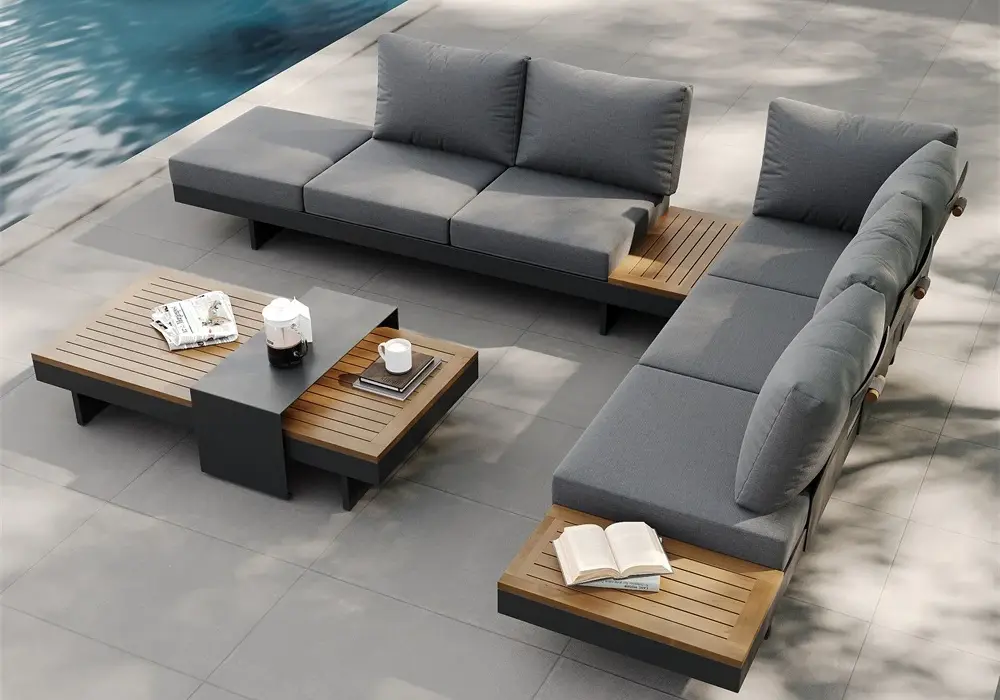
For example, the Outdoor Teak & Aluminum Modular Sofa Set with Coffee Table is positioned around a combination of teak and aluminum construction in a modular six-person configuration. For buyers comparing a set like this, the decision should not stop at the warranty period. The more useful question is whether the frame, cushions, fabric, and overall configuration match the intended level of outdoor exposure.
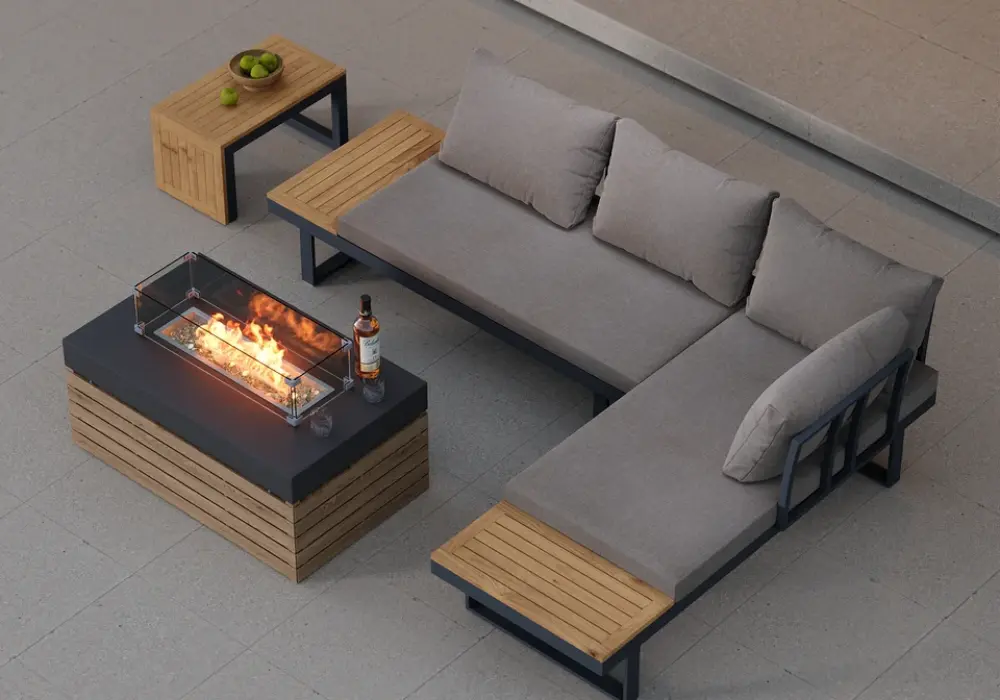
Likewise, the 4-Pieces Modular L-Shaped Teak Sectional Outdoor Sofa Set with Fire Pit in Gray is designed around a more social outdoor layout, where the seating area and fire-pit function become part of one outdoor living zone. In this type of setup, buyers should evaluate the warranty alongside the expected heat, weather, seating frequency, and placement of the furniture.
The practical takeaway is simple: choose materials for the environment first, then use the warranty to evaluate the manufacturer's confidence and your remaining risk.
Should you buy an extended warranty?
An extended warranty is most worth considering when the furniture is expensive, heavily used, difficult to replace, or installed in a demanding environment.
For a typical residential patio, it may be less valuable if the original warranty already provides meaningful structural coverage and the furniture uses durable outdoor materials.
For commercial or heavy-use applications, however, the calculation changes. Commercial use may be excluded from residential warranties, so buyers should specifically seek terms that cover the intended application.
Make Warranty Part of Your Outdoor Sofa Buying Decision
A good outdoor sofa warranty should not be treated as a substitute for durable construction. Instead, use it as one part of a broader purchasing framework:
Size → frame → outdoor fabric → weather resistance → intended exposure → warranty → total value.
If you are furnishing a covered patio, a high-performance fabric and durable frame may be enough to provide long-term value without paying for unnecessary protection. For a fully exposed backyard, coastal deck, or frequently used entertaining area, prioritize UV resistance, moisture management, corrosion resistance, and clear component-level warranty coverage.
The goal is not simply to find the longest warranty. It is to buy an outdoor sofa whose materials, construction, performance, and warranty all make sense for the environment where it will actually live.
If you're comparing outdoor sectionals, start by recording your patio dimensions, expected exposure, seating capacity, and preferred material combination. Then use the warranty checklist above before comparing individual configurations and prices.
FAQ
What is a reasonable warranty length for the frame, finish, and cushions of an outdoor sofa?
As a practical comparison benchmark, look for around 3–5 years or more for structural frames, roughly 2–5 years for finishes, and 1–3 years for cushions and upholstery, depending on the manufacturer and product category. These are not universal requirements, so always review the actual written terms.
Will my outdoor sofa warranty cover weather damage such as sun fading, rain exposure, or coastal salt air corrosion?
Not necessarily. Many warranties distinguish manufacturing defects from normal environmental exposure. Sun fading, mildew, corrosion, and weather-related deterioration may be excluded or subject to specific conditions. If you live near the coast or plan to leave the sofa fully exposed, check the exclusions before buying.
How do prorated warranties work compared with full replacement warranties for outdoor furniture?
A prorated warranty can reduce the value of the remedy as the product ages, while a full replacement provision generally provides the stated remedy without that age-based reduction when the claim qualifies. Always check the exact formula and exclusions.
What documentation, photos, and receipts should I prepare before filing a warranty claim?
Keep your original invoice or order confirmation, product model or SKU, warranty document, delivery information, and assembly instructions. Take photographs of the entire sofa, the defective area, and any relevant product labels or connection points.
Are outdoor sofa warranties typically transferable if I sell the furniture or move to a new homeowner?
Not always. Transferability depends on the manufacturer's terms. Some warranties are tied to the original purchaser, while others may allow transfer under specific conditions. If resale value matters to you, check this before purchasing.
Should I buy an extended warranty or third-party protection plan for commercial or heavy-use outdoor settings?
Only after confirming that the original warranty covers your intended use. Residential warranties may exclude commercial applications. For restaurants, hotels, rental properties, or other high-use environments, compare commercial-grade construction and commercial warranty coverage before paying for an additional protection plan.