

The best flower arrangement for a dining table is proportional to the table's shape and size, positioned at a height that does not block sightlines across the table, and composed of flowers that complement the room's colour palette and the season. Whether you are styling dining tables for everyday meals or special occasions, the right floral centrepiece transforms the dining experience by adding natural colour, texture, and a focal point that draws people together. The key is balancing visual impact with practical considerations—ensuring the arrangement enhances rather than obstructs conversation, food service, and place settings.
Table of Contents
Principles of Dining Table Floral Design
A dining table flower arrangement follows different rules than a bouquet for an entryway or a bedside table. The dining table is a functional space where people eat, talk, and connect, so the arrangement must be beautiful without being intrusive.
Height matters most. The cardinal rule is that the arrangement should never block eye contact between people seated across from each other. A general guideline is to keep the tallest element below 305 mm from the table surface, or use a tall, sparse arrangement with transparent gaps—like a single branch of blossoms—that allows sightlines to pass through. Low, compact arrangements under 203 mm are the safest choice for everyday dining.
Proportion to table size. The arrangement should occupy no more than one-third of the table's length and one-quarter of its width, leaving ample space for plates, glassware, and serving dishes. A 1829 mm rectangular table comfortably accommodates an arrangement up to 610 mm long. A 991 mm round table looks best with a compact centrepiece no wider than 305 mm.
Scent considerations. Strongly fragrant flowers like lilies, hyacinths, and some roses can interfere with the aroma and taste of food. For dining tables, choose flowers with mild or no fragrance—hydrangeas, ranunculus, peonies in moderation, tulips, dahlias, and greenery like eucalyptus or ferns.
Symmetry vs. asymmetry. Formal dinners tend to call for symmetrical arrangements, while casual gatherings and modern interiors benefit from asymmetrical, organic designs that feel more relaxed and contemporary.
Choosing the Right Vase
The vase is as important as the flowers themselves. It provides structure, determines the arrangement's height profile, and contributes its own aesthetic to the tablescape.
Low bowl vases are the most versatile choice for dining tables. A wide, shallow bowl—102 to 152 mm tall—creates a lush, sprawling arrangement that stays below the sightline. These vases work especially well with mass flowers like hydrangeas, garden roses, and chrysanthemums, which can fill the bowl densely without adding height.
Cylinder vases offer a clean, modern look. A tall cylinder with a single type of flower—such as a cluster of tulips or a tight bunch of delphinium—creates a dramatic vertical line that is visually striking yet narrow enough to see through. For dining tables, use cylinders that are either very tall (406+ mm) with sparse vertical flowers, or very short (152 mm) with compact arrangements.
Pitcher vases bring a rustic, farmhouse charm that works beautifully with informal arrangements. A ceramic or glass pitcher filled with wildflowers or a loose gathering of seasonal blooms creates an effortlessly elegant centrepiece.
Compote dishes are shallow, footed bowls that elevate the arrangement slightly above the table while maintaining a low profile. They are the classic choice for lush, garden-style arrangements and work particularly well for formal dining occasions.
Multiple small vases offer an alternative to a single large centrepiece. Three or five small bud vases spaced along the centre of a rectangular table create a flowing, garden-like effect that never obstructs views and allows each flower to be appreciated individually.
Arrangement Styles for Different Table Shapes
The shape of your dining table should influence the style and placement of your flower arrangement.
Rectangular tables benefit from elongated arrangements or a series of smaller vases arranged in a line. A long, low arrangement in a rectangular tray creates a dramatic runner of flowers. Alternatively, place three matching small arrangements at equal intervals along the table's centre. For a more organic look, use varying heights and vase styles, connected by trailing greenery that creates visual flow between the vessels.
Round tables require a single centrepiece. A round, symmetrical arrangement in a compote dish or low bowl is the classic choice. Keep the arrangement compact—no wider than one-third of the table's diameter—to leave room for place settings. For small round tables, a single statement bloom in a bud vase may be all that is needed.
Oval tables offer flexibility. You can use either a single elongated arrangement or a pair of matching arrangements placed symmetrically. The curve of the table means the arrangement should be slightly wider in the middle and tapered at the ends to follow the table's silhouette.
Square tables look best with a compact, symmetrical arrangement centred on the table. A low, round arrangement in a bowl vase mirrors the table's geometry while keeping the surface uncluttered.
Seasonal Flower Ideas
Choosing seasonal flowers ensures freshness, affordability, and a natural connection to the time of year.
Spring arrangements celebrate renewal with tulips, daffodils, hyacinths (use sparingly due to scent), ranunculus, and peonies. Spring colour palettes lean toward pastels—soft pinks, pale yellows, lavender, and fresh greens. A simple arrangement of white and pink tulips in a glass cylinder vase captures the season's freshness.
Summer arrangements embrace bold, warm colours with dahlias, zinnias, sunflowers, cosmos, and garden roses. Summer is the ideal season for lush, abundant arrangements overflowing with mixed blooms. A compote dish filled with dahlias in shades of coral, peach, and burgundy creates a showstopping centrepiece.
Fall arrangements shift toward richer, deeper tones. Chrysanthemums, marigolds, dahlias in autumnal shades, and dried elements like wheat stems or pampas grass bring warmth. Pair orange and burgundy flowers with seed pods, branches with changing leaves, or dried hydrangeas for texture.
Winter arrangements lean on structural elements and cool tones. White amaryllis, paperwhite narcissus, forced cherry branches, and winter greens like cedar and pine create elegant arrangements. Add metallic accents—copper or brass vase elements—to bring warmth to the cool palette.
Colour Palettes and Themes
The colour of your flower arrangement should harmonise with your dining room's existing palette while providing a point of visual interest.
Monochromatic arrangements use a single colour in varying shades. An all-white arrangement of roses, hydrangeas, and ranunculus is timeless and works with any decor style. A single-colour approach lets the textures and forms of the flowers take centre stage.
Complementary palettes pair colours opposite each other on the colour wheel—blue and orange, purple and yellow. These combinations are vibrant and energetic, best suited for casual dining and summer gatherings.
Analogous palettes use colours adjacent on the colour wheel—pink and coral, yellow and orange, blue and purple. These combinations feel harmonious and sophisticated, working well for both formal and everyday arrangements.
Neutral and green arrangements focus on foliage rather than blooms. Eucalyptus, olive branches, ferns, and herbs like rosemary or lavender create understated, organic arrangements that suit minimalist and Scandinavian interiors. These arrangements also tend to last longer than cut flowers.
Matching Arrangements to Your Dining Table
The material, colour, and style of your dining table should inform your flower arrangement choices.
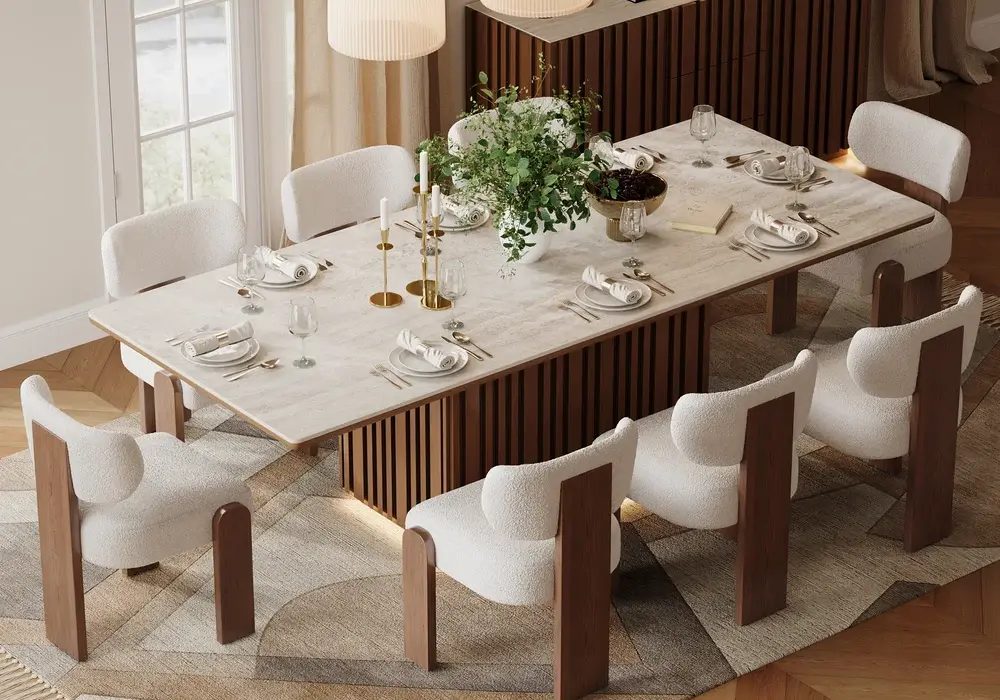
For a dining table with a sintered stone or travertine top—materials that have a cool, mineral quality—pair arrangements that bring warmth through organic forms and rich colours. A Aura 2134 mm Rectangle Sintered Stone Dining Table with a matte travertine finish seats eight and provides a generous surface for an elongated arrangement or a series of three matching vases spaced along the centre. The mid-century modern styling of this table pairs beautifully with lush, garden-style arrangements in compote dishes.
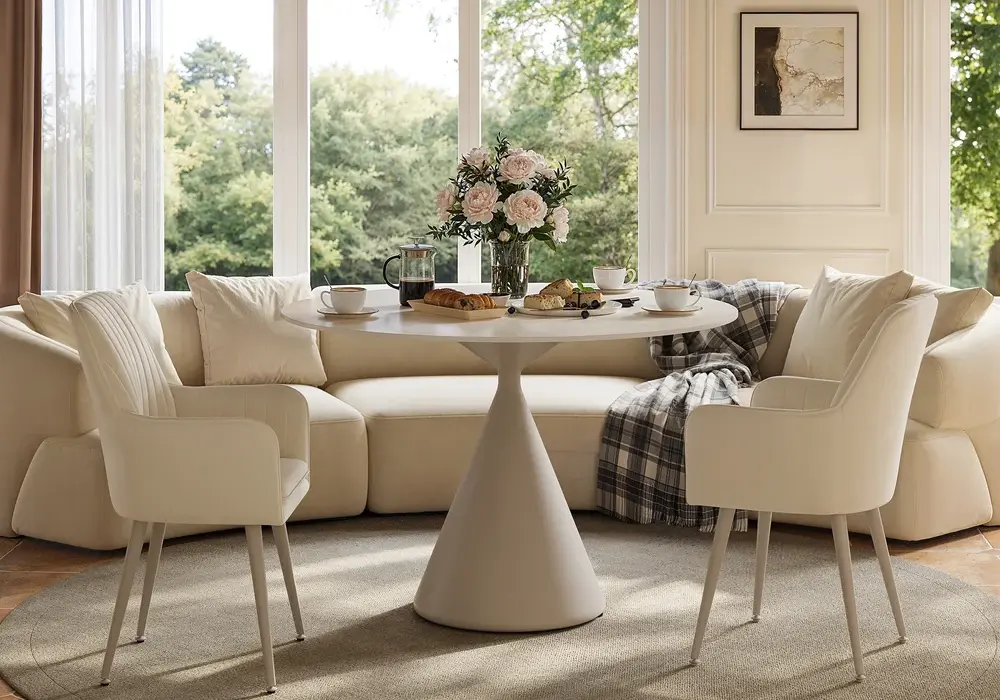
A compact round table like the 991 mm Round Sintered Stone Dining Table calls for a single, intimate arrangement. With a seating capacity of two to four, this table is perfect for a small bud vase with a single statement bloom or a low bowl arrangement no wider than 305 mm. The matte travertine top in sandy tones complements earthy, warm-coloured flowers like ranunculus in peach and coral.
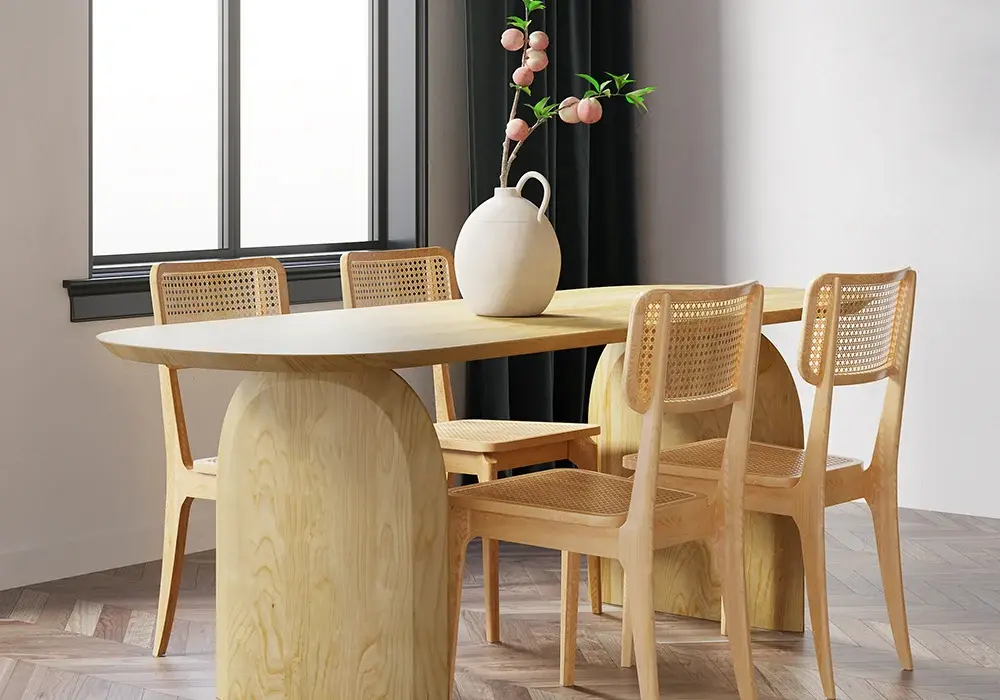
For a natural wood table like the 1803 mm Wooden Dining Table, the warm pine surface invites arrangements that echo its organic character. Wildflowers, dried grasses, or a loose gathering of seasonal blooms in a ceramic pitcher create a relaxed, Japandi-inspired centrepiece. An oval arrangement that follows the table's double-pedestal shape maintains visual balance while leaving generous space for six place settings.
Low-Maintenance and Long-Lasting Options
If you want the beauty of flowers without frequent replacement, consider these approaches:
Long-lasting cut flowers include chrysanthemums (2–3 weeks), alstroemeria (2 weeks), carnations (2–3 weeks), and orchids (2–3 weeks as cut stems, longer as potted plants). These varieties outperform delicate flowers like peonies or sweet peas, which may last only 3–5 days.
Dried and preserved flowers require zero maintenance and last indefinitely. Pampas grass, dried lavender, bunny tail grass, and preserved hydrangeas create beautiful, textural arrangements that need no water. Pair them with fresh greenery for a mixed arrangement that combines the best of both.
Potted plants on the dining table offer a living alternative to cut arrangements. A small potted orchid, a cluster of succulents, or a compact herb garden in a decorative pot provides ongoing greenery with minimal upkeep.
Flower frogs and chicken wire as mechanics inside your vase help stems stay in place without dense foam, allowing better water circulation and extending flower life.
Frequently Asked Questions
How tall should a flower arrangement be on a dining table?
Keep dining table arrangements under 305 mm tall, or use tall, sparse arrangements with see-through gaps. Low arrangements under 203 mm are ideal for everyday use.
What flowers last longest on a dining table?
Chrysanthemums, alstroemeria, carnations, and orchids are among the longest-lasting cut flowers, typically remaining fresh for two to three weeks with proper care.
Should I use scented flowers on a dining table?
Avoid strongly scented flowers like lilies and hyacinths on dining tables, as their fragrance can interfere with the aroma and flavour of food. Choose mild-scented or unscented varieties instead.
How do I arrange flowers for a rectangular dining table?
Use an elongated arrangement in a rectangular tray or a series of three to five small vases spaced along the table's centre. This creates visual flow while leaving room for place settings.
Can I use dried flowers on a dining table?
Yes, dried flowers like pampas grass, lavender, and preserved hydrangeas are excellent low-maintenance options that last indefinitely and add texture to your tablescape.
How often should I change the water in my dining table vase?
Change the water every two to three days, trimming the stems at an angle each time. This extends the life of your arrangement by preventing bacterial buildup in the vase.