

A media console is a low, horizontal storage cabinet designed to hold a television, organise audiovisual equipment, and conceal cables while providing surface space for decorative objects. Unlike a simple TV stand, a media console typically incorporates drawers, cabinets, or shelving specifically engineered to house media components such as streaming devices, gaming consoles, sound bars, and remote controls. When shopping for media consoles, the key distinctions lie in storage capacity, surface material, width relative to your television, and whether the design offers features like cable management, soft-close drawers, or extendable tops that adapt to different room layouts.
Table of Contents
Media Console vs. TV Stand: What Is the Difference?
While the terms media console and TV stand are often used interchangeably, there are functional differences worth understanding.
A TV stand is generally a simpler, more minimal piece of furniture. Its primary purpose is to support the television at a comfortable viewing height. TV stands may include a shelf or two for basic components but often lack enclosed storage. They tend to be lighter, less expensive, and easier to assemble.
A media console is a more substantial storage solution. It typically features a wider footprint, enclosed cabinet space with doors and drawers, and a design that integrates the television into a cohesive furniture composition rather than treating it as a standalone object. Media consoles often extend beyond the width of the television to create a balanced visual anchor in the room.
The distinction matters because it affects your room's organisation. If you have multiple devices, gaming accessories, physical media, or unsightly cables, a media console with enclosed storage will keep everything accessible yet hidden. If your setup is minimal—just a TV and a single streaming device—a simpler TV stand may suffice.
Common Media Console Materials
The material of a media console determines its durability, weight capacity, aesthetic character, and price point.
Sintered stone has become an increasingly popular top material for premium media consoles. Sintered stone is manufactured by compacting natural minerals under extreme heat and pressure, creating a surface that is heat-resistant, scratch-resistant, and non-porous. It mimics the appearance of natural marble or travertine while offering superior durability. Media consoles with sintered stone tops combine the warmth of a wooden cabinet body with a sleek, cool-toned surface.
Solid wood and wood veneer remain the most common cabinet body materials. Ash wood, walnut, and oak are popular choices that bring warmth and natural grain patterns. Solid wood frames offer superior structural rigidity, while veneer panels provide a consistent appearance at a more accessible price.
Engineered wood (MDF or particleboard with laminate or veneer finish) is used in many mid-range media consoles. While not as durable as solid wood, high-quality engineered wood with a thick veneer can provide years of service and a refined appearance.
Stainless steel is used in some modern and minimalist designs, either as the primary material or as a base and support structure. Steel offers industrial durability and a sleek, contemporary look.
Standard Sizes and TV Compatibility
Choosing the right media console size requires matching the console width to your television's width and ensuring adequate surface depth for your components.
The general rule is that your media console should be at least as wide as your television, and ideally 20 to 30 per cent wider. This creates visual balance and provides surface space on either side of the screen for speakers, decorative objects, or ventilation.
TV Size | Recommended Console Width |
55-inch | 1524–1829 mm |
65-inch | 1778–2032 mm |
75-inch | 2032–2438 mm |
85-inch | 2286–2896 mm |
Depth is equally important. A console that is too shallow may not accommodate larger components or may cause the television to feel precariously perched. A depth of 406 to 457 mm is standard for most media consoles, providing enough room for devices while keeping the profile low and unobtrusive.
Height is a comfort consideration. The centre of your television screen should be at approximately eye level when you are seated—typically 1067 mm from the floor. If your console is 356 to 559 mm tall and your TV stands on top, the viewing angle will be comfortable for most sofa heights.
Storage Features That Matter
The storage configuration of a media console determines how effectively it manages your media equipment and accessories.
Drawers provide enclosed storage for items you want to keep hidden—remote controls, gaming controllers, cables, manuals, and small accessories. Soft-close drawer slides are a premium feature that prevents slamming and extends the life of the mechanism. Look for drawers with full-extension slides so you can access the entire drawer contents.
Cabinet doors conceal larger components like AV receivers, gaming consoles, and streaming devices. Push-to-open mechanisms eliminate the need for visible handles, creating a clean, minimalist front. Some cabinets include adjustable interior shelves that can be repositioned to accommodate components of different heights.
Cable management is a critical feature that is often overlooked. The best media consoles include built-in cable management channels or grommets that route power and HDMI cables from your devices to wall outlets without creating visible tangles. Even a simple hole in the back panel can make a significant difference in keeping your setup tidy.
Extendable tops are an innovative feature that lets you adjust the console's width to accommodate different TV sizes or room configurations. This adaptability is particularly valuable if you anticipate upgrading to a larger television in the future.
Design Styles and Aesthetic Options
Media consoles are available in a wide range of design styles to complement any interior.
Modern media consoles feature clean lines, minimalist hardware, and materials like sintered stone, glass, and high-gloss finishes. They work well in contemporary living rooms with a restrained colour palette.
Mid-century modern consoles incorporate organic wood tones, tapered legs, and fluted or slatted detailing. Ash wood with a whitewash finish is a hallmark of this style, which pairs beautifully with retro-inspired or eclectic interiors.
Industrial designs combine wood with metal accents, often featuring black steel frames and rustic wood surfaces. These consoles suit loft-style apartments and urban interiors.
Scandinavian media consoles emphasise light woods, functional simplicity, and pale finishes. They are ideal for smaller spaces where a light visual footprint keeps the room feeling open.
Fluted detailing—vertical grooves on cabinet doors or drawer fronts—has become a sought-after design element that adds texture and visual interest without overwhelming the piece. This subtle architectural detail elevates even the simplest console design.
Media Consoles That Demonstrate Key Features
Three examples illustrate the range of materials, sizes, and features available in quality media consoles.
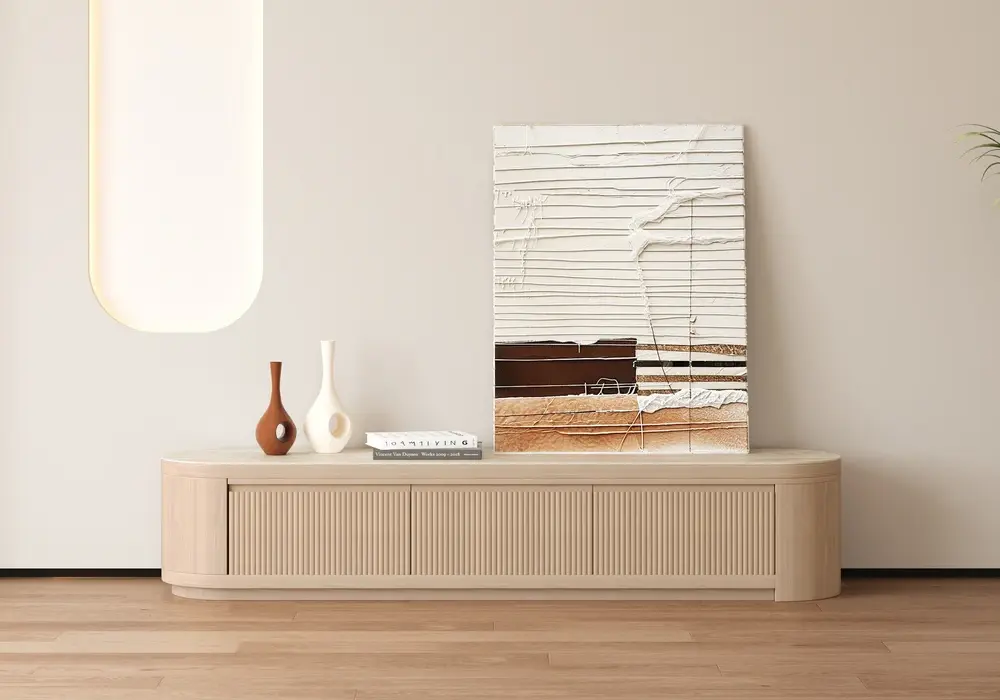
The Velar 1803–2896 mm Extendable Fluted TV Stand embodies the extendable concept. Its width adjusts from 1803 mm to 2896 mm, accommodating televisions from 2032 mm and larger. The sintered stone top in white and grey provides a durable, heat-resistant surface, while the fluted cabinet doors add textural sophistication. Three soft-close drawers provide ample enclosed storage, and the modern design suits contemporary living rooms. The three-year limited warranty reflects the manufacturer's confidence in its construction.
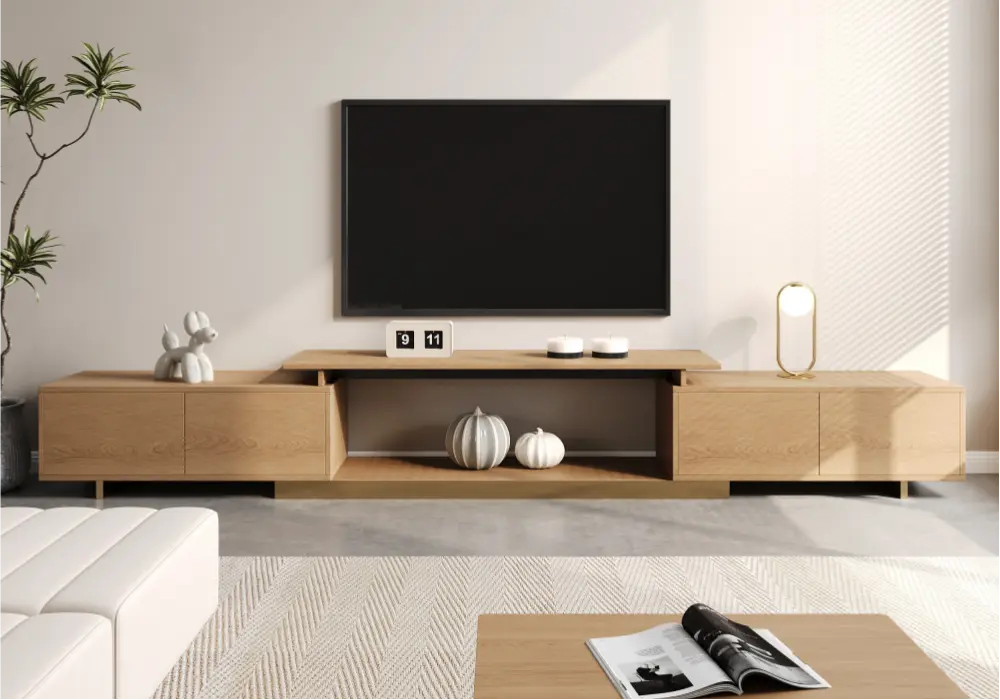
For a more streamlined approach, the Mordel 1600–2388 mm Extendable TV Stand uses push-to-open hidden storage doors instead of visible drawers. Its width ranges from 1600 to 2388 mm, making it suitable for televisions from 1651 to 2159 mm. The stainless steel and FSC-certified wood construction offers a modern aesthetic with an environmentally responsible material choice. The glossy finish and minimalist hardware-free front create a sleek, uncluttered appearance.
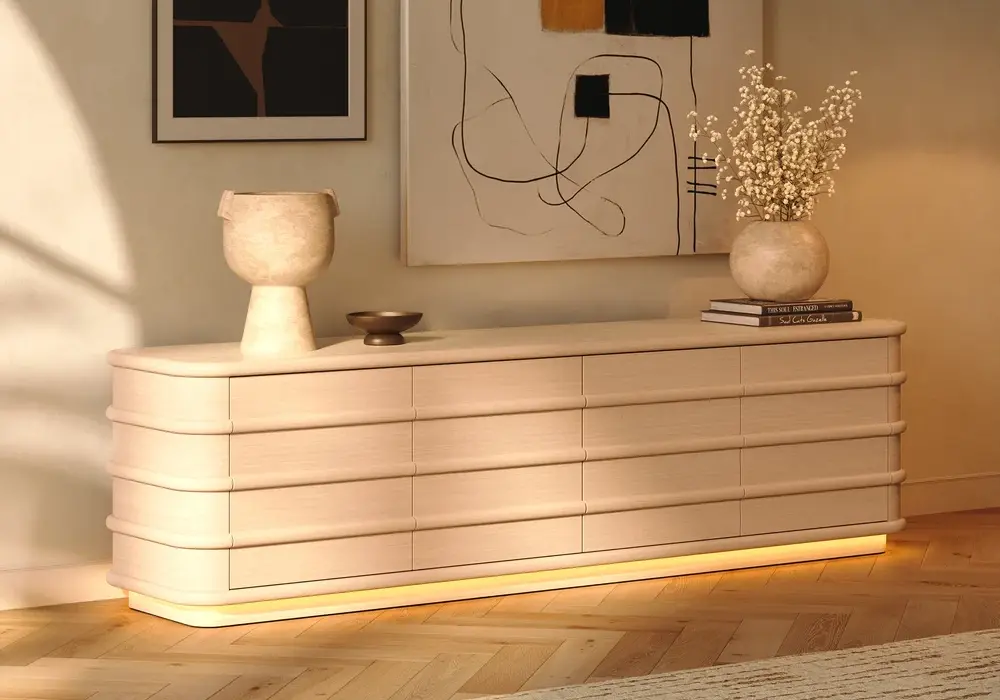
The Larvo 2032 mm Ash Wood TV Stand takes a mid-century modern approach. At 2032 mm wide, it is sized for 1778- to 2007-mm televisions and features a solid ash wood frame with ash veneer panels in a whitewash finish. The sintered stone top adds durability and a premium tactile surface. Built-in dimmable LED lighting, cable management, and adjustable interior shelves demonstrate how a single console can integrate multiple functional features. At 559 mm tall and 457 mm deep, it provides a substantial presence while maintaining comfortable viewing ergonomics.
Placement and Room Layout Tips
Where you place your media console significantly affects both the viewing experience and the room's visual balance.
Position the console against the longest unbroken wall in your living room, ideally opposite your primary seating area. Maintain a viewing distance of approximately 1.5 to 2.5 times the diagonal screen size of your television. For a 1905 mm TV, this means sitting 2.9 to 4.7 m away.
If the console is wider than your TV, use the surface space on either side for symmetry—a pair of table lamps, bookend speakers, or matching decorative objects create visual balance. Avoid cluttering the surface with too many small items, which competes with the television for attention.
For open-concept living spaces, the media console can serve as a visual anchor that defines the living area within a larger room. Choose a console with an attractive back panel or a finished rear if any portion will be visible from behind.
Frequently Asked Questions
What is the difference between a media console and an entertainment centre?
A media console is a single low cabinet, while an entertainment centre is a larger system that may include the console plus matching shelving units, hutches, or wall-mounted storage above the television.
How wide should a media console be for a 65-inch TV?
A media console for a 65-inch television should be at least 1778 mm wide, with 1829 to 2032 mm being ideal for visual balance and surface space.
Can I put a sound bar on a media console?
Yes, most media consoles are deep enough to accommodate a sound bar placed directly in front of the television. Ensure the console surface is at least 406 mm deep and that the sound bar does not block the TV's infrared sensor.
What is sintered stone and why is it used for media console tops?
Sintered stone is a manufactured surface created by compressing natural minerals under extreme heat. It is heat-resistant, scratch-resistant, and non-porous, making it a durable and visually striking material for console tops.
Do media consoles need cable management?
Cable management is highly recommended. Without it, power and HDMI cables create visual clutter around your television. Look for consoles with built-in grommets, channels, or rear panel openings.
How tall should a media console be?
The ideal media console height places the centre of your television at seated eye level—approximately 1067 mm from the floor. Most consoles range from 356 to 559 mm tall, which works well when combined with a television on top.