

To put together a recliner sofa, identify the exact model, inventory its parts, and follow its assembly manual for the legs, backrests, module connectors, and any power connections. Work with the number of helpers the manufacturer recommends, keep electrical equipment disconnected during assembly, and test movement only after the structure is complete. When comparing reclining sofas and chairs, remember that a manual reclining sectional and a power reclining sofa can require different assembly and inspection steps.
Table of Contents
Identify the Mechanism Before Opening the Hardware
Find the model label and the instructions that match the delivered furniture. Product photographs, a similar sofa's video, or a generic recliner guide cannot establish which brackets and fasteners your sofa uses. A reclining sofa may have adjustable backrests, manual footrests, powered seats, or adjustable headrests. Confirm the mechanism and the approved assembly steps before trying to move any part.
If the manual is missing, ask the seller for the correct version before starting. Send the model number and photographs of the delivered parts if needed. Keep cartons and protective packaging until you have checked for damage and completed the required inspection. Do not install a bent bracket, damaged cable, cracked frame part, or fastener that does not match the parts list.
Choose a clean, well-lit space near the sofa's final position. Protect the floor with a suitable blanket or assembly mat, leaving a stable working surface. Keep children and pets away from loose hardware, open mechanisms, and heavy parts. Make sure there is enough room to set down a component without resting it on a switch, wire, or projecting connector.
Understand the Differences Between Manual and Power Recliners
A manual reclining sectional and a power reclining sofa may look similar, but their mechanisms and assembly checks can differ.
The two-piece fabric and faux-leather reclining sectional is listed with manual recline and an adjustable backrest. For this type of sofa, check how the individual pieces are joined and supported in the model instructions. Do not assume that a backrest should be pulled off or that a connector lifts vertically simply because the parts appear detachable.
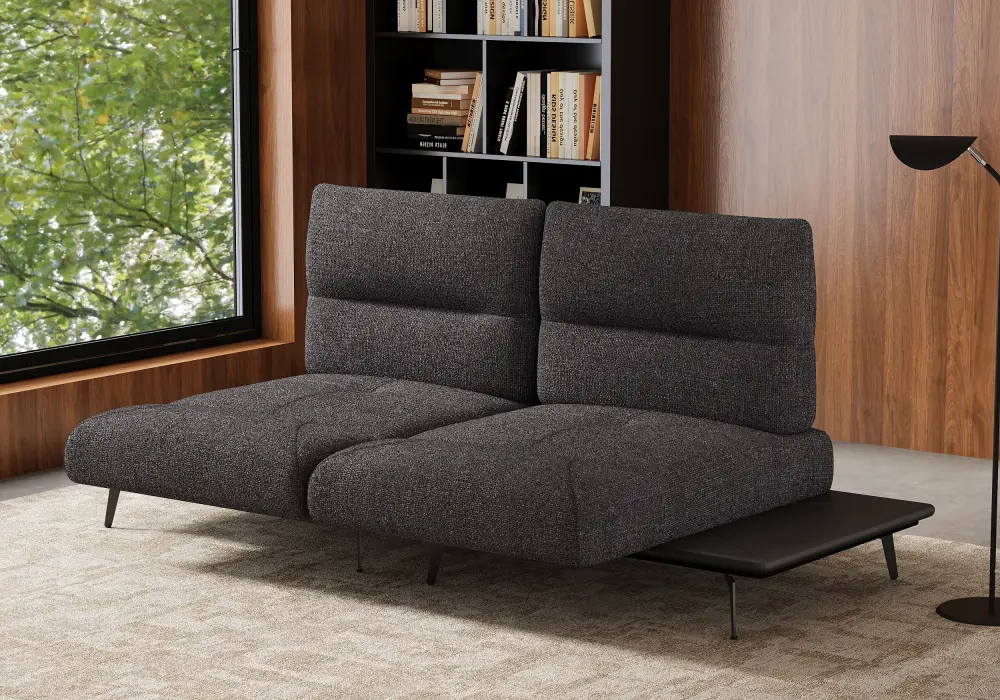
For a power model, assembly also requires attention to the electrical connections and cable routing. The Curva 85-inch power reclining sofa with adjustable headrests is one example. According to its product description, both end seats are powered, while the headrests are manually adjustable. This distinction is useful when identifying the parts and understanding which functions require power.
Because the Curva combines powered reclining seats with manually adjustable headrests, its assembly checklist should account for both the structural components and the specified power connections. Follow the instructions supplied for the exact model rather than assuming that all power recliners use the same brackets, connectors, or assembly sequence.

Inventory Parts and Prepare the Correct Tools
Spread the hardware on a clean tray and compare each item with the manual's list. Separate different screw lengths even when their heads look similar. Count washers, brackets, legs, and protective caps, and identify left and right components where the instructions distinguish them. Look for accessory boxes only in locations indicated by the packing information; do not cut through upholstery to search for hardware.
Use the tools specified in the instructions. A supplied hex key or correctly sized screwdriver may be sufficient, but do not assume a powered driver is appropriate. Excessive torque can damage threads, wood-based panels, or fittings. Avoid substituting bolts, adding adhesive, or modifying a hole because a part seems difficult to align.
Arrange enough help before lifting or turning a component. The weight and shape matter as much as the number of pieces. Choose a controlled lifting method that follows the instructions, and use the structural frame for support. Arms, cushions, footrests, and electrical parts are not general-purpose handles.
Follow the Model's Sequence for the Structure
Read the full assembly sequence once before beginning. Some sofas need legs or supports installed while a section is on a protected side; others use a different order. Follow the stated orientation and support points. Do not copy a sequence from another model or tip a power mechanism onto a vulnerable part simply because that makes a bolt easier to reach.
When the manual specifies a slide-on back, align both sides with the intended brackets and engage them exactly as shown. If it specifies bolts, use the designated holes and hardware. Stop if one side will not align or the back remains loose; pushing harder can disguise a misalignment. A back that appears upright is not necessarily secured.
For a sectional, position modules on the same level surface and connect them using the intended joining points. Check that legs and supports sit correctly before securing the sections. Do not drag joined modules to force them into alignment, and do not remove structural bolts to make the furniture fit. Follow the manual's final tightening sequence and inspect all specified connections before continuing.
Connect Power Only After the Structure Is Ready
For a powered model such as the Curva power reclining sofa, keep the power supply unplugged while assembling and routing its connections. Match connectors using the manual's diagrams and labels. Do not force a keyed plug, pull on wires, or connect an unidentified cable because the ends look similar. If a cable or connector is damaged, contact the seller rather than repairing or bypassing it yourself.
Route cables away from hinges, moving linkages, sharp edges, and points where the sofa rests on the floor. Leave the amount of slack and positioning the instructions require. A cable that looks tidy with the footrest closed may become tight or trapped when the seat moves, so the final inspection must consider the full operating range.
Place the completed sofa where it has the operating space specified by the manufacturer. Keep the outlet accessible and avoid routing power leads across a walking path. Do not open the motor, transformer, or control housing as part of normal furniture assembly. Adjustable headrests, charging ports, and other accessories do not necessarily operate in the same way as the reclining mechanism, so check the model's actual functions.
Inspect and Test the Completed Sofa
Check that the sofa rests evenly, the specified fasteners are secure, and every detachable part is engaged as directed. Remove packaging, loose hardware, tools, and blankets from beneath and around the mechanism. Make sure people and pets are clear before any movement test.
For a power model, connect power only after those checks and follow the initial-operation instructions. Test one function at a time with nobody reaching beneath the sofa. Watch for cable tension, rubbing upholstery, uneven movement, or unexpected noise. Stop operating it if something catches or moves incorrectly; disconnect power before inspection and contact support when the cause is unclear.
What you notice | What to check | When to stop |
A backrest feels loose | Correct model instructions and engagement points | It will not lock or align as described |
A module sits unevenly | Floor, feet, and prescribed support placement | A structural part appears bent or damaged |
Power does not operate | Approved supply and clearly identified connections | A cord is damaged or the fault remains unexplained |
Movement catches or makes a new noise | Clearance around the sofa | Fabric, wires, or objects may be trapped |
Keep the manual, parts list, and purchase information after assembly. They will help if the sofa needs moving, a connector is replaced, or you need support later. Do not discard extra-looking hardware until the manual confirms its role.
Frequently Asked Questions
Can One Person Assemble a Recliner Sofa?
Use the number of people recommended for the exact model, and add help when weight or access makes handling difficult. Heavy sections and reclining mechanisms can be awkward to position safely, so do not turn or lift them alone simply because a connection looks easy.
Do All Recliner Backs Slide Into Brackets?
No. Back attachment methods vary, and some are fixed. Use the correct manual to identify the connection and locking method. Do not assume that a loose or removable-looking back should be forced into place.
When Should I Plug In a Power Recliner?
After the structure is assembled, connections and cable routing are checked, and the surrounding area is clear. Follow the manufacturer's initial-operation steps and disconnect power before inspecting a problem.
Can I Use Different Screws if the Supplied Ones Do Not Fit?
Do not substitute hardware without manufacturer approval. Recheck the part label, screw length, alignment, and instructions. Contact the seller if the specified parts still do not fit.
What if My Sofa Arrived Without an Assembly Manual?
Request the exact model's instructions before starting. A similar product's guide may use different brackets, supports, or wiring, so it should not replace the correct documentation.